Perspectives · Analysis
Why Trip.com Group Is Scaling Up in Vietnam, and What It Signals for Asian Travel
A larger Ho Chi Minh City office, a Vietnam-based team that has more than doubled, and new agreements with two of the country’s biggest hospitality groups: Trip.com Group’s latest moves in Vietnam arrive just as the country posts a record 21.2 million international arrivals. For travel businesses across Asia, the expansion is more than a company milestone: it is a case study in how global platforms are positioning themselves around one of the region’s fastest-moving markets.
A market working in both directions
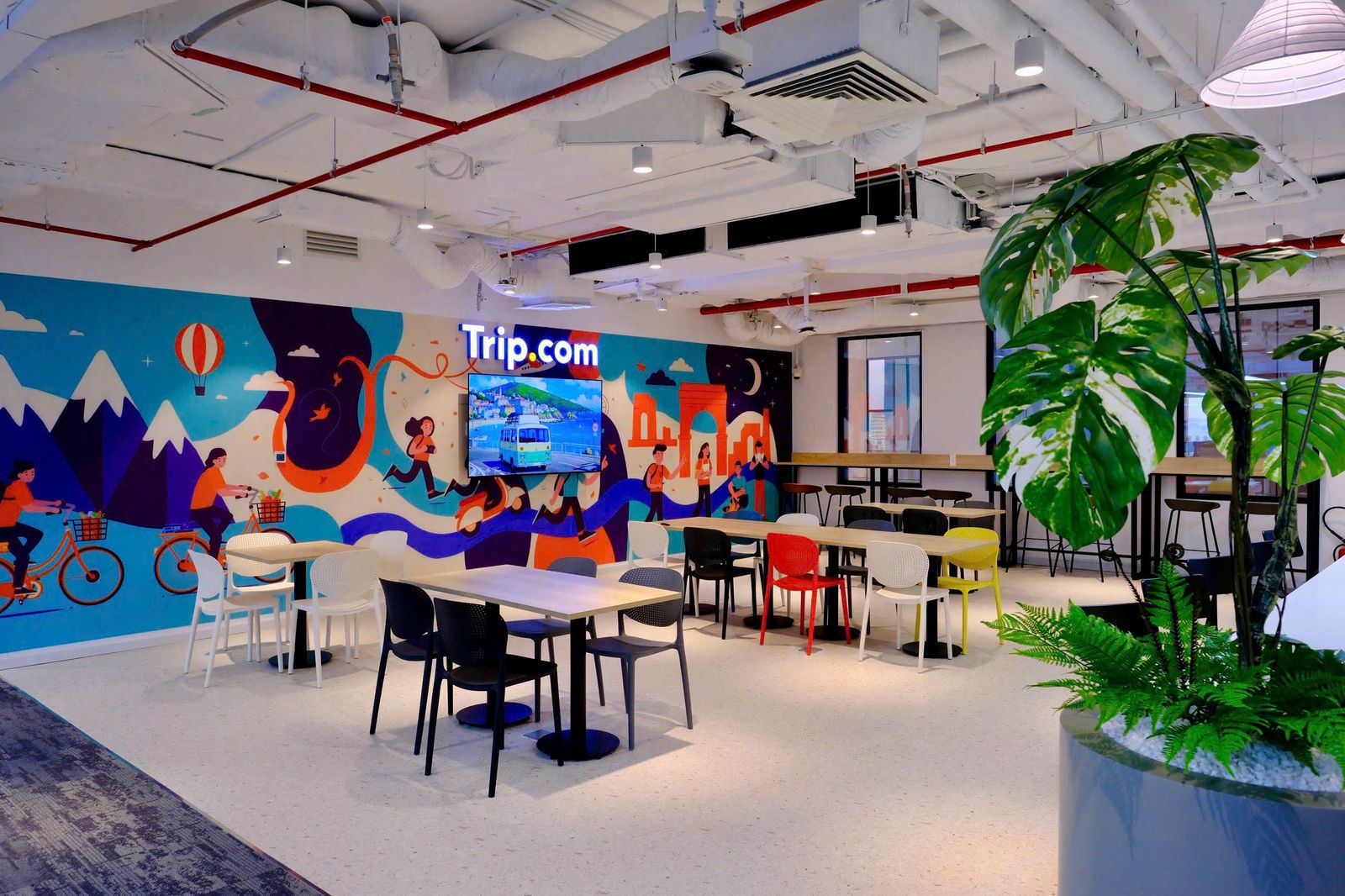
On 1 July, Trip.com Group opened its expanded office in Ho Chi Minh City. According to the company, its Vietnam-based headcount has more than doubled over the past couple of years, covering partner sourcing, business development, travel network management, localised marketing, and customer-service coordination.

Trip.com Group's expanded Ho Chi Minh City office. Photo: Trip.com Group
For a group that reported net revenue of RMB 62.4 billion (approximately US$8.7 billion) in 2025, up 17 per cent year-on-year according to its NASDAQ-listed financial results, an office expansion is not in itself major news. What makes it worth reading closely is the question behind it: why Vietnam, and why now?
Part of the answer sits in official data. Vietnam welcomed nearly 21.2 million international visitors in 2025, an all-time record, up 20.4 per cent on 2024 and 17.8 per cent above the pre-pandemic peak of 2019, according to Vietnam’s National Statistics Office and the Vietnam National Authority of Tourism (VNAT). The momentum has carried into 2026: arrivals reached almost 12.3 million in the first half, up 14.9 per cent year-on-year, tracking towards a full-year target of 25 million.
The other part of the answer lies in Vietnamese travellers themselves. Platform data released by Trip.com Group shows new app downloads in Vietnam growing 63 per cent in 2025 to 1.8 million installs, monthly active users up 70 per cent, and bookings for mid-haul flights linking Vietnam with Mainland China, South Korea, Japan, and Taiwan up 103 per cent. (These are the company’s own platform figures, reflecting its growth rather than the market as a whole.)
Taken together, the two data sets describe a market that is rare in Asia right now: growing strongly in both directions at once. Vietnam is simultaneously a rising destination and an emerging source market. For a travel platform, that dual profile is precisely where investment goes first.
A distribution reach few platforms can match
Vietnam’s online travel space is among the most contested in Southeast Asia, with several global and regional platforms competing for the same hotel inventory and the same digitally fluent traveller. Within that field, Trip.com Group brings a distinctive asset: alongside its international platform, the group operates Ctrip, one of the largest travel booking ecosystems serving travellers in Mainland China, together with Skyscanner and Qunar.
The relevance to Vietnam is immediate. Mainland China has returned as Vietnam’s largest source market, sending an estimated 5.3 million visitors in 2025, up 41.3 per cent, the strongest growth among major markets, and a quarter of all international arrivals, according to Vietnam’s National Statistics Office. In the first half of 2026, Chinese arrivals reached 2.7 million, leading South Korea’s 2.16 million; the two markets combined account for roughly 40 per cent of Vietnam’s inbound total.
Chinese travellers, meanwhile, were projected to take around 155 million outbound trips in 2025, according to research firm China Trading Desk. A large share of those journeys are planned, compared, and booked on domestic Chinese platforms rather than on international booking sites.
This is where Trip.com Group’s structure becomes a meaningful advantage for its Vietnamese partners. A hotel in Da Nang or Phu Quoc that joins the group’s network is not only listed on Trip.com’s international platform; it also gains a route to hundreds of millions of users inside Mainland China through Ctrip, a distribution channel that Vietnam’s tourism industry values highly but has few direct ways to reach on its own.
Demand signals from the Chinese market corroborate the opportunity. Separate industry data reported by Vietnamese media in June showed accommodation searches for Vietnam from Mainland China rising 164 per cent in the first five months of 2026. When multiple independent data points converge on the same trend, the trend is usually real.
From booking channel to destination partner
The third strand of Trip.com Group’s announcement extends beyond transactions. The company says it is exploring collaborations with Ho Chi Minh City tourism stakeholders and planning a “Super Destination” campaign to showcase Vietnam across Ctrip and Trip.com’s international platforms. These initiatives are at an exploratory stage (no agreements have been signed), but they indicate the direction of travel.

Trip.com Group and Vinpearl sign strategic partnership. Photo: Trip.com Group
More concretely, the group has signed memoranda of understanding with Sun Hospitality & Entertainment Group and Vinpearl, two of the largest hospitality ecosystems in Vietnam, to promote Vietnamese tourism offerings to international travellers. Trip.com Group currently connects global travellers with more than 15,000 accommodation partners in Vietnam, by its own count.

Trip.com Group and Sun Hospitality & Entertainment Group sign strategic partnership. Photo: Trip.com Group
For destination-marketing professionals across Asia, this is the most instructive part of the story. Global platforms are increasingly acting not just as booking channels but as co-marketers of destinations, running destination campaigns, curating content, and steering demand through their own user bases. For national and city tourism organisations, that offers reach that traditional promotion budgets rarely deliver on their own; platform campaigns can put a destination in front of hundreds of millions of users at a speed no conventional media buy matches. The complementary question for destination managers is how to work with several partners and channels in parallel, so that platform reach adds to, rather than substitutes for, a destination’s own market presence. The most effective destination strategies in the region tend to combine both.
What B2B readers should watch
Three signals from this expansion are worth tracking for anyone operating in Asian travel.
First, the sourcing footprint. Trip.com Group’s Vietnam team is built around partner functions (sourcing, network management, localised marketing) rather than pure sales. Platforms invest in on-the-ground partner teams when they expect sustained supply growth; for Vietnamese hoteliers, attraction operators, and airlines, this typically translates into faster onboarding, better content support, and more co-marketing opportunities.
Second, the mid-haul corridor. The 103 per cent growth in Vietnam–Northeast Asia flight bookings reported by the platform aligns with a broader regional pattern: intra-Asian mid-haul travel is currently the fastest-recovering and fastest-innovating segment of the market. Suppliers positioned along the Vietnam–China–Korea–Japan–Taiwan corridor are sitting on the region’s strongest demand flows.
Third, the two-way market. Vietnam’s outbound travellers, who are young, mobile-first, value-conscious, and increasingly confident, booked Thailand, Mainland China, South Korea, Taiwan, and Japan as their top destinations on the platform. Destinations across Asia courting new source markets should have Vietnam on their shortlist now, not in five years.
Trip.com Group reported that bookings on its international platform grew roughly 60 per cent year-on-year in 2025. As a rising destination, an emerging source market, and an increasingly digital travel economy, Vietnam sits squarely at the centre of that growth story in Southeast Asia. The company’s expanded Ho Chi Minh City office is a statement that it intends to stay close to it.
Market statistics in this article are drawn from Vietnam’s National Statistics Office and the Vietnam National Authority of Tourism; Trip.com Group figures are from the company’s listed financial results and its 1 July 2026 announcement, attributed at each point in the text.
RELATED STORIES
-800x471.jpg?prefix=brief-asia)
Cover the logo. They'll still know who you are.
Simon Ng · 9 min

The pianist who goes looking for forgotten music
Manh Khang · 8 min

Seven in the morning by Hoan Kiem Lake
Manh Khang · 7 min

Linh Nga, ten years away and a technique brought home
Manh Khang · 12 min
Spot something wrong? Email editor@briefasia.com. We log every correction publicly.