Asia · Trade
Trade Enforcement Against Chinese Imports Runs on Autopilot Despite Détente
Anti-dumping machinery at Commerce and USITC proceeds case by case while White House talks ease headline tension
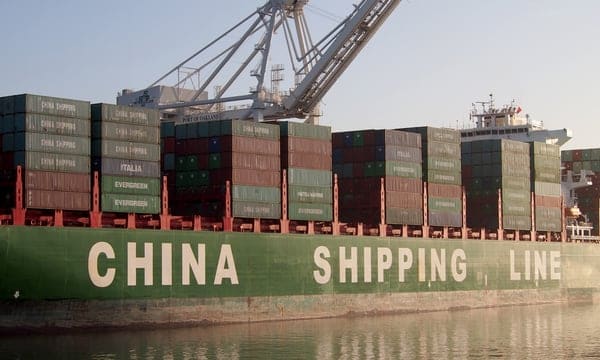
KEY TAKEAWAYS
- ·The USITC initiated 72 trade enforcement cases against China or Hong Kong in the first half of 2026, representing nearly 40 percent of its total docket.
- ·Five-year sunset reviews designed as off-ramps have become renewal mechanisms, with some Chinese goods carrying duties for over two decades.
- ·Chinese firms have responded by diversifying production into ASEAN and other regions while retaining core research and supply chain control domestically.
The Machinery Keeps Running
President Trump's May 2026 trip to Beijing produced joint statements on "constructive strategic stability" and preliminary deals on tariffs and critical minerals. Yet inside the U.S. Department of Commerce and the International Trade Commission, case files on Chinese goods continued to pile up. Between January and June 2026, the USITC opened 183 trade enforcement proceedings. Seventy-two involved mainland China or Hong Kong, nearly 40 percent of the total docket.
The caseload spanned 37 anti-dumping investigations, 27 countervailing duty probes, 14 intellectual property disputes under Section 337, and 21 five-year sunset reviews. Fifty-seven concluded with affirmative findings that kept restrictions in place; only two produced negative outcomes. The numbers point to a system operating on statutory rails, largely immune to diplomatic weather.
Sunset Reviews That Never Set
Five-year sunset reviews were designed as off-ramps. Congress intended them to ask whether injury from dumped or subsidized imports had ended, allowing duties to expire. In practice, they function as renewal notices. The USITC database shows 21 China-related cases cycling through review, some entering second or third rounds. Preserved mushrooms, non-oriented electrical steel, and citric acid have carried duties for over two decades.
The procedural inertia is deliberate. Once an order enters the Federal Register, terminating it requires fresh evidence of changed conditions and affirmative votes from both Commerce and the Commission. Maintaining the status quo demands only that domestic petitioners file for review. Path dependence favors continuation.
Industrial Targets Shift Upmarket
Early waves of trade cases concentrated on steel, aluminum, and basic manufactures. Recent filings show a different priority map. Chemicals and pharmaceuticals account for roughly 20 investigations in the first half of 2026, close to one-third of China-related cases. Semiconductors, electronic components, automotive parts, and advanced machinery fill out the rest.
The tilt mirrors industrial policy enacted through the CHIPS and Science Act and the Inflation Reduction Act. Trade enforcement is no longer confined to remedying specific price distortions; it aligns with broader technology competition. Section 337 cases, though fewer in number, cluster in high-value categories such as TOPCon solar cells, semiconductor devices, and smart televisions. Intellectual property claims have become another lever in a larger strategic toolbox.
Compliance Costs and Strategic Pivots
Chinese exporters face mounting administrative burdens. Participation in anti-dumping proceedings requires detailed cost submissions through the Commerce Department's ACCESS system. Firms must track administrative reviews that can reset deposit rates unpredictably. Commerce currently administers more than 700 active orders covering products from over 60 countries. For small and medium enterprises, the resource drain is prohibitive. Some have withdrawn from the U.S. market altogether.
Uncertainty compounds the expense. Investigations can linger for years, leaving importers unsure of final duty rates. Buyers often reduce orders or switch suppliers once a case opens, even before a final determination. Solar manufacturers such as LONGi, JinkoSolar, and Trina Solar have navigated repeated U.S. probes over the past decade, adjusting procurement, pricing, and legal strategies in response.
Rather than retreat, many Chinese firms have restructured. ASEAN remained China's largest trading partner in 2025, with bilateral trade up 9.6 percent. Belt and Road partner countries accounted for 51.8 percent of Chinese foreign trade. Investment announcements in clean technology sectors outside China have approached $400 billion since 2014, spanning electric vehicles, solar photovoltaics, and wind. Production capacity has expanded in Southeast Asia, Mexico, and Central and Eastern Europe, while research, engineering, and supply chain coordination remain concentrated in China.
Export data from China's General Administration of Customs show mechanical and electrical products reached 7.8 trillion yuan in the first half of 2025, about 60 percent of total exports. Shipments of electric vehicles, lithium-ion batteries, and photovoltaic products climbed 12.7 percent over the same period. The International Energy Agency estimates China controls more than 80 percent of global manufacturing capacity for photovoltaic modules, solar cells, and silicon wafers.
Two Tracks, One Relationship
Diplomatic engagement and statutory enforcement now operate on parallel tracks. Executive actions such as tariff adjustments and export licensing can shift with political priorities. Anti-dumping and countervailing duty orders, by contrast, live inside Title 19 of the U.S. Code and the Administrative Procedure Act. They advance through agency notice-and-comment cycles, evidentiary hearings, and judicial review. Political bargaining at the cabinet level rarely reaches them.
The dual structure means that headline agreements on market access or investment can coexist with a grinding accumulation of trade restrictions at the agency level. For Chinese exporters, the relevant horizon is not the next summit but the next administrative review. The institutionalization of enforcement creates friction that outlasts any single negotiation cycle.
What began as temporary remedies for specific trade distortions have evolved into a permanent compliance regime. The sunset reviews rarely produce sunsets. The caseload expands into higher-value sectors. And the strategic adjustments by Chinese firms, from production relocation to technology upgrading, suggest they are planning for a long game in which U.S. trade enforcement remains a fixed cost of doing business across the Pacific.
RELATED STORIES
China Imposes Anti-Dumping Measures on Japanese Semiconductor Chemical Imports
Jun-ho Seo · 3 min
India's Chinese Import Bill Climbs Despite Self-Reliance Push
Priyanka V. Rao · 3 min
China's August Inflation Accelerates on Energy and Typhoon Disruption
Tran Quoc Bao · 2 min

China's Social Security Fund Doubles Offshore Holdings to $86 Billion
Jun-ho Seo · 3 min
Spot something wrong? Email editor@briefasia.com. We log every correction publicly.