Finance · Fintech
Tonik Partners With AI Rudder to Optimize Customer Interactions Across Digital Channels
The Philippines' first digital-only bank deploys conversational AI platform to analyze customer engagement and improve operational consistency
KEY TAKEAWAYS
- ·Tonik has integrated AI Rudder's conversational AI platform to analyze and optimize customer interactions across multiple communication channels in real time.
- ·The partnership addresses operational challenges as Southeast Asia's digital banks shift from customer acquisition to retention and profitability with consistent service quality.
- ·AI Rudder's enterprise platform enables Tonik to monitor conversation quality, identify process inefficiencies, and maintain service standards as customer engagement scales.
Digital Banking Infrastructure Under Pressure
Southeast Asia's digital banking sector is navigating a fundamental shift in how customers expect to interact with financial institutions. With users moving fluidly between mobile apps, messaging platforms, and voice channels, maintaining consistent service quality has become an operational challenge rather than a mere customer experience aspiration.
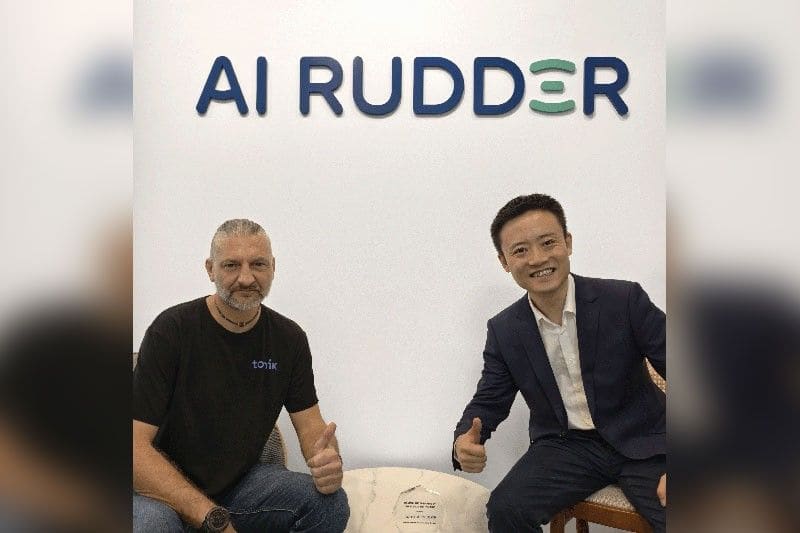
Tonik, the first Bangko Sentral ng Pilipinas-licensed digital-only bank in the Philippines, has deployed conversational AI infrastructure from Singapore-based AI Rudder to address this fragmentation. The partnership centers on analyzing customer interactions at scale and identifying operational gaps that emerge when engagement spreads across disconnected touchpoints.
What AI Rudder Brings to the Table
AI Rudder's platform provides Tonik with enterprise-grade tools to monitor, evaluate, and optimize customer communication across multiple channels from a single interface. The technology is designed to surface patterns in how customers interact with the bank, where friction points occur, and which processes can be standardized without sacrificing responsiveness.
For Tonik, this means moving beyond reactive customer service toward a model where interaction data informs operational decisions. The platform enables the bank's teams to assess conversation quality, measure consistency across channels, and identify opportunities to refine workflows before service degradation becomes visible to customers.
The system does not replace human agents. Instead, it functions as an analytical layer that helps teams understand what is working and what requires adjustment. That distinction matters in a region where trust in digital-only institutions is still being built, and where a single service failure can prompt customers to revert to traditional banks.
The Operational Case for Conversational AI
Tonik's decision to integrate AI Rudder reflects a broader trend among digital banks in Asia: the recognition that customer engagement at scale requires infrastructure, not just intent. As Tomasz Borowski, Tonik's COO, framed it, the priority is delivering seamless and responsive experiences consistently, which demands technology capable of evaluating interactions in real time and supporting continuous improvement.
The platform allows Tonik to establish benchmarks for customer-facing activities, track adherence to those standards, and flag anomalies that might indicate training gaps or process inefficiencies. Over time, this data can inform decisions about resource allocation, channel prioritization, and service design.
Kevin, COO of AI Rudder, emphasized that the collaboration is built around helping financial institutions improve operational efficiency and manage customer interactions more effectively through conversational AI. The partnership reflects a shared view that competitive advantage in digital banking increasingly depends on the ability to learn from customer data and adjust operations accordingly.
Southeast Asia's Digital Banking Context
The timing of this deployment is notable. Digital banks across Southeast Asia are moving past the customer acquisition phase and into the retention and profitability phase. That transition requires operational discipline. Early-stage digital banks often prioritize growth metrics, rapid onboarding, and feature launches. Mature digital banks need to demonstrate that they can operate efficiently, maintain service quality under load, and extract value from customer relationships over time.
Tonik's integration of AI Rudder signals a shift toward operational maturity. The bank is investing in infrastructure that does not generate immediate revenue but that supports the consistency and reliability customers expect from institutions holding their deposits and processing their transactions.
This matters in the Philippines, where digital financial services adoption is high but where trust in digital-only institutions remains conditional. Customers are willing to try digital banks, but they are also quick to switch if service quality falters. Maintaining engagement requires not just competitive rates or sleek interfaces, but reliable, predictable service across every interaction.
What Comes Next
The partnership between Tonik and AI Rudder is part of a broader pattern in which digital banks are layering AI-driven analytics into their operations to gain visibility into customer behavior and operational performance. As these institutions scale, the ability to monitor and optimize interactions at volume becomes a competitive differentiator.
For Tonik, the immediate focus is on strengthening customer engagement capabilities and using AI Rudder's platform to identify areas where operational processes can be refined. Over time, the data generated by the platform could inform decisions about product development, channel strategy, and resource allocation.
The collaboration also underscores the role of Singapore-based technology providers in supporting digital banking infrastructure across Southeast Asia. AI Rudder's platform is being deployed in a market where digital banking is still relatively new, and where the operational challenges of scaling customer engagement are only beginning to be understood.
As digital banks in the region mature, the emphasis is shifting from customer acquisition to customer retention, from feature velocity to operational consistency, and from growth at any cost to growth with sustainable unit economics. Tonik's deployment of conversational AI infrastructure is a step in that direction.
RELATED STORIES
GCash Parent Mynt Clears Final Regulatory Hurdle for Manila IPO
Mariel D. Santos · 3 min

Manila Halts Approvals for Digital Payment Operators Pending Fraud Review
Jun-ho Seo · 4 min

Philippine Capital Inflows Slide as Foreign Firms Curtail Local Lending
Tran Quoc Bao · 3 min

GCash IPO Could Turn Users Into Shareholders
Mariel D. Santos · 3 min
Spot something wrong? Email editor@briefasia.com. We log every correction publicly.