Finance · Markets
Tokyo and Washington Intervene Together to Halt Yen's Four-Decade Low
Japan's finance minister will confirm the first coordinated currency action since 2011, with operations still underway to support the battered yen
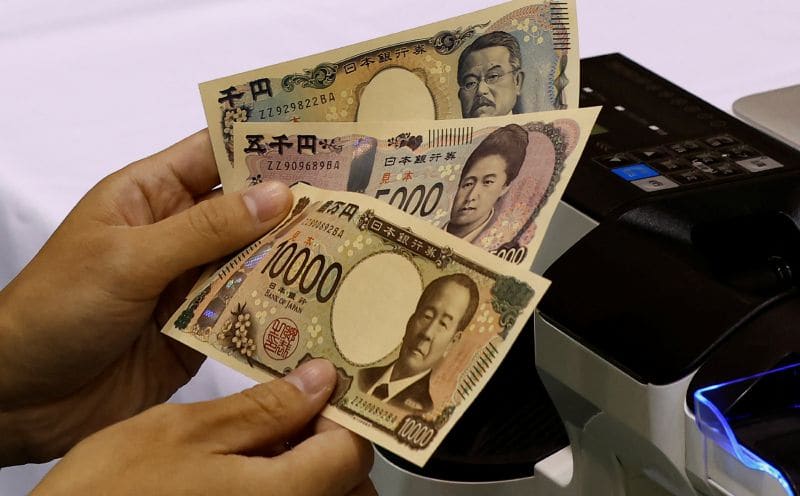
KEY TAKEAWAYS
- ·Japan's finance minister will confirm Monday that Tokyo and Washington executed joint currency intervention to support the yen at its weakest level since 1986, with operations still ongoing.
- ·US Treasury Secretary Scott Bessent's notepad showed plans to buy five to ten billion dollars in yen, while Treasury officials instructed banks to prepare for further action.
- ·The coordinated effort marks the first joint intervention since 2011 and coincides with Bank of Japan signals of potential near-term rate hikes to address policy divergence.
Confirmation Expected Monday
Japanese Finance Minister Satsuki Katayama will announce Monday that Tokyo and Washington executed joint intervention in currency markets, according to two government officials. The coordinated action aims to reverse the yen's slide to levels not seen in four decades.
The officials, speaking on condition of anonymity due to the sensitive nature of ongoing operations, indicated that Katayama will emphasize both nations' resolve to counter what they view as excessive yen weakness. One official confirmed the operation remains active.
The yen has weakened to its lowest point against the dollar since 1986, prompting authorities in both capitals to take coordinated steps. Market participants observed multiple rounds of yen-buying activity consistent with official intervention, marking the first such joint effort since the aftermath of Japan's 2011 earthquake and tsunami.
Intervention Traces and Timing
Market sources identified yen-buying activity in New York trading hours on Thursday, consistent with Japanese authorities operating during US market sessions. The timing preceded the Bank of Japan's Friday policy decision, which maintained current settings while signaling a higher probability of near-term rate increases.
Treasury Secretary Scott Bessent provided an unusual public glimpse into the planning when a notepad at Friday's cabinet meeting showed a handwritten to-do item: "Buy Japanese Yen (JPY) US$5-US10 bil." Earlier in the week, Bessent had publicly stated the yen "seems very undervalued to me," a rare direct assessment of another nation's currency from a sitting Treasury secretary.
On the same Friday, Treasury officials contacted several banks to inform them of potential yen market intervention and instructed them to stand ready for additional operations, according to a source with knowledge of the communications.
Why Coordinated Action Matters
Joint currency intervention represents a significant escalation in policy response. Unilateral intervention by Japan has become routine in recent years as the yen weakened steadily against a backdrop of diverging monetary policies. The Bank of Japan maintained ultra-loose settings while the Federal Reserve and other major central banks raised rates aggressively to combat inflation.
US participation signals Washington's assessment that yen weakness has crossed a threshold from benign market adjustment to destabilizing force. A weak yen complicates US manufacturing competitiveness, particularly in autos and industrial equipment where Japanese exporters gain pricing advantages. It also raises import costs for Japan, the world's third-largest economy, stoking inflation in a nation unaccustomed to sustained price increases.
The scale hinted at in Bessent's notes, between five billion and ten billion dollars, would represent meaningful firepower but falls short of the massive operations conducted during past crisis episodes. The 2011 intervention, coordinated among G7 nations following the earthquake, deployed tens of billions in the opening salvo.
Market Response and Forward Look
Currency markets showed muted initial reaction to the intervention traces, with the yen strengthening modestly before giving back some gains. Traders remain skeptical that even coordinated intervention can durably reverse currency trends driven by fundamental interest rate differentials.
The Bank of Japan's Friday signal of potential rate hikes provides a more sustainable path to yen support. If Tokyo begins normalizing policy while the Federal Reserve holds or cuts rates, the interest differential narrows, removing a key driver of yen weakness.
Market participants will watch whether Monday's formal announcement includes commitments beyond the initial operations. Coordinated intervention typically comes with verbal commitments from finance ministers and sometimes joint statements outlining shared economic assessments. The strength of that messaging will determine whether markets view this as a one-time correction or the start of sustained defense of a new yen floor.
Treasury and Finance Ministry officials have not yet provided on-the-record comment. The silence reflects standard practice around active currency operations, where surprise maximizes impact and premature disclosure can invite speculative attacks.
For Asia's financial centers, the intervention carries implications beyond the yen-dollar rate. Coordinated G2 action sets a precedent that could extend to other currencies if Washington perceives trade imbalances or competitive devaluations as threats to US economic interests. Regional central banks will recalibrate their own intervention thresholds accordingly.
RELATED STORIES

Japan Wage Growth Hits 29-Year High, Reinforcing Central Bank Rate Path
Aiko Nakamura · 3 min
Bank of Japan Eyes Rate Increase as Inflation Risks Mount
Cheng Wei-Lun · 4 min
Bank of Japan Prepares Third Rate Increase in Ten Months
Aiko Nakamura · 3 min
Bank of Japan to Continue Rate Increases to Anchor Inflation at 2 Per Cent
Aiko Nakamura · 3 min
Spot something wrong? Email editor@briefasia.com. We log every correction publicly.