Asia · Business
Timor-Leste President Urges Foreign Investors to Take Risks as Nation Opens Economy
José Ramos-Horta tells businesses not to wait for perfect conditions, citing Chinese entrepreneur's success as model for economic opportunity
KEY TAKEAWAYS
- ·Timor-Leste President José Ramos-Horta urged foreign investors to take risks and enter the market without waiting for perfect conditions, citing early entrepreneurs as success models.
- ·The call comes as Timor-Leste pursues structural reforms to diversify its economy away from oil dependence, positioning stability as its key contribution to ASEAN.
- ·Investors face significant infrastructure and institutional gaps, but early movers could gain first-mover advantages in sectors including agriculture, fisheries, tourism, and manufacturing.
A Call for Bold Action
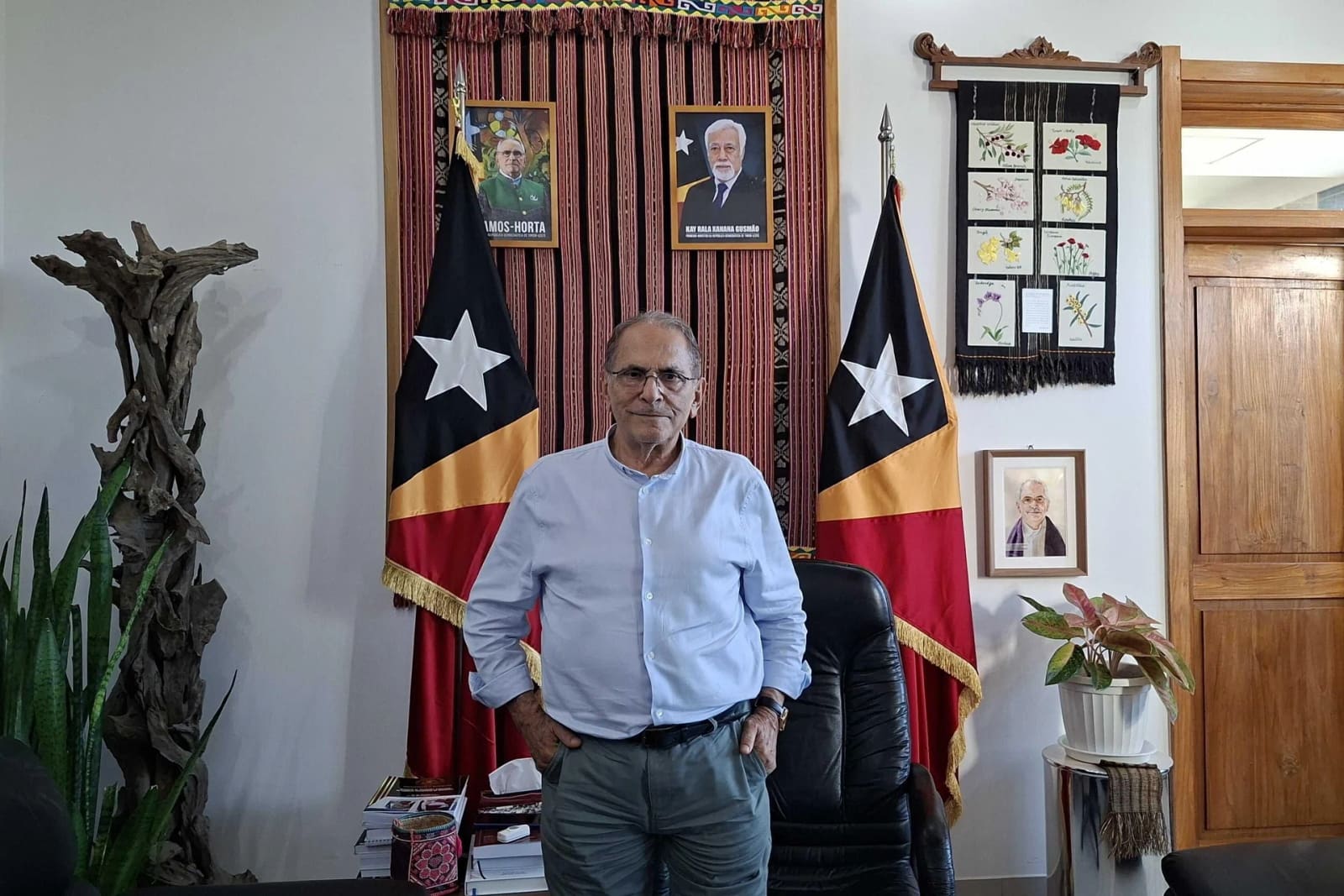
President José Ramos-Horta of Timor-Leste has a message for foreign investors hesitating at the threshold of Southeast Asia's youngest economy: stop waiting for perfection and start taking risks.
During an interview at the Presidential Palace in Dili, Ramos-Horta recalled watching a Chinese travelling salesman years ago pedal up a steep hill on a bicycle loaded with plastic containers. The president predicted the man would own his own shop within a year and expand it within five. The anecdote captures what Ramos-Horta sees as the entrepreneurial spirit needed to succeed in emerging markets.
"Why the Chinese are all over the world is not only because China is big and has billions of dollars to invest, but because they are not waiting for perfection for them to go to a country," Ramos-Horta said.
Structural Reform and Diversification Push
The message comes as Timor-Leste, which gained independence in 2002, pursues structural reforms aimed at reducing its dependence on oil revenues. The nation has long relied on petroleum exports to fund government operations, but volatile commodity prices and finite reserves have pushed policymakers toward economic diversification.
For investors accustomed to mature regulatory frameworks and established business infrastructure, Timor-Leste presents a different proposition. The country is still building out basic economic institutions, legal systems, and physical infrastructure that larger Southeast Asian economies take for granted.
Yet Ramos-Horta's pitch is deliberate. Rather than promise an "investor's heaven," he emphasizes the first-mover advantage available to those willing to navigate uncertainty. Early entrants can shape market dynamics, build relationships with government counterparts during policy formation, and establish brand presence before competition intensifies.
Regional Stability as Foundation
Ramos-Horta positioned the country's contribution to the Association of Southeast Asian Nations as centered on stability, according to the president. Timor-Leste became ASEAN's eleventh member in 2022, joining a bloc with a combined GDP exceeding three trillion dollars.
The stability argument matters for a nation that endured violent conflict during its path to independence. Demonstrating political continuity and peaceful governance becomes part of the investment case, signaling that early turbulence has given way to predictable institutions.
The Entrepreneurial Model
The president's reference to Chinese entrepreneurs reflects a broader pattern across developing Asia. Small traders and businesspeople often precede large institutional investors, testing markets with limited capital and high tolerance for operational challenges. These pioneers frequently succeed not despite difficult conditions but by adapting quickly to local realities.
For Timor-Leste, attracting this kind of risk-tolerant capital could accelerate sectors beyond oil, including agriculture, fisheries, tourism, and light manufacturing. The country's location between Indonesia and Australia positions it within regional supply chains, though infrastructure gaps remain significant.
What Comes Next
The pitch to foreign investors arrives at a moment when global capital is reassessing exposure to frontier markets. Rising interest rates in developed economies and geopolitical tensions have made investors more selective about where they deploy funds.
Timor-Leste faces competition from other emerging markets in the region, many with more developed infrastructure and larger domestic markets. Cambodia, Laos, and Myanmar, despite their own challenges, offer manufacturing ecosystems that Timor-Leste is only beginning to build.
Whether Ramos-Horta's call resonates will depend partly on how quickly structural reforms translate into tangible improvements in business conditions. Investors will watch for progress on legal frameworks, customs procedures, land tenure systems, and financial sector development.
The president's message is clear: opportunity exists for those willing to act before everything is perfect. The question is whether enough investors share that appetite for adventure.
RELATED STORIES
Qian Hu Launches Timor-Leste Venture to Capture Early Aquaculture Opportunity
Priyanka V. Rao · 3 min
Vietnam Bets $76 Billion Funding Gap Can Lure Capital Without Copying Rivals
Priyanka V. Rao · 4 min
Vietnam Pitches Itself as Southeast Asia Innovation Hub to New Zealand Investors
Priyanka V. Rao · 4 min
Philippines Logs P115 Billion Foreign Investment Surge in Q2
Priyanka V. Rao · 3 min
Spot something wrong? Email editor@briefasia.com. We log every correction publicly.