Finance · Banking
Thailand's Central Bank Tightens Oversight of Non-Bank Lenders and Payment Services
Bank of Thailand governor signals expanded supervision amid concerns over household debt and financial inclusion, targeting cash transactions worth at least 5 million baht
KEY TAKEAWAYS
- ·The Bank of Thailand is expanding oversight of non-bank lenders and payment providers, with proposed rules targeting cash transactions worth at least 5 million baht to prevent money laundering.
- ·The central bank has launched programs including SME Credit Boost, SME Secured Plus, and long-term household debt restructuring to address declining growth and structural economic challenges.
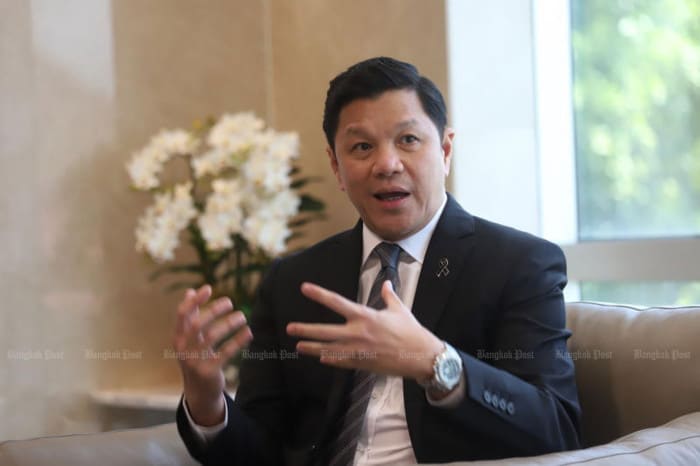
- ·Governor Vitai Ratanakorn questioned the value of macroeconomic stability targets if the economy deteriorates, businesses close, and poverty increases despite strong bank performance.
Expanded Regulatory Scope
The Bank of Thailand is expanding its regulatory perimeter to include closer supervision of lending and payment services offered by non-bank financial institutions, according to governor Vitai Ratanakorn. The move targets consumer protection and aims to prevent irregular transactions within Thailand's growing alternative finance sector.
In a Facebook post on Friday, Vitai outlined the central bank's intention to strengthen oversight across both credit provision and payment infrastructure operated outside the traditional banking system. The regulator recently opened public hearings on proposed rules governing risk management for cash-related transactions valued at a minimum of 5 million baht, part of efforts to prevent money laundering and other illicit financial activities.
Four-Pillar Strategy
The Bank of Thailand's approach centers on four structural areas: household debt management, financial inclusion for individuals and small to medium-sized enterprises, fairer pricing of financial services, and prevention of illicit capital flows.
On household debt, the central bank introduced a long-term debt restructuring program designed to help borrowers whose incomes have declined to levels where they can no longer cover expenses. Vitai raised the question of what purpose macroeconomic stability targets serve if the economy continues to deteriorate, businesses shut down, and more people fall into poverty.
For SMEs, the regulator has implemented two loan programs, SME Credit Boost and SME Secured Plus, to improve access to funding. The central bank has also worked to standardize 19 fee items across the banking sector to reduce financial costs for smaller enterprises and individual borrowers.
Pricing and Inclusion
The regulator's focus on fairer costs extends to fees and interest rates charged to individuals and SMEs. The Bank of Thailand wants to ensure that pricing for financial services reflects reasonable risk premiums rather than exploitative structures that can emerge in less-regulated segments of the market.
Financial inclusion remains a priority as the central bank seeks to broaden access to credit for underserved segments, particularly small businesses and lower-income households that may lack collateral or formal credit histories required by traditional banks.
Macroeconomic Context
Vitai acknowledged that Thailand's economic challenges are tied to both growth rates and growth potential, both of which have been declining due to numerous structural problems. Before the war in the Middle East, inflation remained relatively low and at times negative, while banks posted very strong performance and capital positions.
The governor noted that risks to price stability and financial stability have declined significantly, even as the central bank maintains its core mandate of macroeconomic stability. He emphasized that the regulator must adapt as risks change, stating that remaining static would prevent the institution from performing its role effectively or fulfilling its responsibilities.
Implementation and Timeline
The public hearing on cash transaction management represents the latest step in a broader regulatory evolution. The proposed rules target transactions that could facilitate corruption and illicit capital flows, requiring financial institutions to implement stronger risk controls.
The Bank of Thailand's shift toward non-bank oversight reflects a regional trend as regulators across Asia grapple with the rapid growth of fintech platforms, digital payment systems, and alternative lenders that operate outside traditional banking frameworks. These entities often serve segments of the population excluded from conventional finance but can also present consumer protection and systemic risk challenges.
Vitai's comments suggest the regulator views its expanded mandate as necessary to address the gap between macroeconomic indicators and lived economic reality for Thai households and businesses. The central bank's ability to maintain stability metrics while growth stagnates and debt burdens rise has prompted questions about whether policy frameworks designed for different economic conditions remain fit for purpose.
The coming months will test whether the Bank of Thailand's four-pillar approach can address structural weaknesses while supporting credit access and protecting consumers in an increasingly complex financial landscape.
RELATED STORIES

Thailand Launches $3 Minimum Bond Program to Boost Household Savings
Priyanka V. Rao · 4 min

ThaiBev Revenue Slips on Beer Weakness While Genting Singapore Profit Drops 33%
Priyanka V. Rao · 3 min

AI Demand Pushes Southeast Asia Data Centre Investment Despite Power Constraints
Cheng Wei-Lun · 2 min
Thai Baht's Brief Rally Masks Persistent Weakness Through Year-End
Priyanka V. Rao · 2 min
Spot something wrong? Email editor@briefasia.com. We log every correction publicly.