Technology · Products
Tesla Taps Samsung and LG for Cybercab Camera Supply
South Korean electronics giants secure camera module contracts for the automaker's robotaxi platform, marking a strategic shift from mobile to automotive AI hardware.
KEY TAKEAWAYS
- ·Tesla has chosen Samsung Electro-Mechanics and LG Innotek to supply camera modules for its Cybercab robotaxi platform.
- ·The contracts mark a strategic expansion for both Korean suppliers from smartphone components into automotive-grade hardware for autonomous systems.
- ·Vision-based perception remains central to Tesla's self-driving approach, with each robotaxi requiring multiple high-reliability cameras for 360-degree coverage.
Korean Suppliers Enter Tesla's Robotaxi Hardware Stack
Tesla has selected Samsung Electro-Mechanics and LG Innotek to provide camera modules for the Cybercab, the automaker's purpose-built robotaxi platform. The decision brings two of South Korea's largest electronics component makers into the supply chain for a vehicle designed to operate without human drivers.
Camera systems form the backbone of Tesla's approach to autonomous driving. The company has consistently rejected lidar in favor of vision-based perception, relying on multiple cameras positioned around each vehicle to feed data into its neural networks. For a robotaxi operating in urban environments without steering wheels or pedals, camera reliability and image quality become critical.
A Pivot from Smartphones to Automotive AI
Both Samsung Electro-Mechanics and LG Innotek have built their reputations supplying camera modules to smartphone manufacturers. Samsung Electro-Mechanics produces compact, high-resolution modules for flagship Galaxy devices, while LG Innotek has long been a primary camera supplier for Apple's iPhone lineup.
The automotive sector represents a fundamental shift in scale and requirements. Vehicle camera modules must withstand wider temperature ranges, higher vibration, and longer operational lifespans than consumer electronics. They also need to meet automotive safety standards, which demand redundancy and fault tolerance absent from mobile devices.
Physical AI applications, including robotics and autonomous systems, are driving demand for specialized imaging hardware. These use cases require sensors capable of real-time processing at the edge, low latency, and integration with compute platforms optimized for machine learning inference.
Implications for Asia's Component Ecosystem
The Cybercab camera contracts extend the reach of Korean suppliers beyond their traditional stronghold in consumer electronics. Seoul has emerged as a hub for advanced manufacturing in displays, batteries, and semiconductors. Automotive components represent the next frontier, with Hyundai Motor Group and its affiliates already anchoring a domestic EV supply chain.
For Samsung Electro-Mechanics and LG Innotek, Tesla's selection offers validation of their automotive-grade manufacturing capabilities. It also diversifies revenue streams as global smartphone sales plateau. The companies have invested heavily in cleanroom facilities and automated assembly lines capable of meeting automotive quality standards.
Tesla's supply chain decisions carry weight across Asia. The automaker's Shanghai Gigafactory sources batteries from CATL and LG Energy Solution, while its reliance on Taiwanese semiconductor packaging and Chinese rare earth materials underscores the region's centrality to EV production.
Deployment Timeline and Production Scale
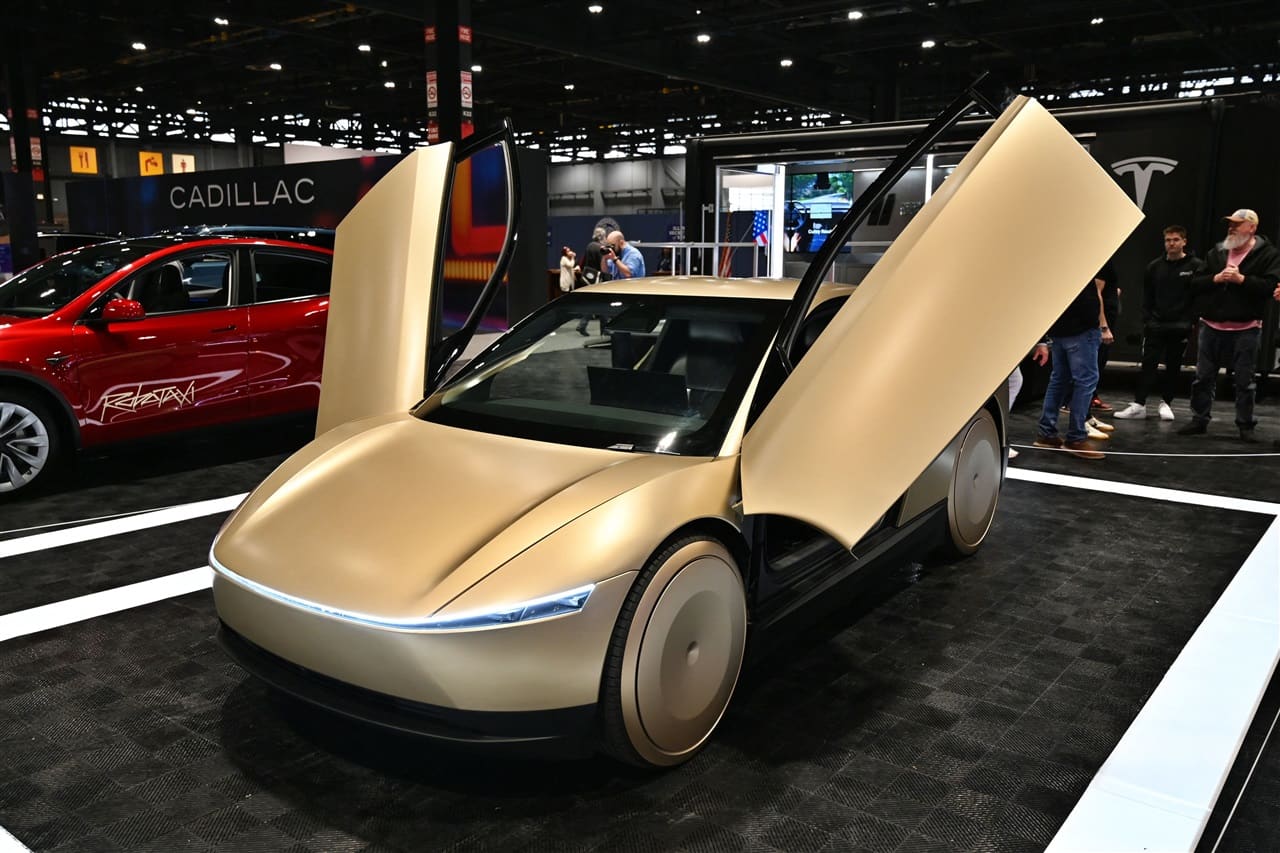
Tesla unveiled the Cybercab concept in late 2024, promising a vehicle optimized for ride-hailing networks rather than private ownership. The company has not disclosed a production timeline, but securing camera suppliers suggests progress toward manufacturing readiness.
Volume production of robotaxi camera modules will test the scalability of Samsung and LG's automotive operations. Each Cybercab will likely require eight or more cameras to provide 360-degree coverage, multiplying unit demand compared to smartphone applications.
The camera supply agreement also reflects Tesla's strategy of working with multiple vendors to reduce concentration risk. Dual-sourcing has become standard practice in the automotive industry, particularly for safety-critical components where supply disruptions can halt entire production lines.
What Comes Next
Tesla's camera architecture for the Cybercab will need to integrate with the company's custom AI chips and full self-driving software stack. The modules must deliver image data at high frame rates with minimal latency, requiring close coordination between hardware suppliers and Tesla's engineering teams.
Both Samsung Electro-Mechanics and LG Innotek are likely to leverage this partnership to pursue contracts with other automakers developing autonomous systems. The experience gained from Tesla's demanding specifications could position them as preferred suppliers for the next generation of vision-based driver assistance and autonomy platforms across the industry.
RELATED STORIES
Seoul Rejects Profit-Sharing Pressure on Samsung and SK Hynix
Cheng Wei-Lun · 3 min
BYD Enters Humanoid Robotics Market, Intensifying Competition With Hyundai
Cheng Wei-Lun · 3 min
South Korea Mobilizes Conglomerates for Humanoid Robot Push
Cheng Wei-Lun · 3 min
SK Hynix Eyes Stake Sale in $3 Billion China Packaging Facility
Cheng Wei-Lun · 2 min
Spot something wrong? Email editor@briefasia.com. We log every correction publicly.