Finance · Markets
Telekom Malaysia Profit Falls 9% as Restructuring Costs Offset Revenue Gains
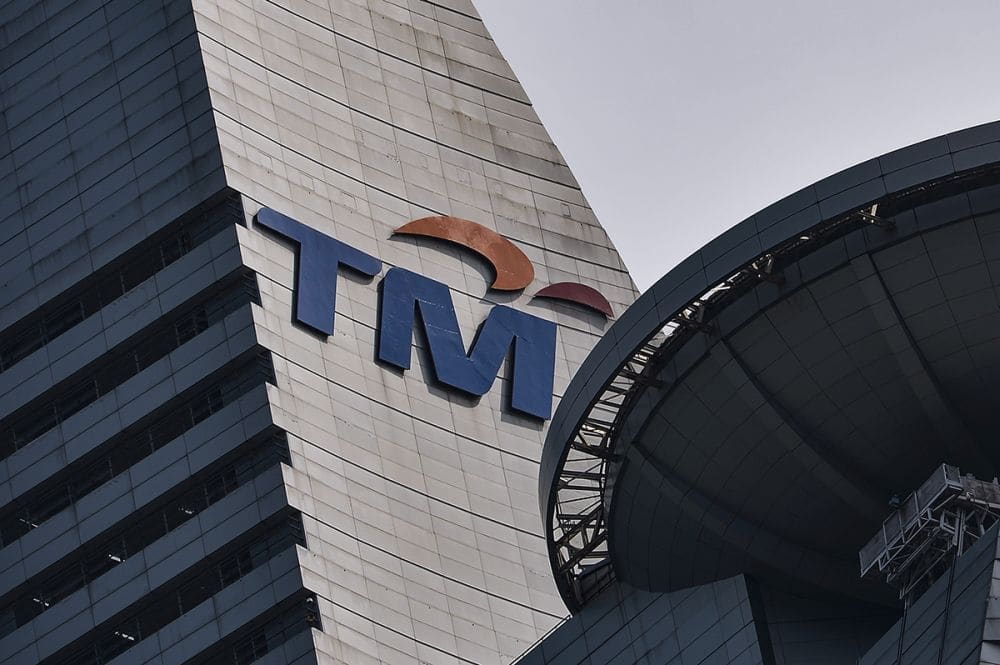
Malaysia's largest telco reported RM365.5 million in second-quarter net profit despite 7% revenue growth, as employee separation schemes and World Cup sponsorship weighed on margins
KEY TAKEAWAYS
- ·Telekom Malaysia reported second-quarter net profit of RM365.48 million, down 9.3 per cent year-on-year, while revenue rose 6.9 per cent to RM2.96 billion.
- ·Operating profit fell to RM545.5 million from RM640 million as Prihatin voluntary separation costs and FIFA World Cup 2026 sponsorship expenses compressed margins.
- ·The board declared a 7.0 sen interim dividend, bringing first-half payouts to 13.5 sen per share, and management reaffirmed full-year 2026 guidance.
Profit Decline Amid Revenue Growth
Telekom Malaysia posted net profit of RM365.48 million for the quarter ended June 30, down 9.3 per cent from RM402.97 million in the same period last year. Revenue climbed to RM2.96 billion from RM2.77 billion, driven by sustained demand for data services, information and communications technology solutions, and core telecommunications offerings.
Operating profit before other gains and finance costs fell sharply to RM545.5 million from RM640 million in the year-ago quarter. The carrier attributed the compression to costs associated with its Prihatin voluntary separation programme, which accommodates employees seeking early retirement or career changes, alongside investment in sponsorship rights for the FIFA World Cup 2026.
The divergence between top-line growth and bottom-line pressure underscores the near-term friction of workforce restructuring in Malaysia's telecoms sector. While data and enterprise ICT revenue streams continue expanding, one-off expenses tied to strategic repositioning are eroding profitability in the current quarter.
Restructuring and Strategic Bets
Telekom Malaysia's Prihatin initiative represents a deliberate effort to reshape the workforce for a digital-first operating model. By enabling voluntary exits, the company aims to reduce legacy cost structures and reallocate resources toward higher-margin segments such as cloud services, cybersecurity, and wholesale fibre infrastructure.
The FIFA World Cup sponsorship, meanwhile, signals an attempt to elevate brand visibility across Southeast Asia ahead of intensifying competition from regional carriers and over-the-top content platforms. Sponsorship outlays are typically front-loaded, meaning the financial impact concentrates in the quarters leading up to the tournament, with brand and subscriber acquisition benefits materialising later.
Datuk Amar Huzaimi Md Deris, group chief executive officer, described the first-half performance as evidence that the company's PWR 2030 strategy is gaining traction. That multi-year roadmap centres on three pillars: pioneering new digital services, winning in core connectivity markets, and revitalising legacy infrastructure assets. The strategy envisions Telekom Malaysia transitioning from a traditional fixed-line incumbent into a diversified digital services provider by the end of the decade.
Shareholder Returns and Forward Guidance
The board declared a second interim single-tier dividend of 7.0 sen per share for the financial year ending December 31, 2026, payable September 18. Combined with the first interim payment, total dividends for the first half reach 13.5 sen per share, maintaining the carrier's commitment to regular shareholder distributions even as it funds restructuring and capital expenditure.
Management reiterated confidence in meeting full-year 2026 financial guidance, citing disciplined execution and a focus on recurring revenue from enterprise and consumer segments. The company expects restructuring expenses to taper in the second half, allowing operating leverage to improve as revenue growth continues.
Regional Context and Competitive Pressures
Telekom Malaysia operates in a market shaped by aggressive fibre-to-the-home rollouts, rising mobile data consumption, and government-backed digitalisation mandates. Neighbouring carriers in Thailand, Indonesia, and Singapore are pursuing similar workforce optimisation programmes while expanding enterprise cloud and managed-services portfolios.
The Malaysian government's push for nationwide 5G coverage and public-sector cloud adoption presents both opportunity and execution risk. Telekom Malaysia's ability to capture enterprise contracts and wholesale infrastructure deals will depend on cost discipline and service differentiation in a commoditising connectivity landscape.
For investors, the current quarter illustrates a familiar tension: short-term margin pressure from necessary restructuring versus longer-term positioning in higher-value digital services. The trajectory of Prihatin-related costs and the payoff from World Cup brand investment will shape sentiment through year-end. Regional peers watching Telekom Malaysia's playbook will draw lessons on balancing legacy workforce transitions with the capital demands of next-generation network infrastructure.
RELATED STORIES
KPJ Healthcare Posts 27% Profit Jump on Complex Care Shift
Priyanka V. Rao · 2 min
Ringgit Strengthens as US Debt Burden Pressures Dollar
Priyanka V. Rao · 3 min

Ringgit Climbs as US Debt Crosses $40 Trillion, Pressures Dollar
Cheng Wei-Lun · 3 min
Kuala Lumpur Benchmark Climbs in Early Trade on Wall Street Gains
Priyanka V. Rao · 2 min
Spot something wrong? Email editor@briefasia.com. We log every correction publicly.