Travel & Dining · Trends
Taiwan High Speed Rail Takes Delivery of New Train Cars in Kaohsiung
The arrival marks the latest fleet expansion for the island's shinkansen-based rail network, operated since 2007
KEY TAKEAWAYS
- ·Taiwan High Speed Rail received new train cars at Kaohsiung port on Saturday, adding to its fleet on the 345-kilometer Taipei-Kaohsiung corridor.
- ·The shinkansen-based network carries approximately 200,000 passengers daily at peak periods, with punctuality rates above 99 percent since 2007.
- ·The delivery supports potential service expansion and fleet renewal as Taiwan HSR explores route extensions to Pingtung and Yilan.
Fleet Expansion Continues
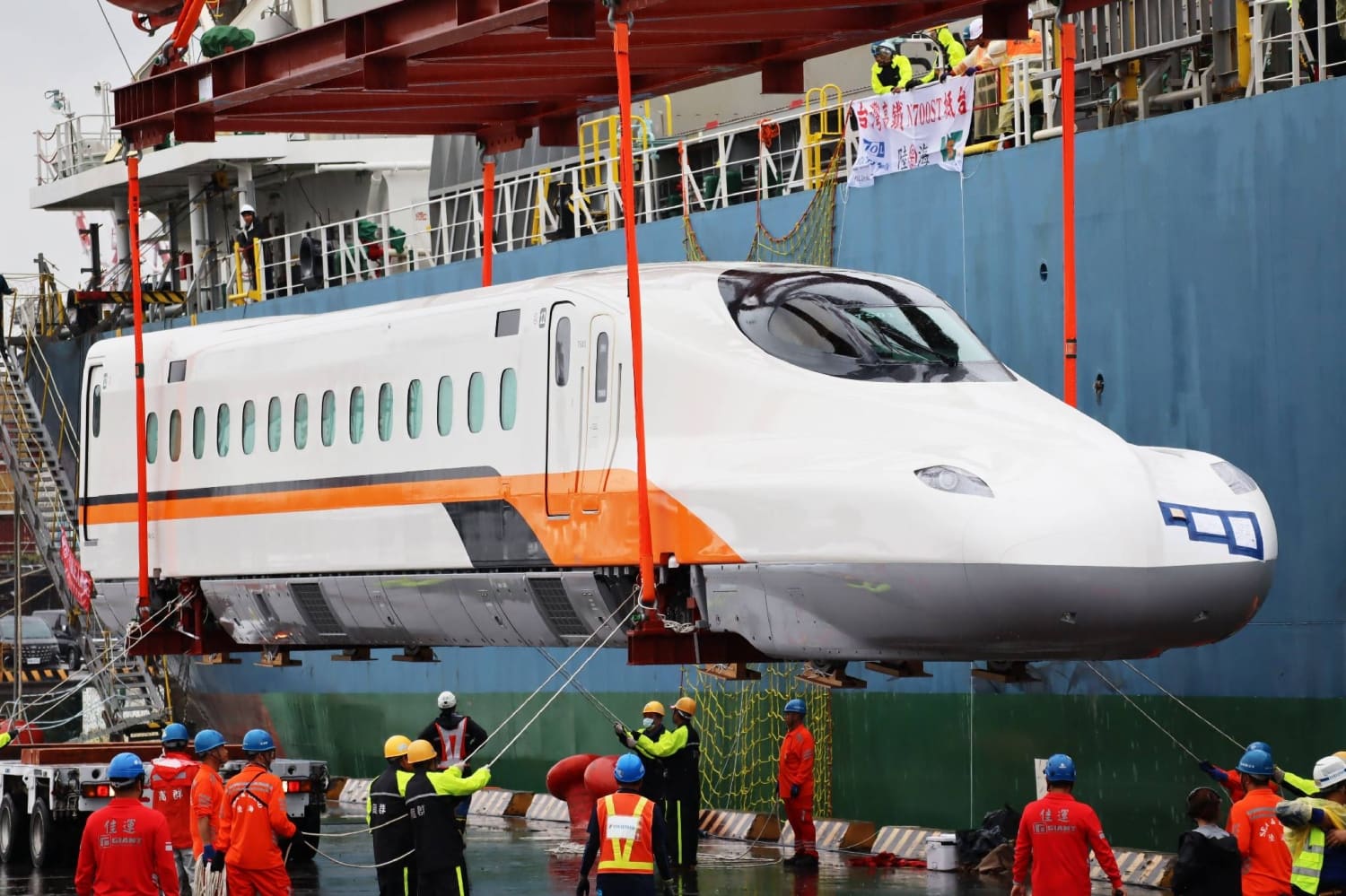
Taiwan High Speed Rail unloaded new train cars at a port facility in Kaohsiung on Saturday, according to Taiwan High Speed Rail Corporation. The delivery represents the latest addition to the island's bullet train fleet, which has operated along the 345-kilometer western corridor since commercial service began in 2007.
The new rolling stock arrived by cargo vessel at the southern port, one of Asia's busiest container and logistics hubs. Kaohsiung serves as a strategic entry point for rail equipment bound for Taiwan's high-speed network, with port infrastructure designed to handle the oversized dimensions and weight of train cars.
The Taiwan HSR Network
Taiwan High Speed Rail operates trains based on Japan's shinkansen technology, running at speeds up to 300 kilometers per hour. The system connects Taipei in the north to Zuoying in Kaohsiung, serving 12 stations across the island's most densely populated western plain.
The service carries approximately 200,000 passengers daily during peak periods, with ridership recovering to near pre-pandemic levels. Travel time between Taipei and Kaohsiung takes roughly 90 minutes on the fastest services, compared to more than four hours by conventional rail.
Taiwan HSR Corporation has periodically expanded its fleet to meet growing demand and replace aging units. The original train sets, delivered in the early 2000s, were manufactured in Japan and assembled with technology licensed from Japan Railway companies.
Regional Rail Modernization
The delivery comes as several Asian markets invest in high-speed rail infrastructure. Indonesia's Jakarta-Bandung line opened in 2023 using Chinese technology, while Thailand and Malaysia continue planning cross-border networks. Vietnam has revived discussions on a north-south high-speed corridor, though funding remains uncertain.
Taiwan's network stands as one of the region's most established, benefiting from early adoption of Japanese rail engineering and consistent operational performance. The system has maintained punctuality rates above 99 percent, a metric closely watched by transport ministries across Southeast Asia evaluating their own rail projects.
Fleet renewals also reflect the operational realities of high-speed rail: trains running at 300 kilometers per hour accumulate wear faster than conventional rolling stock, requiring regular maintenance cycles and eventual replacement. Taiwan HSR Corporation has not disclosed the total number of train cars in the latest order or the delivery schedule for additional units.
What Comes Next
The arrival of new equipment positions Taiwan HSR to maintain service frequency and potentially add routes or extend operating hours. The corporation has explored extending the line further south to Pingtung and north to Yilan, though both projects face engineering challenges related to mountainous terrain.
Kaohsiung's role as the receiving port underscores the city's importance in Taiwan's transport and logistics network. The port handles not only containerized cargo but also specialized shipments, including wind turbine components, industrial machinery, and now rail cars.
For travelers and investors watching Asia's rail sector, Taiwan's steady expansion offers a counterpoint to the more headline-grabbing mega-projects in China and India. The island's incremental approach, focused on reliability and ridership growth rather than record-breaking speeds or distances, reflects a mature market where high-speed rail is already woven into daily commuting patterns.
The new train cars will undergo testing and commissioning before entering passenger service, a process that typically takes several months. Taiwan High Speed Rail has not announced a target date for the units to begin commercial operation.
RELATED STORIES
Formosa Plastics and Daicel Launch Chip Materials Joint Venture in Taiwan
Cheng Wei-Lun · 3 min
Renminbi Faces Upward Pressure After US-Japan Yen Intervention
Cheng Wei-Lun · 3 min
TSMC and Sony Launch $4.69 Billion Sensor Joint Venture in Japan
Cheng Wei-Lun · 3 min
TSMC and Sony Form $1.77 Billion Image Sensor Venture in Japan
Cheng Wei-Lun · 3 min
Spot something wrong? Email editor@briefasia.com. We log every correction publicly.