Asia · Business
Taiwan's AIDC Lands $680 Million in Aerospace Contracts at Farnborough
The Taiwanese manufacturer secured deals with major aerospace firms for civilian aircraft and engine work, marking a strategic push into commercial aviation markets
KEY TAKEAWAYS
- ·Aerospace Industrial Development Corp secured contracts worth NT$22 billion (US$680.27 million) for civilian aircraft and engine work at the Farnborough International Airshow.
- ·The deals mark a strategic shift for the Taiwanese defense manufacturer toward commercial aviation, a sector with longer production runs and more stable revenue than military projects.
- ·Taiwan's aerospace sector is competing with Japan, South Korea, and Singapore for supply chain positions as Boeing and Airbus ramp up narrow-body production through 2027.
Taiwan Stakes Claim in Commercial Aerospace
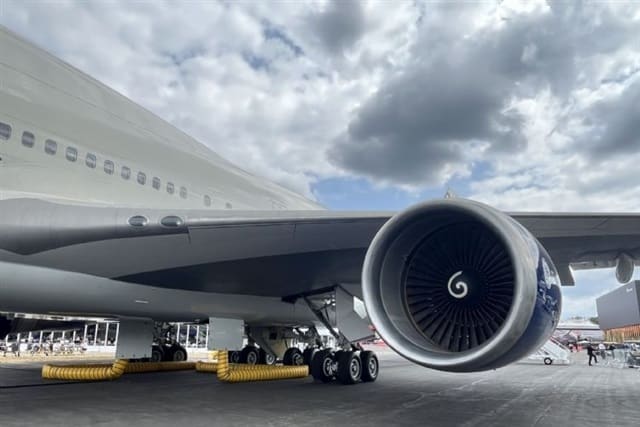
Aerospace Industrial Development Corp (AIDC), Taiwan's state-backed aircraft manufacturer, has locked in contracts exceeding NT$22 billion (US$680.27 million) with multiple aerospace companies at the Farnborough International Airshow, according to the company. The agreements cover work on civilian aircraft and engine manufacturing, representing one of the largest commercial aviation contract hauls for a Taiwanese aerospace firm in recent years.
The deals were signed during the July airshow in the United Kingdom, one of the industry's two premier trade events alongside the Paris Air Show. AIDC did not disclose the names of the contracting parties or the specific aircraft programs involved, but the scale of the commitments suggests participation in established narrow-body or wide-body supply chains rather than experimental projects.
Taiwan's Aerospace Ambitions Beyond Defense
AIDC has historically focused on military aircraft, including indigenous defense programs and maintenance contracts for Taiwan's air force. The company manufactures the domestically developed Advanced Jet Trainer and has participated in upgrade programs for legacy fighter fleets. Its pivot toward commercial aviation reflects a broader strategy among Asian aerospace manufacturers to diversify revenue streams and tap into the projected growth of global air travel, particularly within the Asia-Pacific region.
Taiwan's aerospace sector has built expertise in precision machining, composite materials, and systems integration, capabilities that translate readily to civilian aircraft production. The island's position in advanced manufacturing supply chains, particularly for semiconductors and electronics, offers adjacencies that commercial aviation primes increasingly value. However, Taiwanese firms have historically played supporting roles in airframe and engine production, with limited direct relationships to Boeing, Airbus, or major engine manufacturers.
The Farnborough contracts position AIDC to move up the value chain. Engine work in particular demands tight tolerances and materials science capabilities, and tier-one engine contracts typically carry multi-year revenue visibility. Civilian aircraft programs also tend to have longer production runs and more stable order books than defense projects, which are subject to budget cycles and geopolitical shifts.
Regional Context and Competitive Pressures
Asia has become a critical battleground for aerospace manufacturing. Japan's Mitsubishi Heavy Industries, South Korea's Korean Aerospace Industries, and Singapore's ST Engineering all compete for work packages from Western primes. China's state-owned aviation conglomerates, meanwhile, are building parallel domestic supply chains to support the COMAC C919 and other indigenous aircraft programs, creating both competitive pressure and, for some firms, market access challenges.
Taiwan's aerospace companies operate in a distinct policy environment. The island's defense needs drive significant government investment in indigenous capabilities, but export restrictions and diplomatic isolation complicate participation in some multinational programs. Commercial aviation, by contrast, operates on a more straightforward vendor qualification and cost-competitiveness basis, making it a more accessible growth vector for Taiwanese manufacturers.
The timing of AIDC's contract wins coincides with a broader ramp-up in commercial aircraft production. Boeing and Airbus have both announced plans to increase narrow-body output through 2027, and engine manufacturers are managing record backlogs. Supply chain bottlenecks, particularly for castings, forgings, and machined components, have created opportunities for qualified second- and third-tier suppliers to secure new business.
What the Numbers Mean
The NT$22 billion figure represents roughly 15 percent of AIDC's trailing twelve-month revenue, based on the company's most recent financial disclosures. The contracts likely span multiple years, with revenue recognition tied to delivery milestones. Aerospace work packages typically involve upfront tooling and qualification costs, followed by recurring production revenue as aircraft or engines move through assembly.
For Taiwan's aerospace sector as a whole, the deals underscore a multi-year effort to build commercial aviation credentials. The island's Industrial Technology Research Institute and government-backed development programs have invested in composite manufacturing, additive manufacturing for aerospace parts, and advanced non-destructive testing, all aimed at positioning Taiwanese suppliers for higher-value work.
Whether AIDC can convert these contracts into sustained commercial aviation market share will depend on execution, quality performance, and its ability to secure follow-on work as current programs mature. The company's historical strength in complex defense manufacturing suggests it has the technical foundation, but commercial aerospace demands scale, cost discipline, and long-term relationships that differ from military contracting dynamics.
Farnborough serves as a bellwether for the aerospace industry's health and deal flow. The fact that a Taiwanese manufacturer emerged as one of the show's contract winners signals both the geographic diversification of aerospace supply chains and the increasing role of Asian manufacturers in sustaining the global commercial aviation buildout.
RELATED STORIES
Eurasian Security Bloc Convenes as Shein Prices Hong Kong IPO
Cheng Wei-Lun · 3 min
Taiwan's National Security Council Expands Role in Defense Strategy
Cheng Wei-Lun · 3 min

Taiwan Consumer Confidence Falls Amid Record Growth Forecasts
Cheng Wei-Lun · 2 min
Taiwan GDP Growth Forecast Lifted to 11.6% on AI Chip Demand
Cheng Wei-Lun · 3 min
Spot something wrong? Email editor@briefasia.com. We log every correction publicly.