Sustainability · Energy
SunAsia Commits $250 Million to Twin Floating Solar Plants on Laguna Lake
Philippine developer eyes 264 MW capacity across two projects, targeting 2028 commissioning as Manila accelerates renewable energy build-out
KEY TAKEAWAYS
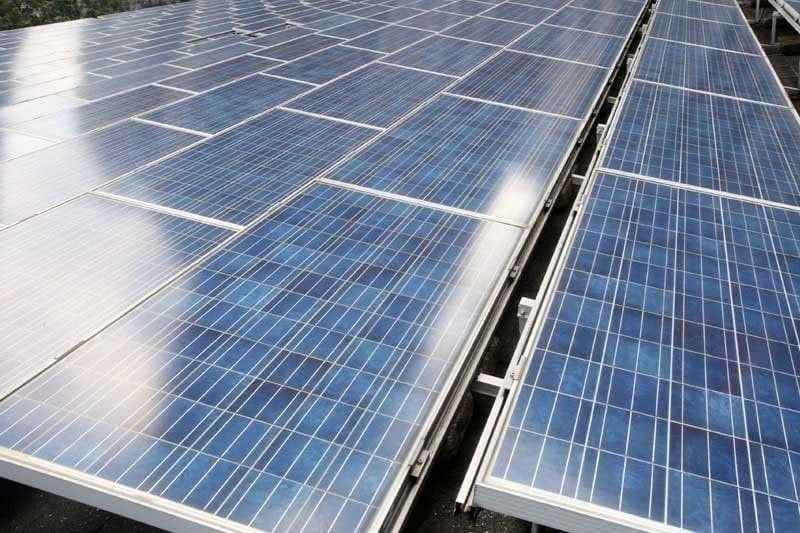
- ·SunAsia Energy is investing more than 12 billion pesos for two floating solar plants on Laguna Lake, each rated at 131.79 megawatts-peak and targeting January 2028 commercial operations.
- ·The projects will occupy two of ten designated water blocks administered by the Laguna Lake Development Authority, feeding power into Metro Manila's congested distribution networks.
- ·Combined output is projected to serve approximately 278,000 households and displace roughly 460,888 metric tons of carbon dioxide annually once operational.
A Quarter-Billion Bet on Water-Borne Generation
SunAsia Energy Inc. has earmarked more than 12 billion pesos (approximately $250 million) for a pair of utility-scale floating solar installations on Laguna Lake, the Philippines' largest inland body of water. Two wholly-owned subsidiaries, NewAsia Power Energy II Corp. and Nortesol II Inc., filed separate environmental compliance applications with the Department of Environment and Natural Resources for projects rated at 131.79 megawatts-peak apiece, according to regulatory filings.
The plants will occupy two of ten designated water blocks administered by the Laguna Lake Development Authority. NewAsia Power Energy II will construct the Sta. Rosa facility; Nortesol II will handle the Cabuyao 1 site. Each carries an indicative capital expenditure of roughly 6 billion pesos and is designed for a 25-year operating life.
Site preparation is scheduled to begin this month, with turbine and module installation running through the end of 2027. Both facilities are slated to enter commercial service in January 2028.
Strategic Positioning in Manila's Power Corridor
Laguna Lake lies immediately southeast of Metro Manila, placing the projects within the Luzon grid's congested load pocket. The combined 264 MWp of capacity will feed directly into distribution networks serving the capital region and adjacent industrial zones in Cavite and Laguna provinces, areas that have faced recurring voltage issues during peak demand.
Floating photovoltaic arrays carry two advantages over land-based installations in the densely populated corridor. First, they sidestep land acquisition and clearance costs in one of Southeast Asia's most expensive real-estate markets. Second, the water surface moderates panel temperatures, yielding marginal efficiency gains over terrestrial counterparts.
The Lake Authority's block-allocation framework, introduced in 2024, was designed to avoid the permitting bottlenecks that have stalled earlier offshore renewable proposals. By pre-zoning sections of the lake and publishing technical guidelines, the agency compressed feasibility timelines for developers willing to work within prescribed parameters.
Broader Portfolio and Regional Partnerships
SunAsia, led by former agriculture undersecretary Tetchi Capellan, has positioned itself as a specialist in water-based solar. Earlier this year the company signed a joint-venture agreement with VinEnergo, a Vietnamese state-linked developer, to deploy $406 million across three solar-on-water projects totaling 422 MWp in Pampanga and Negros Occidental. Those installations mount panels on concrete pile structures above fishponds and shallow coastal waters, allowing aquaculture operations to continue below.
The Laguna Lake projects employ a similar engineering approach but at greater scale. Once operational, the twin facilities are expected to generate enough electricity to serve approximately 278,000 households and displace roughly 460,888 metric tons of carbon dioxide equivalent annually, according to SunAsia's environmental impact statements.
The Philippines remains heavily reliant on coal and imported liquefied natural gas for baseload generation. Renewable energy accounted for 22 percent of the national generation mix in 2025, below the government's interim target of 35 percent by 2030. Floating solar represents one of the few scalable options in a country where arable land is scarce and rooftop installations face fragmented ownership structures.
Execution Risk and Regulatory Momentum
The aggressive construction schedule leaves little margin for delays. Floating solar projects require specialized pontoons, marine-grade cabling, and mooring systems engineered to withstand typhoon conditions. Supply-chain lead times for these components have stretched in recent quarters as Chinese manufacturers prioritize domestic orders.
Environmental clearance, while procedurally streamlined under the Lake Authority's block system, still requires public consultations and third-party impact assessments. Any objections from lakeside municipalities or fishing cooperatives could push commissioning dates beyond the January 2028 target.
Still, SunAsia's track record and the involvement of VinEnergo, which has deployed more than 1.5 gigawatts of solar capacity across Vietnam, suggest the company has access to the technical expertise and vendor relationships needed to execute on schedule.
Manila's policy environment has turned decidedly pro-renewables over the past eighteen months. The Department of Energy recently signaled it will prioritize grid-connection agreements for projects that can demonstrate financial close and shovel-ready status, a shift that favors well-capitalized developers like SunAsia over speculative entrants.
If the Laguna Lake plants come online as planned, they will mark the largest floating solar deployment in the Philippines and one of the largest in Southeast Asia outside Thailand. More importantly, they will test whether water-based generation can be delivered at tariff rates competitive with conventional thermal power, a threshold that will determine whether the model scales beyond pilot projects.
RELATED STORIES
Seventeen Firms Compete for Manila's $200 Million Geothermal Risk Fund
Priyanka V. Rao · 3 min

Koloma Targets Fourth Philippine Hydrogen Block in Offshore Palawan Push
Tran Quoc Bao · 3 min

Five ASEAN Members Back Regional Oil Stockpile as Study Nears Completion
Tran Quoc Bao · 3 min

Philippines Energy Budget Climbs 26% as Electric Vehicle Funding Surges
Priyanka V. Rao · 3 min
Spot something wrong? Email editor@briefasia.com. We log every correction publicly.