Sustainability · Energy
Seventeen Firms Compete for Manila's $200 Million Geothermal Risk Fund
Philippines launches exploration support program covering half of drilling costs to unlock clean energy capacity and reduce exposure to imported fuel volatility
KEY TAKEAWAYS
- ·Seventeen power companies are competing for Manila's 10 billion peso geothermal derisking facility, which will cover up to 50% of exploration drilling costs.
- ·Each exploratory well requires $6 million to $8 million in investment, with convertible loans turning into grants if drilling fails to confirm viable resources.
- ·The Philippines ranks third globally in geothermal capacity, and the facility aims to expand bankable projects while reducing reliance on imported fuel.
Race for Risk Capital
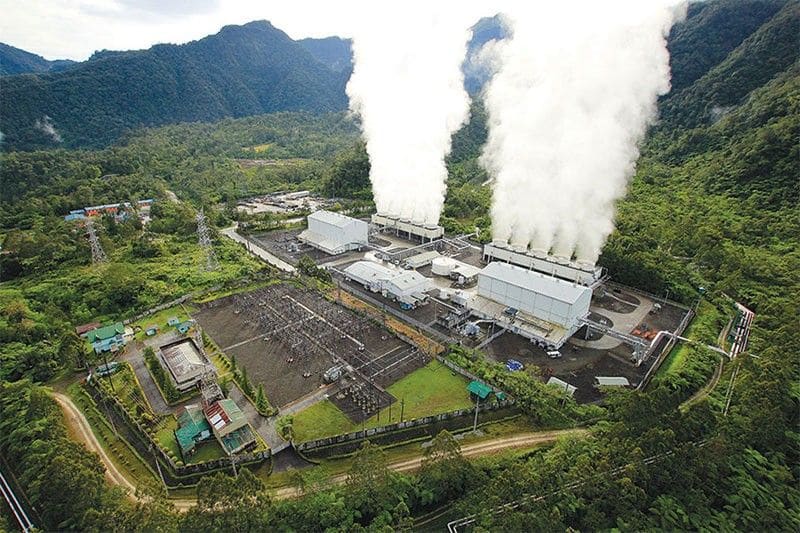
Seventeen power companies are competing for access to Manila's 10 billion peso ($200 million) geothermal exploration fund, a financing mechanism designed to absorb the upfront risk of drilling in one of the world's most active volcanic regions.
Twelve firms have committed applications to the Philippine Geothermal Resource Derisking Facility, according to Energy Undersecretary Rowena Cristina Guevara, with five additional companies positioned as alternates. The applicant pool includes ventures with foreign equity participation, though none are entirely foreign-owned.
The Asian Development Bank is preparing to issue a tender for technical evaluators who will assess the applications on behalf of the Department of Energy. Selection criteria and timeline have not been disclosed.
How the Mechanism Works
The facility addresses the single largest barrier in geothermal development: exploration risk. A single exploratory well requires investment between $6 million and $8 million, with no guarantee of viable steam or heat resources at commercially exploitable temperatures and pressures.
Under the derisking structure, the government will provide cost-shared support covering up to 50% of drilling expenses through convertible loans. If exploration fails to confirm viable resources, the loans convert to grants, eliminating repayment obligations and capping developer losses at half the exploration cost.
The Economy and Development Council, chaired by President Ferdinand Marcos Jr., approved the facility at its tenth meeting. Energy Secretary Sharon Garin framed the program as a hedge against fuel import volatility, noting that successful exploration would expand the pipeline of bankable geothermal projects and strengthen grid resilience.
Regional Context
The Philippines ranks third globally in installed geothermal capacity, trailing only the United States and Indonesia. The country sits on the Pacific Ring of Fire, with significant untapped hydrothermal reservoirs across Luzon, Visayas, and Mindanao.
Geothermal currently provides baseload power to the Luzon and Visayas grids, operating at capacity factors above 80%. Unlike solar and wind, geothermal plants deliver dispatchable output around the clock, making them a critical complement to variable renewables as Manila pursues coal phasedown targets.
Indonesia, the regional leader, has struggled to monetize its geothermal potential despite larger reserves, hampered by permitting delays and inadequate risk-sharing frameworks. Manila's facility represents a policy experiment closely watched across Southeast Asia, where volcanic arc nations face similar exploration economics.
Financial Architecture
The 10 billion peso fund will be deployed over multiple exploration cycles. Successful projects that confirm commercial resources will repay the convertible loans, recycling capital back into the facility for subsequent drilling campaigns.
Projects that fail during exploration will not trigger repayment, with the government absorbing the loss. This asymmetric risk profile is intended to lower the hurdle rate for private capital, particularly for smaller developers without balance sheets capable of absorbing total write-offs.
The structure mirrors derisking facilities deployed in Kenya and Ethiopia, where multilateral development banks have used similar convertible instruments to catalyze geothermal exploration in frontier markets. Early results in East Africa show the model can reduce the effective cost of capital for geothermal by 200 to 300 basis points.
What Comes Next
Evaluation of the twelve committed applications will begin once the ADB-procured technical advisors are in place. Undersecretary Guevara did not specify a timeline for fund disbursement or the start of drilling operations.
The facility's ability to recycle capital will depend on hit rates during exploration. Industry benchmarks suggest that 30% to 40% of exploratory wells in proven geothermal fields confirm commercial viability, though success rates in greenfield areas can fall below 20%.
If the initial cohort of projects performs in line with global averages, the facility could support exploration of between 15 and 25 wells across multiple sites. Each successful confirmation would add between 20 and 50 megawatts of potential capacity, assuming standard field development economics.
Manila has not disclosed whether the facility will prioritize projects in established geothermal corridors or encourage exploration in underexplored provinces. That decision will shape both the risk-return profile of the fund and the geographic distribution of new capacity across the archipelago.
RELATED STORIES
Manila's Hyperscaler Bet Draws Fire Over Job Creation and Grid Strain
Priyanka V. Rao · 5 min
Philippine Nickel Miners Push for Unified Policy Framework as Critical Minerals Race Intensifies
Priyanka V. Rao · 3 min
Southeast Asian Firms Race to Raise Green Debt as Region Falls Behind on Renewables
Priyanka V. Rao · 3 min
JCR Holds Philippines at A- as Growth Slows to Mid-3% Range
Priyanka V. Rao · 3 min
Spot something wrong? Email editor@briefasia.com. We log every correction publicly.