Travel & Dining · Trends
Spicy Noodle Maker Partners With Seoul to Turn Viral Fame Into Tourist Arrivals
Samyang Foods links up with South Korea's Culture Ministry to convert Buldak's global popularity into measurable travel demand, leveraging brand recognition across Southeast Asia and beyond.
KEY TAKEAWAYS
- ·Samyang Foods signed a formal agreement with South Korea's Culture Ministry to use its Buldak noodle brand in joint tourism promotion efforts targeting international travelers.
- ·The partnership reflects a shift toward leveraging consumer brands with organic overseas reach as tools for driving travel demand, rather than relying solely on heritage sites.
- ·Measuring the impact of food brand partnerships on actual tourist arrivals remains a challenge, requiring more sophisticated attribution methods than most national tourism agencies currently use.
From Convenience Store to Passport Stamp
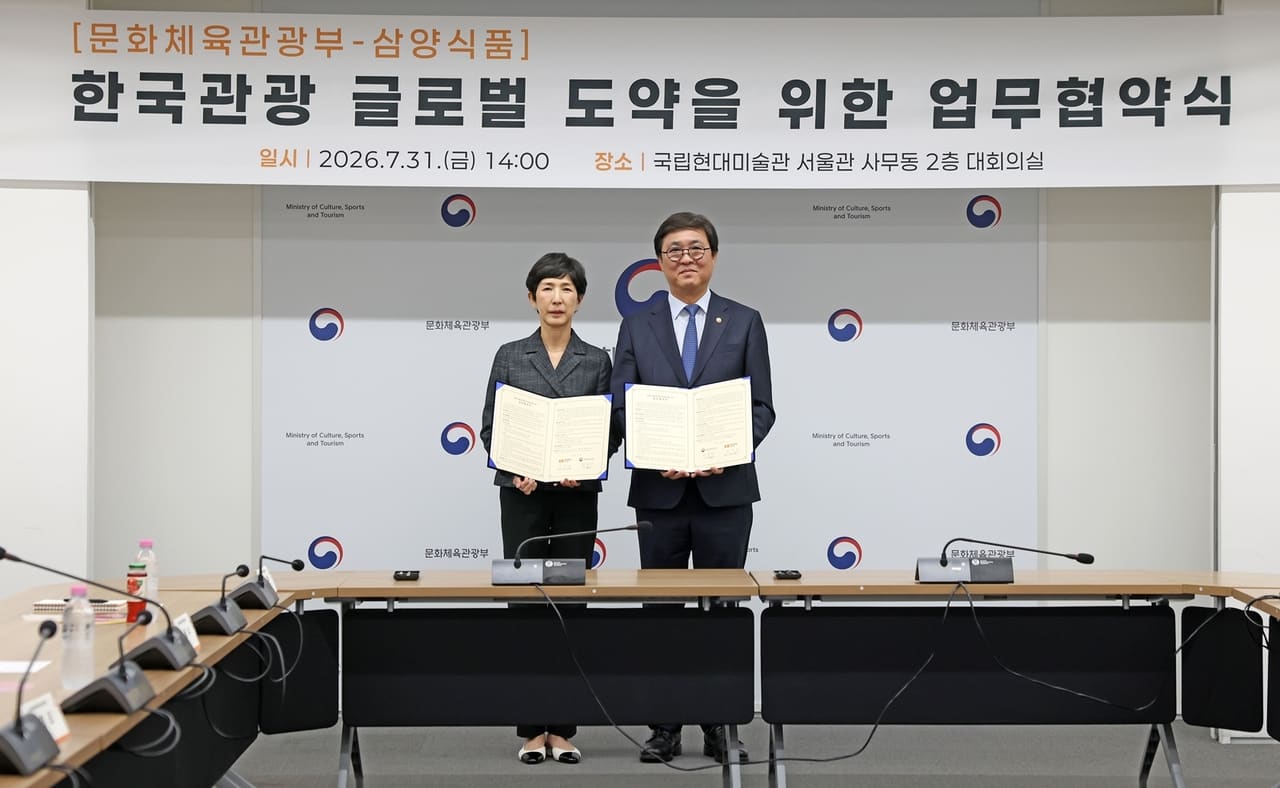
A Korean instant noodle brand known for its fiery heat is now helping to shape the country's tourism strategy. Samyang Foods announced a formal partnership with the Ministry of Culture, Sports and Tourism, turning social media buzz around its Buldak line into a tool for attracting international visitors. The memorandum of understanding was signed at the National Museum of Modern and Contemporary Art in Seoul, marking one of the first times a food manufacturer has been directly enlisted in national tourism promotion efforts.
The collaboration reflects a broader shift in how Asian governments are thinking about soft power. Rather than relying solely on heritage sites or natural landscapes, officials are increasingly recognizing that consumer brands with genuine overseas traction can serve as entry points for travel decisions. Samyang's Buldak products, which have generated millions of social media posts and challenge videos across platforms, offer a case study in converting digital virality into physical movement.
The Numbers Behind the Heat
Samyang's export figures underscore why the Culture Ministry sees value in the tie-up. The company ships Buldak noodles to more than 100 markets, with particularly strong performance in Southeast Asia, North America, and parts of Europe. While the company has not disclosed exact export revenue for the Buldak line, industry observers note that spicy noodle varieties now account for a significant share of South Korea's total instant noodle exports, which reached approximately $900 million in 2025 according to data from the Korea Agro-Fisheries & Food Trade Corporation.
The partnership aims to leverage that distribution footprint. Under the agreement, Samyang will incorporate tourism messaging into its overseas marketing campaigns, while the Culture Ministry will feature the brand in promotional materials targeting key source markets. The specific mechanics include co-branded content, potential packaging collaborations, and joint participation in food expos and travel trade shows.
Asia's Culinary Tourism Playbook
South Korea is not alone in recognizing the link between food brands and travel. Thailand has long promoted its cuisine as a diplomatic asset, with the government supporting Thai restaurant openings abroad as informal tourism offices. Japan's regional governments have funded campaigns around sake breweries and ramen shops to drive visits to secondary cities. Malaysia's durian festivals and Singapore's hawker center heritage listings serve similar functions, translating taste into ticket sales.
What distinguishes the Samyang arrangement is the directness of the partnership and the brand's digital-native appeal. Buldak's popularity was not engineered by state agencies but emerged organically through user-generated content and challenge culture. The government is effectively drafting an existing cultural export rather than creating one from scratch.
Operational Questions
Several practical challenges remain. The first is attribution. Measuring how many travelers cite a noodle brand as a factor in their decision to visit South Korea will require more sophisticated survey methods than most national tourism organizations currently deploy. The second is geographic mismatch. Buldak sells well in markets where South Korea already enjoys strong tourism demand, but it is less clear whether the brand can open new source markets or deepen penetration in places where visa barriers, flight capacity, or economic conditions limit travel.
The third is brand risk. Associating a commercial product too closely with national identity can backfire if quality issues, supply chain controversies, or shifts in consumer taste emerge. Samyang will need to maintain product consistency and brand equity across dozens of markets while also serving as a quasi-official ambassador.
What Comes Next
The partnership is being watched by other consumer goods companies in the region. If the collaboration produces measurable increases in travel intent or actual arrivals from target demographics, expect similar agreements between governments and snack makers, beverage brands, or cosmetics firms with strong export profiles. The model could also extend beyond food. South Korean beauty brands, Japanese whisky distillers, and Taiwanese bubble tea chains all command loyal followings that might be converted into tourism pipelines.
For now, the success of the Samyang-Culture Ministry partnership will hinge on execution. Joint campaigns are scheduled to roll out in the second half of 2026, with initial focus on markets where Buldak already has distribution scale. The government is betting that a bowl of spicy noodles can do more than satisfy a craving; it can also prompt a flight booking.
RELATED STORIES
Samsung and SK Hynix Turn Down KEPCO's Multibillion-Dollar Prepayment Demand
Cheng Wei-Lun · 4 min
South Korea's Export Surge Powers Economic Upturn Through Third Quarter
Jun-ho Seo · 4 min

South Korea Targets $40,000 Per Capita Income as GDP Growth Accelerates
Jun-ho Seo · 4 min

LG Pivots to AI-Defined Vehicle Platform as Korea Chases China's Self-Driving Lead
Jun-ho Seo · 3 min
Spot something wrong? Email editor@briefasia.com. We log every correction publicly.