Asia · Trade
Southeast Asia Quietly Honors US Trade Pacts Despite Legal Void
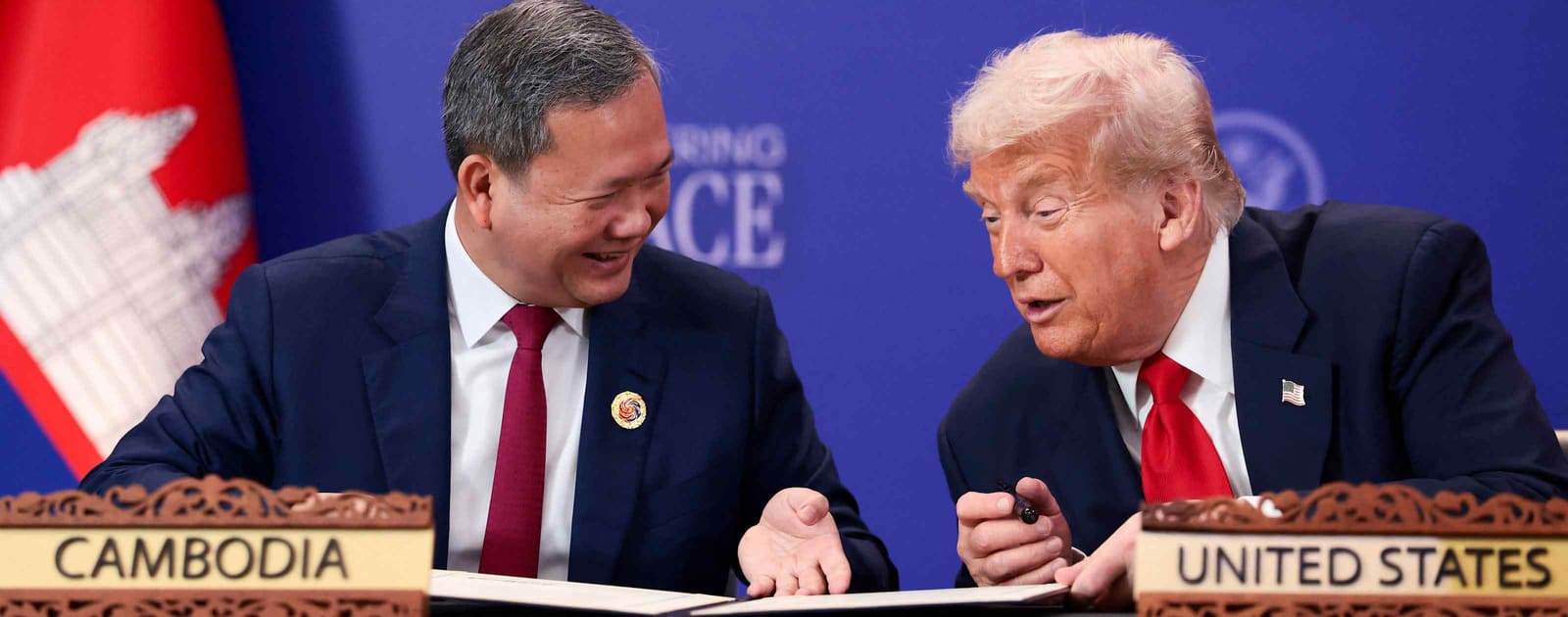
Cambodia and regional partners continue implementing agreement provisions months after court ruling invalidated bilateral deals with Washington
KEY TAKEAWAYS
- ·Cambodia and other ASEAN members are implementing customs, intellectual property, and transparency measures from US trade agreements despite a court ruling that voided the deals earlier this year.
- ·The continued adherence reflects domestic reform priorities and investor stability concerns, with Cambodia attracting USD 4.2 billion in foreign direct investment in 2025 tied to export supply chains.
- ·Businesses face legal uncertainty as the informal arrangements lack enforceability and dispute resolution mechanisms, with trade lawyers warning the status quo could collapse if political conditions shift.
Agreements Live On in Practice
Cambodia and other Southeast Asian nations continue to implement measures tied to bilateral trade agreements with Washington, despite a judicial ruling that voided the pacts and mounting regional frustration over their terms. The observation comes from a senior US business representative based in the region, who noted the gap between legal status and practical policy.
The phenomenon points to a pragmatic calculus by ASEAN governments: maintain parts of the frameworks that serve domestic reform agendas or stabilize investor expectations, even when the formal legal architecture has collapsed. For businesses operating across the region, the result is a patchwork of half-honored commitments that vary by country and sector.
The Legal Limbo
A court decision earlier this year struck down the bilateral deals, which had been negotiated during the previous US administration's pivot to transactional engagement with individual ASEAN members. The ruling found procedural flaws in how the agreements were ratified, rendering them unenforceable under international law.
Yet enforcement on the ground tells a different story. According to the US business leader, Cambodia has moved forward with customs procedural changes, intellectual property enforcement upgrades, and transparency measures that were embedded in its agreement with Washington. Other countries in the bloc have similarly maintained selective adherence to provisions that align with their broader economic modernization goals.
Why Governments Are Sticking With It
The continued implementation reflects overlapping interests. Many of the agreement provisions, particularly around regulatory transparency and digital trade facilitation, dovetail with reforms ASEAN members were already pursuing under regional frameworks like the ASEAN Economic Community blueprint.
For Cambodia specifically, maintaining elements of the US deal signals stability to foreign investors who had factored the agreement into long-term planning. The country attracted USD 4.2 billion in foreign direct investment in 2025, much of it in manufacturing and logistics tied to export supply chains serving North American markets.
There is also a diplomatic dimension. By honoring parts of the agreements, governments preserve room for future negotiations should Washington revisit the terms or seek a multilateral reset with the region. Abandoning implementation entirely would close that door.
Business Frustration Remains
The business community, however, remains caught in the middle. The lack of formal enforceability means companies cannot invoke dispute resolution mechanisms or rely on the agreements in legal proceedings. That uncertainty complicates compliance decisions and investment timelines.
US firms operating in the region have pressed both Washington and ASEAN capitals to clarify the status of the agreements or negotiate replacements. The American Chamber of Commerce in Singapore and similar bodies in Bangkok and Jakarta have flagged the issue in recent briefings with trade officials.
Regional trade lawyers note that the current situation, while workable in the short term, creates risk for businesses that made capital commitments based on the agreements. If political winds shift or a new administration in Washington takes a harder line, the informal arrangements could evaporate quickly.
What Comes Next
The trajectory depends largely on US policy direction. The current administration has shown limited appetite for deep trade engagement in Asia, focusing instead on tariff-based measures and narrower sector agreements. That leaves ASEAN governments with little clarity on whether a formal replacement framework is forthcoming.
In the meantime, the status quo persists: agreements that exist in practice but not in law, honored selectively and without guarantees. For businesses and policymakers alike, it is a workable compromise, but one that highlights the fragility of trade architecture built on bilateral deals rather than durable multilateral foundations.
The region's approach also underscores a broader shift in how ASEAN navigates great-power competition. Rather than wait for Washington or Beijing to dictate terms, individual members are carving out space to pursue their own interests, even when that means operating in legal gray zones.
RELATED STORIES

Five ASEAN Members Back Regional Oil Stockpile as Study Nears Completion
Tran Quoc Bao · 3 min

Southeast Asian Firms Overlook Digital Pact Worth USD 2 Trillion
Lim Hui Ying · 4 min

Southeast Asian Factories Adopt Proximity Planning to Retain Workers and Investors
Lim Hui Ying · 3 min

Energy Infrastructure Deals Climb in Southeast Asia Amid AI Demand and Security Concerns
Cheng Wei-Lun · 4 min
Spot something wrong? Email editor@briefasia.com. We log every correction publicly.