Technology · Dev
Southeast Asia Builds PCB Capacity as AI Infrastructure Demand Surges
Thailand, Vietnam, and Malaysia are expanding electronics manufacturing beyond consumer devices into advanced circuit boards and semiconductor components
KEY TAKEAWAYS
- ·Thailand, Vietnam, and Malaysia are expanding printed circuit board manufacturing capacity to serve AI server, high-speed networking, and satellite communications markets.
- ·The shift is driven by data center operators diversifying procurement and national industrial policies offering tax incentives and fast-track approvals for advanced electronics projects.
- ·Scaling remains constrained by limited local expertise in high-frequency PCB design, tight supply of copper-clad laminates, and reliance on equipment and materials from Taiwan, Japan, and South Korea.
New Investment Flows into Advanced Electronics
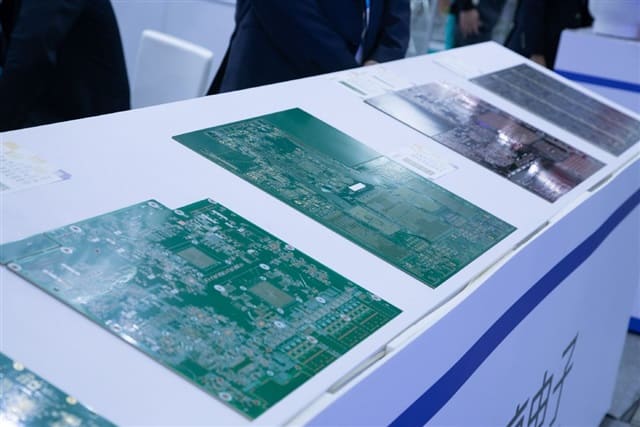
Southeast Asia's electronics industry is undergoing a structural shift. Increased capital allocation toward AI servers, high-speed networking equipment, and satellite communications infrastructure is pulling Thailand, Vietnam, and Malaysia deeper into the supply chain for printed circuit boards and advanced substrates - components that sit upstream from traditional device assembly.
This transition marks a departure from the region's historic role as a low-cost assembly hub for consumer electronics. Companies are now building local capacity for PCB fabrication, a segment that requires precision etching, multi-layer lamination, and clean-room environments. The move reflects both rising demand for data center hardware and a strategic effort by regional governments to capture higher-value segments of electronics manufacturing.
Three Markets, Three Trajectories
Thailand has positioned itself as a regional center for automotive electronics and industrial controls, both of which share design and process overlap with server motherboards and networking cards. Vietnamese manufacturers, many backed by Taiwanese and South Korean investors, are expanding facilities originally built for smartphone components into PCB production lines capable of handling high-layer-count boards used in AI accelerators.
Malaysia brings a different advantage: an established semiconductor packaging and test ecosystem. Local players are leveraging proximity to IC substrate suppliers and advanced packaging houses to enter the PCB market for high-frequency applications, including 5G base stations and satellite ground equipment.
Supply Chain Realignment
The shift is partly driven by data center operators seeking to diversify procurement beyond China and Taiwan. Server OEMs and hyperscale cloud providers are pressuring contract manufacturers to establish backup capacity in Southeast Asia, a region that offers competitive labor costs, improving infrastructure, and preferential trade access to both the United States and Europe.
At the same time, national industrial policies are playing a role. Thailand's Board of Investment has extended tax incentives for PCB and substrate projects that meet minimum technology thresholds. Vietnam's Ministry of Planning and Investment has fast-tracked land approvals for electronics manufacturers committing to localize upstream components. Malaysia's National Semiconductor Strategy includes funding for shared clean-room facilities that PCB makers can lease.
Technical and Talent Challenges
Scaling PCB production in Southeast Asia is not frictionless. Advanced boards for AI servers demand tight impedance control, fine-line patterning below 50 microns, and materials that maintain signal integrity at high frequencies. These specifications require process know-how and equipment that are concentrated in Taiwan, Japan, and South Korea.
Talent is another constraint. While the region has a large workforce experienced in assembly and test, it lacks engineers trained in PCB design simulation, material science for laminates, and yield optimization for multi-layer fabrication. Companies are addressing this through partnerships with technical universities and secondment programs that rotate engineers through facilities in Taiwan and Japan.
Raw material supply remains centralized. Copper-clad laminates, prepreg sheets, and specialty resins are still sourced primarily from suppliers in Taiwan, Japan, and China. Establishing local supply for these inputs would require petrochemical and materials science capabilities that Southeast Asia is only beginning to develop.
Market Outlook
Demand for AI infrastructure is expected to remain strong through the end of the decade, driven by generative AI model training, inference workloads, and edge computing deployments. This creates a window for Southeast Asian manufacturers to establish credibility and scale in the PCB segment before the next wave of technology transition.
Whether the region can sustain this momentum will depend on continued investment in technical education, process automation, and supply chain localization. For now, the movement of PCB capacity into Thailand, Vietnam, and Malaysia represents a tangible shift in how Asia's electronics supply chain is organized - and where value is captured.
RELATED STORIES

Southeast Asian Factories Adopt Proximity Planning to Retain Workers and Investors
Lim Hui Ying · 3 min
China's Electric Truck Exports Surge as Fuel Costs Rise Across Asia
Cheng Wei-Lun · 3 min

Energy Infrastructure Deals Climb in Southeast Asia Amid AI Demand and Security Concerns
Cheng Wei-Lun · 4 min

WeRide Eyes Regional Push Across Australia and Asia-Pacific Markets
Cheng Wei-Lun · 2 min
Spot something wrong? Email editor@briefasia.com. We log every correction publicly.