Finance · Markets
South Korean Won Reaches Five-Month Peak Amid Market Turbulence
Currency strengthened to 1,435.9 against the dollar despite continued volatility in Seoul's equity markets following sharp selloffs
KEY TAKEAWAYS
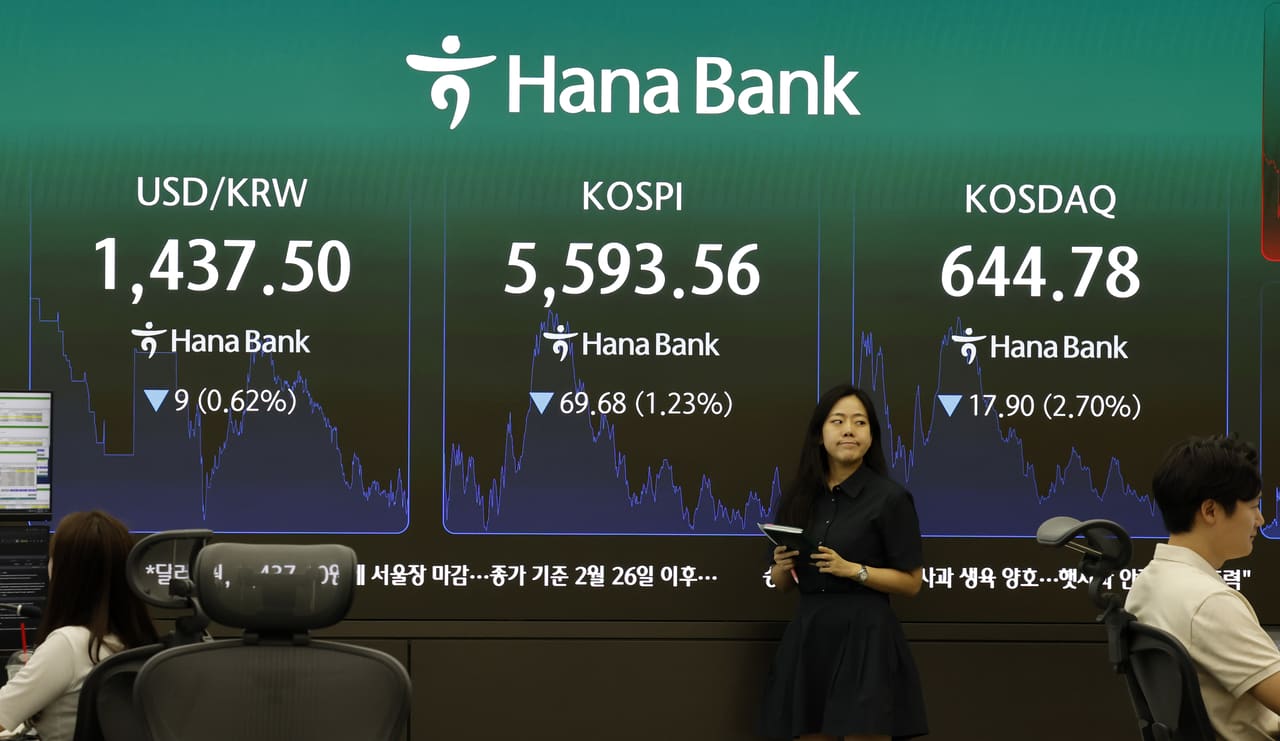
- ·The South Korean won reached 1,435.9 per dollar on Thursday, its strongest intraday level in approximately five months since late February.
- ·The currency's strength contrasted with continued volatility in the Kospi equity index, which faced pressure following two consecutive sessions of sharp declines.
- ·The dollar-won rate closed daytime trading at 1,437.4, gaining 9.3 won from the previous session despite intraday fluctuations above 1,440.
Currency Strength Decouples from Equity Weakness
The South Korean won climbed to its most robust intraday position in approximately five months on Thursday, briefly touching the 1,430 range against the dollar even as the nation's benchmark stock index continued to swing following consecutive days of pronounced declines.
Seoul's foreign exchange market opened the regular trading session at 1,442.5 won per dollar. By mid-morning, around 9:16 a.m. local time, the currency strengthened to 1,435.9, marking its firmest level since late February. The won's advance represents a notable divergence from the turbulence plaguing Seoul's equity markets, where the Kospi has struggled to find stable footing after two sessions of steep losses.
The dollar-won rate exhibited characteristic intraday volatility, pushing back above the 1,440 threshold before settling lower. By the close of daytime trading at 3:30 p.m., the pair finished at 1,437.4, representing a gain of 9.3 won from Wednesday's close. The session's price action underscores the competing forces at work in South Korea's financial markets, where currency strength and equity weakness are unfolding simultaneously.
Regional Currency Dynamics
The won's rally comes as Asian currencies navigate a complex environment shaped by shifting monetary policy expectations across major economies and evolving trade dynamics. South Korea's export-dependent economy remains sensitive to currency movements, with the won's value carrying implications for the competitiveness of major sectors including semiconductors, automobiles, and consumer electronics.
Thursday's strengthening follows a period during which the won had traded in a wider range, reflecting both domestic economic data and external pressures from dollar movements. The currency's ability to reach five-month highs while equity markets remain under pressure suggests differing investor assessments of South Korea's economic trajectory across asset classes.
Market participants are parsing signals from Seoul's economic indicators, including recent trade figures and manufacturing data, alongside developments in global technology supply chains where South Korean firms play critical roles. The semiconductor sector, a cornerstone of the nation's export economy, has faced both cyclical demand questions and geopolitical considerations around chip supply chains.
Equity Market Pressure Persists
The Kospi's continued volatility stands in contrast to the won's Thursday performance. Seoul's main stock index has faced selling pressure over consecutive sessions, with investors reassessing valuations and positioning ahead of corporate earnings updates and macroeconomic data releases.
The disconnect between currency and equity market movements is not unprecedented in South Korea's financial landscape. Previous episodes have seen the won strengthen on foreign capital inflows into fixed-income instruments or currency positioning, even as equity investors pulled back on growth concerns or profit-taking after rallies.
For portfolio managers focused on Korean assets, the current environment presents a nuanced picture. Currency gains can enhance returns for foreign investors in won-denominated assets, potentially offsetting equity market weakness. Conversely, a stronger won can pressure the earnings outlook for export-oriented companies by making their products less competitive in overseas markets.
Forward Positioning
The won's trajectory in coming sessions will likely hinge on several factors, including the pace of any further equity market stabilization, developments in South Korea's economic data calendar, and broader dollar dynamics shaped by major central bank policies. Seoul's currency market has historically demonstrated sensitivity to both regional developments and global risk sentiment shifts.
Analysts watching South Korean markets will be monitoring whether Thursday's currency strength represents the beginning of a sustained trend or a temporary divergence from equity market signals. The interplay between the won's performance and corporate earnings reports from major exporters in the weeks ahead could provide clearer direction for both currency and stock investors navigating Seoul's markets.
The five-month high in the won also raises questions about intervention thresholds and policy responses. South Korean authorities have historically shown willingness to smooth excessive currency volatility when it threatens to disrupt export competitiveness or financial stability, though Thursday's moves remained within ranges that typically do not trigger official action.
As Asian trading hours concluded, the won's performance stood out in regional currency markets, offering a counterpoint to the equity market anxiety that has dominated recent headlines from Seoul. Whether this strength can be sustained will depend on how quickly stability returns to the Kospi and whether economic fundamentals support a continued currency rally.
RELATED STORIES
Seoul Stocks Drop on Mideast Tensions and Oil Price Surge
Tran Quoc Bao · 3 min
Samsung Electronics Drops 8% as Market Questions Buyback Strategy
Cheng Wei-Lun · 2 min
South Korea Extends Trading Hours to Attract Foreign Capital
Anand Sundaram · 2 min

MBK Partners Chair Questioned Over Homeplus Debt Issuance Ahead of Collapse
Anand Sundaram · 3 min
Spot something wrong? Email editor@briefasia.com. We log every correction publicly.