Technology · Policy
South Korea to Launch State Venture Fund for Security Tech Companies
Seoul will model the initiative on the CIA's In-Q-Tel, targeting investments in AI, drones, cyber defense, and aerospace to build domestic alternatives to foreign platforms
KEY TAKEAWAYS
- ·South Korea will establish a state-backed venture fund modeled on the CIA's In-Q-Tel to develop domestic security-technology companies in AI, drones, cyber defense, and aerospace.
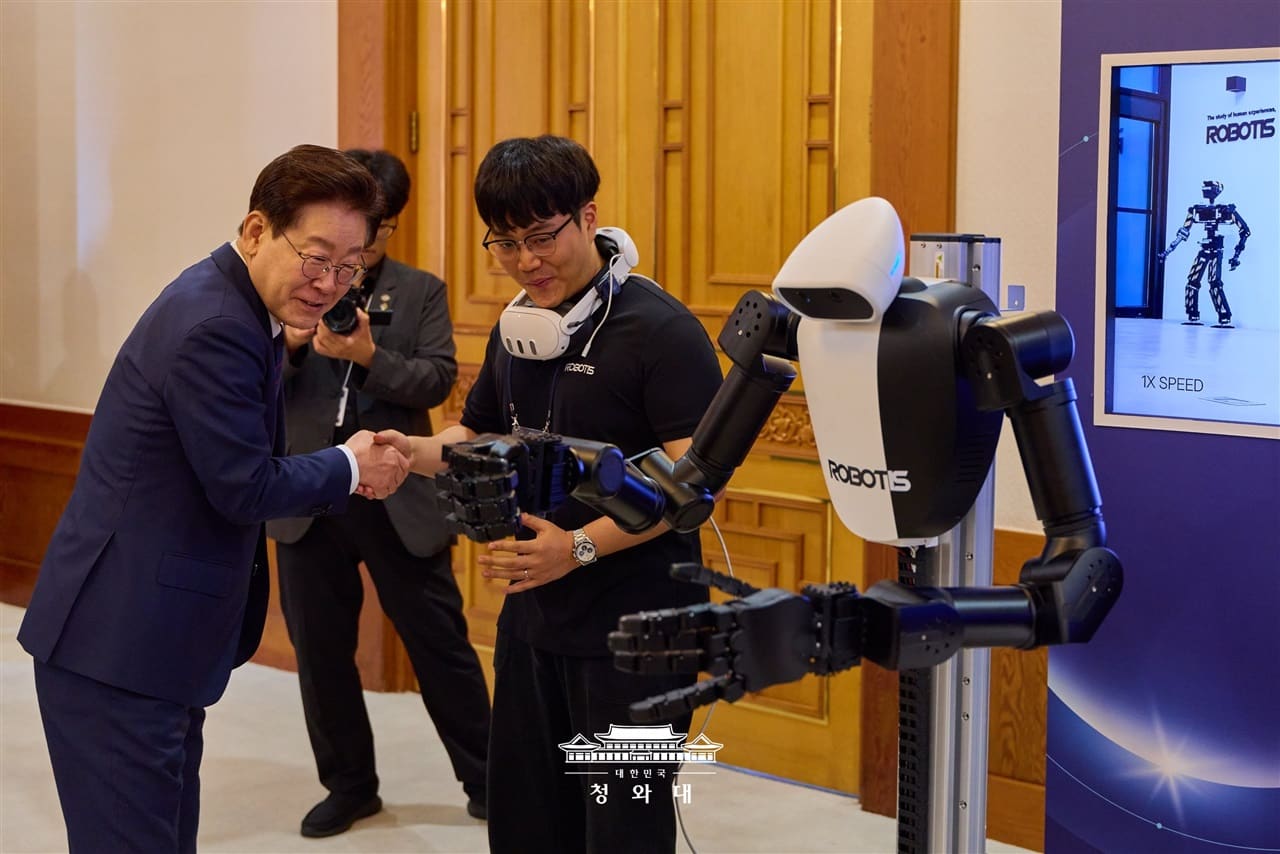
- ·President Lee Jae-myung met with robotics executives on June 26 to outline the strategy, framing technology development as a national-security priority.
- ·The initiative aims to reduce dependence on foreign platforms like Palantir and build domestic alternatives with greater data control and supply-chain resilience.
Seoul Bets on Intelligence-Style Investing
South Korea is preparing to launch a state-backed venture fund explicitly modeled on the Central Intelligence Agency's In-Q-Tel, aiming to cultivate domestic security-technology companies capable of competing with foreign platforms like Palantir. The initiative marks a sharp turn toward direct government investment in fields including artificial intelligence, unmanned aerial systems, cyber defense, and aerospace.
President Lee Jae-myung convened robotics executives and security strategists on June 26 to outline the approach, signaling that Seoul views strategic technology development as a national-security imperative rather than a task left to market forces alone. The fund structure mirrors In-Q-Tel's model, which has channeled CIA capital into early-stage companies since 1999, producing returns on technologies ranging from geospatial analytics to biometric systems.
Why Seoul Is Copying Langley's Playbook
The decision reflects mounting discomfort across Asian capitals about dependence on U.S. defense-tech vendors. Palantir's software underpins intelligence and military operations in multiple allied nations, but procurement contracts often come with data-residency constraints and interoperability limits that Seoul finds restrictive. Building a domestic alternative would give South Korean agencies greater control over sensitive datasets and reduce exposure to supply-chain disruptions or policy shifts in Washington.
In-Q-Tel has invested in more than 400 companies since its founding, generating both financial returns and technology pipelines for the U.S. intelligence community. South Korea's version will likely focus on sectors where the country already has industrial depth, particularly semiconductors, telecommunications infrastructure, and robotics, while filling gaps in software and analytics platforms.
The Regional Context
South Korea is not alone in pursuing state-led technology funds with security mandates. Japan's National Security Technology Research Promotion Fund, established in 2022, channels approximately USD 500 million annually into dual-use technologies. Singapore's Defense Science and Technology Agency has operated venture arms for over a decade, co-investing with private capital in cybersecurity and autonomous systems.
The difference lies in Seoul's explicit emphasis on producing a Palantir competitor, a goal that requires sustained investment in data-fusion software, machine-learning operations, and classified-network integration. South Korean conglomerates have built world-leading hardware businesses, but the country's software ecosystem remains comparatively shallow, particularly in enterprise and government markets where long procurement cycles and security clearances create barriers to entry.
What the Fund Will Target
The government has not yet disclosed the fund's capitalization or governance structure, but the focus areas suggest it will prioritize companies developing sensor networks for border surveillance, satellite-data analytics, counter-drone systems, and AI models trained on Korean-language datasets. Aerospace investments may target satellite propulsion, low-Earth-orbit communications, and launch-vehicle components, sectors where South Korea has announced ambitions to expand domestic capacity.
Cyber defense is another likely emphasis. South Korea faces persistent intrusion attempts attributed to North Korean state actors, and domestic firms have struggled to scale beyond the peninsula's relatively small market. A government fund with patient capital and guaranteed procurement pathways could help those companies reach the scale needed to compete in export markets.
Execution Risks
State-backed venture funds in Asia have mixed track records. Success depends on insulating investment decisions from political interference, recruiting managers with domain expertise, and maintaining discipline around exit timelines. In-Q-Tel's model works in part because it operates at arm's length from the CIA's bureaucracy, with independent portfolio managers and a mandate to seek commercial returns alongside strategic value.
South Korea will need to demonstrate that it can replicate that structure without turning the fund into a subsidy vehicle for underperforming incumbents or a political tool for favored constituencies. The country's innovation agencies have historically performed well in hardware sectors, but software and services demand different skill sets and longer development cycles.
The fund's success will also hinge on whether Seoul can attract talent from the private sector and academia. South Korea's top AI researchers often migrate to U.S. tech giants or Chinese labs offering higher compensation and larger datasets. A government venture fund competing for the same talent will need to offer equity upside and intellectual freedom, not just stable salaries.
What Comes Next
Details on the fund's launch timeline, capitalization, and selection criteria are expected in the coming months. If executed well, the initiative could accelerate South Korea's shift from a hardware-manufacturing hub to a more balanced technology economy with strength in software and platforms. If it falters, it will join a long list of state-led venture experiments that consumed capital without producing competitive companies.
For now, the announcement underscores a broader trend across Asia: governments are no longer content to let Silicon Valley or Shenzhen dominate the technologies that underpin national security. Whether Seoul can build its own Palantir remains an open question, but the willingness to try signals a new phase in the region's technology competition.
RELATED STORIES
South Korea Taps Three Telecom Giants to Deliver Free AI Services Nationwide
Cheng Wei-Lun · 3 min
Nexon Commits $179M to Gaming IP Fund Targeting Asian Developers
Cheng Wei-Lun · 3 min
Samsung Display Restarts Asan OLED Campus as Foldable Phones Stage Recovery
Cheng Wei-Lun · 4 min
South Korean Chip Materials Suppliers Ride AI Boom to Profit Surge
Cheng Wei-Lun · 3 min
Spot something wrong? Email editor@briefasia.com. We log every correction publicly.