Finance · Markets
South Korea's Retail Leverage Curbs Miss the Real Volatility Driver
Foreign high-frequency traders continue to amplify swings in Samsung and SK hynix shares even as new deposit rules slash retail activity by three-quarters
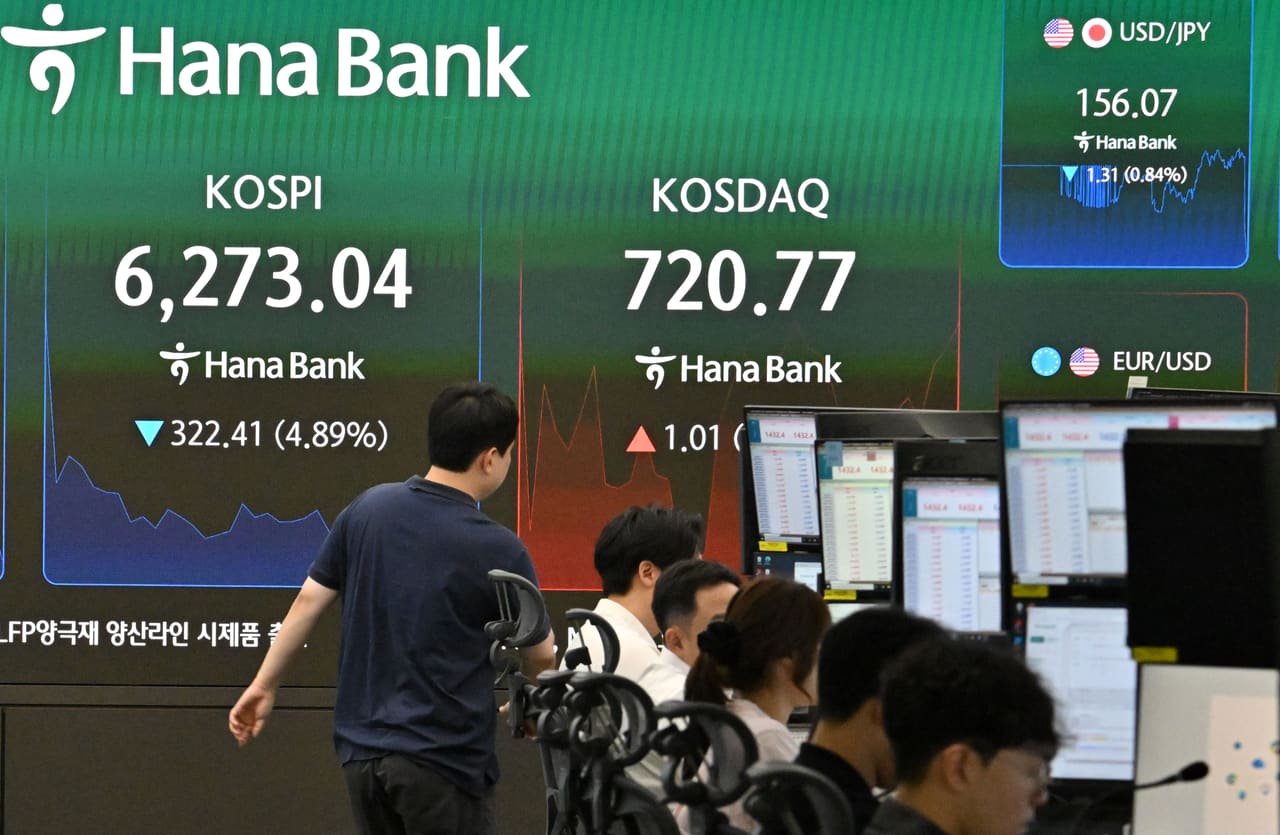
KEY TAKEAWAYS
- ·Trading value in South Korea's five largest single-stock leveraged products fell 74 percent on the first day of new deposit rules, with retail investors selling 1 trillion won net.
- ·Foreign high-frequency trading in Samsung Electronics and SK hynix continues to drive sharp intraday swings, operating outside the scope of the retail-focused curbs.
- ·The gap between domestic retail restrictions and unchecked foreign algorithmic flows leaves the Kospi exposed to volatility that new regulations cannot address.
Retail Activity Collapses Under New Rules
South Korea's stock market saw a dramatic contraction in leveraged retail trading on Friday, the first day of stricter deposit requirements for single-stock derivative products. Trading value in the five largest single-stock leveraged products by market capitalization dropped 74 percent, according to the Korea Exchange. Retail investors offloaded a net 1 trillion won ($700 million) in positions as the new rules took immediate effect.
The regulation, aimed at cooling speculative excess among individual traders, requires higher upfront deposits for products that amplify gains and losses on individual equities. Authorities introduced the measure following concerns about retail exposure to volatile swings in heavyweight tech names, particularly Samsung Electronics and SK hynix, which together account for more than a quarter of the Kospi's market capitalization.
Foreign HFT Flows Remain Unchecked
Yet the Kospi continues to experience sharp intraday volatility, exposing a structural gap in the regulatory approach. While the new deposit rules constrain domestic retail participation, they do not address the role of foreign high-frequency trading firms whose algorithmic strategies concentrate around the same two chip giants.
Foreign HFT activity in Samsung Electronics and SK hynix has grown substantially over the past eighteen months, driven by the global semiconductor cycle and options-related hedging flows. These firms execute thousands of orders per second, often amplifying price movements during periods of thin liquidity or macro uncertainty. Because the leverage curbs target only domestically listed derivative products, cross-border algorithmic flows operate outside their scope.
Market participants note that foreign HFT desks frequently dominate the order book during the opening and closing auctions, periods when price discovery is most sensitive. The concentration of this activity in just two stocks creates a feedback loop: sharp moves in Samsung or SK hynix can trigger index-level volatility, pulling smaller-cap names along for the ride.
Policy Gap in a Two-Speed Market
The divergence between retail and institutional trading patterns highlights a deeper challenge for Korean regulators. Domestic retail investors, who have historically driven a significant share of turnover in single-stock leveraged products, now face materially higher barriers to entry. Meanwhile, foreign institutional and proprietary trading desks continue to deploy sophisticated strategies with minimal friction.
This imbalance raises questions about the effectiveness of rules that focus narrowly on one segment of the market. While reducing retail leverage may lower systemic risk tied to margin calls and forced liquidations, it does little to dampen the volatility generated by high-speed institutional flows. In practice, the Kospi's sensitivity to external shocks remains elevated, even as retail participation contracts.
The Korea Exchange has acknowledged the persistence of volatility but has not yet signaled plans to extend oversight to foreign HFT activity. Doing so would require coordination with overseas regulators and potentially new reporting standards for algorithmic trading, both of which face technical and diplomatic hurdles.
What Comes Next
The sharp drop in retail leveraged trading suggests the new deposit rules are achieving their immediate objective of curbing speculative positioning. Whether that translates into a more stable market, however, depends on factors beyond the reach of domestic policy. As long as foreign HFT activity concentrates in Samsung and SK hynix, the Kospi will remain vulnerable to rapid swings that have little to do with the behavior of individual investors.
Regulators may need to broaden their toolkit if they hope to address the full spectrum of volatility drivers. That could include transaction taxes on high-frequency orders, stricter disclosure requirements for algorithmic strategies, or circuit breakers calibrated to single-stock moves rather than index-level thresholds. For now, the gap between retail curbs and institutional flows remains a live risk in one of Asia's most heavily traded equity markets.
RELATED STORIES
Seoul Markets Tumble as Tech Selloff Ripples Across Asia
Cheng Wei-Lun · 3 min
Seoul Stocks Drop on Mideast Tensions and Oil Price Surge
Tran Quoc Bao · 3 min

Samsung Electronics Drops 8% as Market Questions Buyback Strategy
Cheng Wei-Lun · 2 min
Korean Stocks Retreat as Nvidia Earnings Loom
Cheng Wei-Lun · 2 min
Spot something wrong? Email editor@briefasia.com. We log every correction publicly.