Real Estate · Homes
South Korea's President Lee Targets Property Speculation With New Market Controls
Lee Jae Myung announces dual-track intervention to curb windfall profits and address wealth inequality driven by real estate gains
KEY TAKEAWAYS
- ·President Lee Jae Myung announced dual-track property market interventions targeting both supply and demand to curb speculation in South Korea.
- ·The administration blames real estate windfall profits for worsening wealth inequality and eroding public trust in economic fairness.
- ·Detailed policy measures including tax adjustments and lending restrictions are expected in coming weeks as household debt hits record levels.
Presidential Push Against Speculation
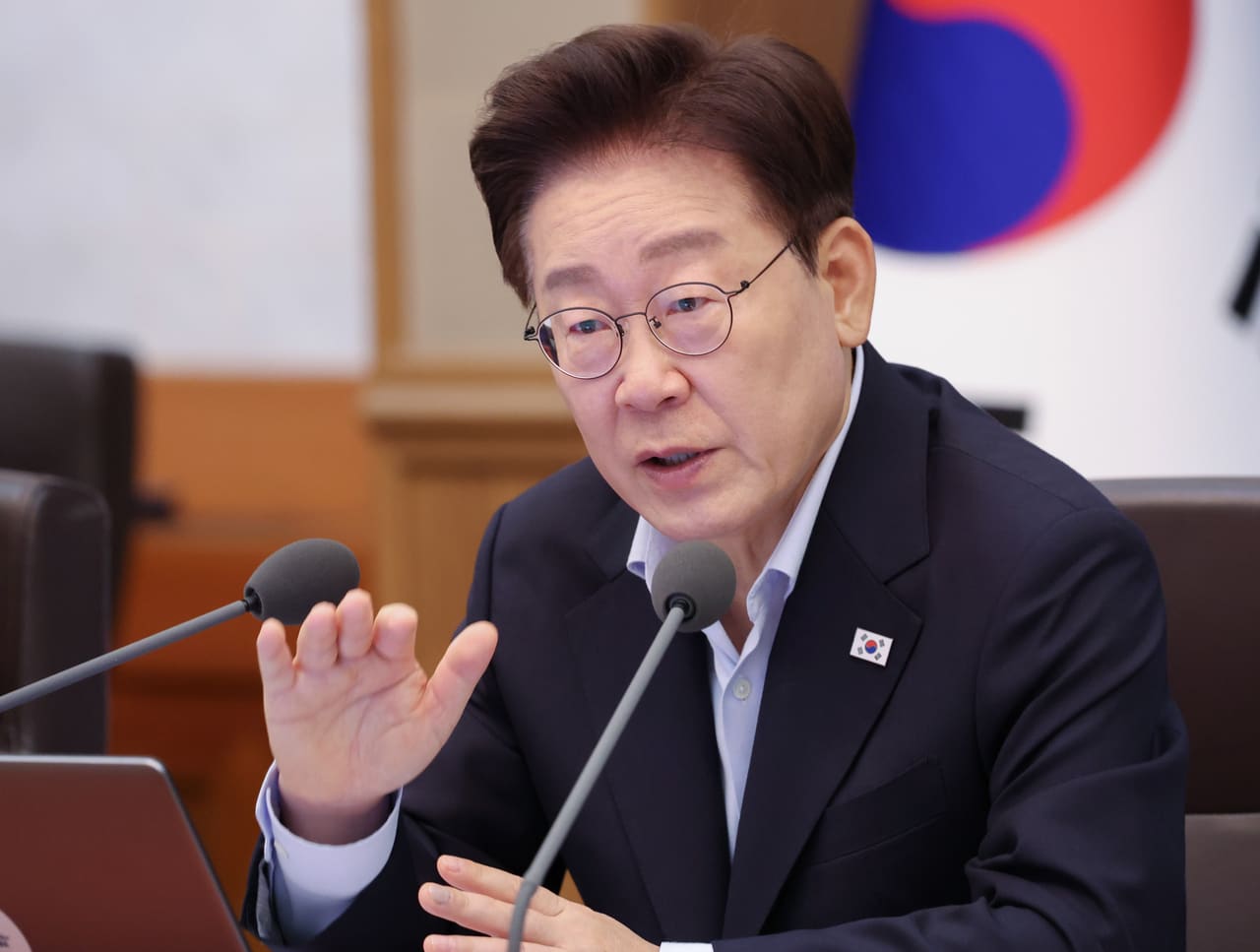
South Korea's President Lee Jae Myung declared Tuesday that his administration will roll out a package of interventions targeting both sides of the property market, aiming to rein in prices and eliminate speculative trading. Speaking at a Cabinet meeting, Lee framed the issue as a crisis of national cohesion, according to the presidential office.
The announcement signals Seoul's intent to deploy regulatory tools across supply pipelines and demand channels simultaneously, a departure from past administrations that often prioritized one lever over the other. Lee's remarks did not detail specific policies but indicated a comprehensive approach spanning zoning, taxation, lending standards, and enforcement.
Windfall Profits Under Fire
Lee identified unearned real estate gains, particularly those secured through regulatory arbitrage or outright violations, as the primary force eroding public trust. The president argued that such profits have destroyed the perception of fairness in South Korea's economy and deepened social divisions.
The comments reflect mounting political pressure as property wealth concentration accelerates. Data from the Bank of Korea shows household debt reached a record high earlier this year, with mortgage lending accounting for the bulk of the increase. Much of that borrowing has flowed into residential and commercial real estate, inflating asset values in Seoul and satellite cities while leaving younger and lower-income households priced out.
Lee also cited wealth inequality as a direct consequence of property market dynamics. Real estate holdings represent the largest component of household net worth in South Korea, and price surges in major metro areas have widened the gap between asset owners and renters. The administration views this disparity as both an economic risk and a political liability ahead of upcoming legislative sessions.
Policy Tools on the Table
While the Cabinet meeting did not unveil concrete measures, government officials have previously floated options including stricter loan-to-value ratios, higher capital gains taxes on short-term transactions, expanded public housing supply, and tougher penalties for zoning violations and illegal redevelopment schemes.
Seoul has also explored demand-side cooling mechanisms such as tighter mortgage underwriting standards and restrictions on multi-property ownership in overheated districts. On the supply side, the administration is under pressure to accelerate land releases and streamline approval processes for residential projects, though execution timelines remain uncertain.
The dual-track strategy aims to address immediate price pressures while building longer-term supply buffers. However, analysts note that supply measures typically take years to materialize, meaning near-term stabilization will hinge on demand controls and enforcement actions.
Regional and Political Context
South Korea's property market has been a perennial flashpoint, with previous administrations oscillating between laissez-faire tolerance and heavy-handed crackdowns. Lee's government inherits a market shaped by low interest rates, limited urban land availability, and entrenched cultural preferences for homeownership as wealth storage.
The issue also carries electoral weight. Public frustration over housing affordability contributed to shifts in legislative balance in recent years, and Lee's party faces pressure to demonstrate tangible progress before the next election cycle. The president's language, emphasizing fairness and national unity, appears calibrated to resonate with middle-class voters squeezed by rising costs.
Neighboring markets are watching closely. Policy moves in Seoul often ripple across Asia's property sectors, particularly in cities facing similar affordability crises. Japan, Taiwan, and Singapore have all experimented with varying degrees of market intervention, and South Korea's next steps could inform regional regulatory debates.
Market Response and Outlook
Financial markets showed muted initial reaction to Lee's remarks, with property stocks trading flat in Tuesday afternoon sessions. Investors are awaiting specifics, particularly around tax rates, lending caps, and enforcement timelines.
Real estate analysts caution that without coordinated implementation, piecemeal measures risk pushing speculative activity into adjacent markets or asset classes. The government's ability to execute on both supply expansion and demand restraint will determine whether the intervention stabilizes prices or merely reshapes where capital flows.
The Cabinet is expected to present detailed proposals in the coming weeks, with legislation likely to follow later this quarter. For now, Lee's statement serves as a policy marker, signaling that the administration views property market reform as a top-tier priority and is prepared to deploy multiple instruments to achieve it.
RELATED STORIES
South Korea Breaks Full-Year Export Record in September
Tran Quoc Bao · 3 min

SK Chemicals Targets Europe's Can-Coating Shift After BPA Ban
Cheng Wei-Lun · 2 min

Samsung Biologics Plans $2.2 Billion Rights Offering to Fund Peptide Acquisition
Jun-ho Seo · 3 min

South Korea Taps Three Telecom Giants to Deliver Free AI Services Nationwide
Cheng Wei-Lun · 3 min
Spot something wrong? Email editor@briefasia.com. We log every correction publicly.