Technology · AI
South Korea's President Launches AI-Focused US Tour With Tech Giants
President Jae-Myung Lee will meet Nvidia CEO Jensen Huang and other industry leaders as Seoul strengthens its position in the global semiconductor and artificial intelligence supply chain.
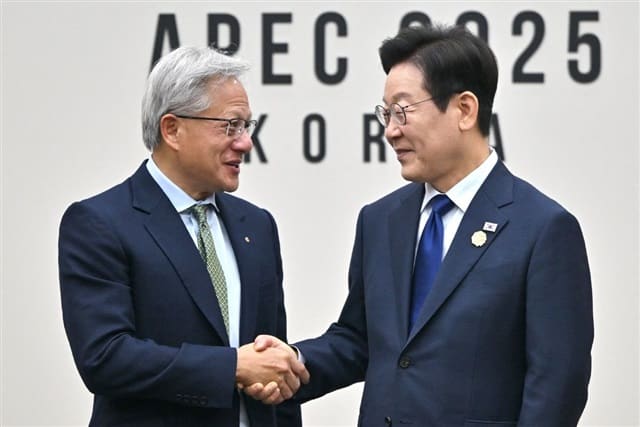
KEY TAKEAWAYS
- ·South Korean President Jae-Myung Lee is visiting the US to meet Nvidia CEO Jensen Huang and other tech leaders, focusing on AI and supply chain partnerships.
- ·Executives from Samsung Electronics, SK Group, Hyundai Motor Group, and Naver are accompanying Lee, reflecting government coordination with the private sector.
- ·The tour aims to secure technology access and position South Korea as a key player in the global AI infrastructure race amid US-China export controls.
High-Stakes Diplomacy
South Korean President Jae-Myung Lee is heading to the United States for an economic diplomacy tour that places artificial intelligence and advanced manufacturing at the center of bilateral discussions. The trip, designed to deepen cooperation on AI development and supply chain resilience, will feature direct conversations with some of Silicon Valley's most influential figures.
Among the scheduled meetings is a sit-down with Jensen Huang, chief executive of Nvidia, the chipmaker whose graphics processing units have become essential infrastructure for training large language models and powering AI applications worldwide. The conversation is expected to touch on partnership opportunities that could benefit both Nvidia's technology roadmap and South Korea's ambitions to secure a larger share of the AI chip market.
Corporate Delegation
Lee is not traveling alone. Executives from Samsung Electronics, SK Group, Hyundai Motor Group, and Naver will accompany the president, signaling the strategic weight Seoul is placing on this visit. The delegation reflects South Korea's industrial core: Samsung and SK dominate memory chips and telecommunications, Hyundai leads in automotive manufacturing and mobility, and Naver anchors the country's internet and AI services sector.
The inclusion of these conglomerates suggests the government is coordinating with the private sector to align investment plans, secure technology access, and explore joint ventures that could accelerate AI adoption across industries. For South Korea, which has long been a powerhouse in hardware manufacturing, the shift toward AI represents both an opportunity and a competitive imperative as China and Taiwan vie for dominance in next-generation semiconductors.
Geopolitical Context
The timing of the tour is notable. Export controls on advanced chip technology have reshaped global supply chains, and Seoul has had to navigate competing pressures from Washington and Beijing. The United States has pushed allies to restrict China's access to cutting-edge semiconductor equipment, while South Korean firms rely on Chinese markets for a significant portion of their revenue.
By emphasizing AI and supply chain cooperation during this US trip, Lee is reinforcing South Korea's alignment with American technology priorities. The meetings with Nvidia and other tech leaders offer a diplomatic avenue to demonstrate that Seoul is a reliable partner in maintaining the West's lead in AI infrastructure, even as South Korean companies continue to manage their exposure to China.
What Seoul Wants
South Korea's government has been vocal about its intention to build a domestic AI ecosystem that can compete globally. That ambition requires access to the most advanced chips, software frameworks, and talent pipelines. Conversations with Nvidia could open doors to preferential access or co-development agreements that would give South Korean firms an edge in deploying AI across manufacturing, automotive, and consumer electronics.
Beyond chips, the delegation's composition suggests interest in AI applications. Hyundai's presence hints at discussions around autonomous driving and smart mobility, areas where AI and automotive hardware intersect. Naver's involvement points to collaboration on cloud infrastructure, language models, and AI-powered services that could compete with offerings from Google, Microsoft, and Chinese tech giants.
Broader Implications
For the broader Asian technology landscape, South Korea's proactive diplomacy underscores a shift in how governments are engaging with the AI race. Rather than waiting for market forces to dictate outcomes, Seoul is using state visits and high-level meetings to shape partnerships and secure strategic advantages. Other countries in the region, from Japan to Singapore, are watching closely and calibrating their own approaches.
The success of Lee's tour will likely be measured not in joint statements but in the deals and commitments that follow in the months ahead. Whether that means new fabrication plants, research collaborations, or commitments from US tech firms to expand operations in South Korea, the trip is designed to produce tangible outcomes that strengthen the country's position in the global AI supply chain.
As the delegation touches down in the United States, the message is clear: South Korea intends to be more than a manufacturing hub. It wants a seat at the table where the future of artificial intelligence is being decided.
RELATED STORIES
South Korean Chip Materials Suppliers Ride AI Boom to Profit Surge
Cheng Wei-Lun · 3 min
South Korea Taps Three Telecom Giants to Deliver Free AI Services Nationwide
Cheng Wei-Lun · 3 min
Samsung Workers Plan Protest Over Pay Gap Between Chip and Device Units
Jun-ho Seo · 3 min
Samsung's Device Division Reports First Quarterly Loss as Chip Costs Surge
Cheng Wei-Lun · 3 min
Spot something wrong? Email editor@briefasia.com. We log every correction publicly.