Technology · Dev
South Korea's Memory Giants Lock in $950 Billion AI Chip Supply Deals
Samsung and SK hynix secure multi-year agreements with Nvidia, Broadcom, and other US tech leaders as Seoul positions itself as critical supplier in the global AI hardware race
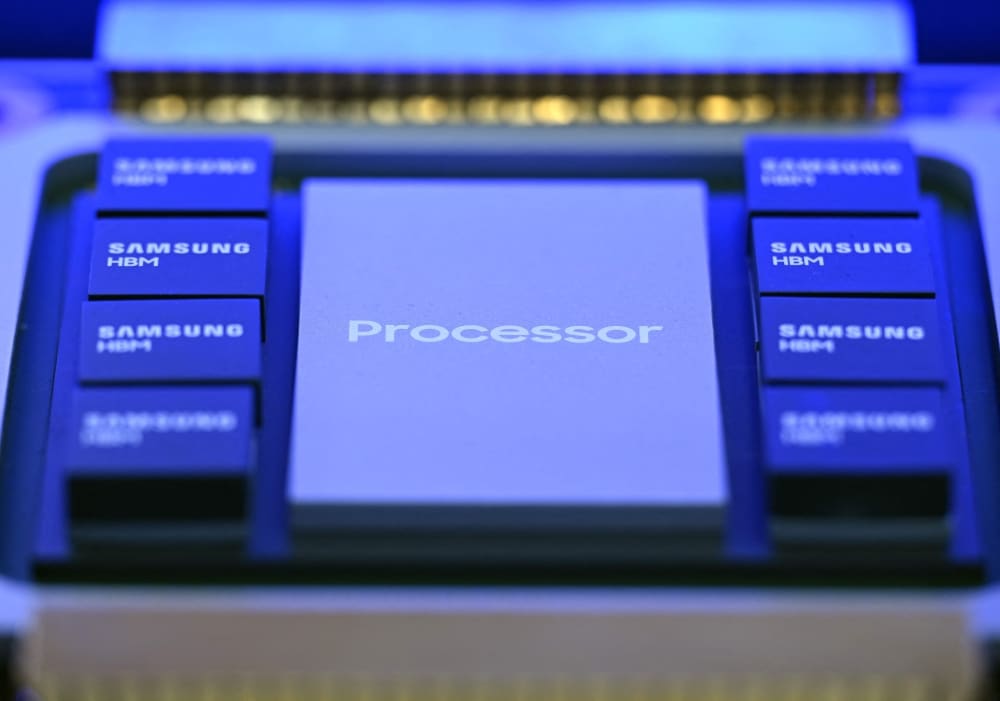
KEY TAKEAWAYS
- ·Samsung Electronics and SK hynix signed supply agreements worth $950 billion over five years with US technology firms including Nvidia and Broadcom.
- ·SK hynix committed $750 billion in high-bandwidth memory shipments while Samsung pledged $200 billion covering memory and foundry services for AI accelerators.
- ·The deals position South Korea as a critical supplier in the AI hardware race and provide revenue visibility amid US-China technology competition.
Seoul's Semiconductor Diplomacy Bears Fruit
Two of South Korea's flagship technology companies have signed agreements valued at $950 billion to supply advanced memory semiconductors to American technology firms, cementing the East Asian nation's position as a linchpin in the artificial intelligence hardware supply chain. The arrangements, announced during a presidential visit to San Francisco, underscore the deepening interdependence between Korean manufacturers and US chip designers as competition intensifies with China.
Presidential chief of staff for policy Kim Yong-beom disclosed the agreements while accompanying President Lee Jae Myung on a multi-day swing through Silicon Valley. Lee held discussions with senior executives from OpenAI, Nvidia, Anthropic, and Broadcom, turning what could have been ceremonial meetings into concrete commercial commitments.
The lion's share of the total comes from SK hynix, which committed to a five-year supply arrangement worth $750 billion. Nvidia features prominently among the recipients, though the agreement encompasses multiple US customers. Samsung Electronics separately signed a memorandum of understanding with Broadcom covering $200 billion in advanced memory chips and foundry services dedicated to AI processor production over the same period.
The Technology Behind the Numbers
High-bandwidth memory sits at the heart of these agreements. HBM chips function as ultra-fast data conduits between graphics processing units and the rest of a computing system, a role that has become critical as AI models grow larger and more computationally demanding. When a large language model generates text or an image synthesis system renders a picture, HBM chips shuttle vast quantities of data at speeds conventional memory cannot match.
Samsung Electronics and SK hynix control the majority of global HBM production, competing primarily with US-based Micron. The technology requires stacking multiple memory dies vertically and connecting them with microscopic through-silicon vias, a manufacturing process that demands both precision and scale. Only a handful of companies worldwide possess the necessary fabrication capabilities.
According to Samsung, the Broadcom collaboration will focus on "industry-leading memory solutions, including HBM, supporting Broadcom's next-generation AI accelerators." Broadcom designs custom silicon for hyperscale cloud providers, meaning Samsung's chips will likely end up in data centers operated by major internet platforms.
SK hynix framed its Nvidia partnership as a joint development effort. The two companies plan to "co-develop and optimize next-generation AI memory solutions, including HBM, to meet evolving infrastructure demands ranging from large language model training to physical AI," according to the Korean manufacturer. Physical AI refers to systems that interact with the real world through robotics and sensor networks, a frontier that Nvidia has been aggressively pursuing.
Regional Stakes in the AI Hardware Race
South Korea's semiconductor industry has emerged as a bright spot in an economy that has struggled with sluggish domestic consumption and trade headwinds. Memory chip exports surged over the past year, driven by insatiable demand from AI infrastructure projects in North America and Europe. The government has responded by pledging to triple AI-related spending in 2026, aiming to position the country alongside the United States and China as a top-tier power in artificial intelligence.
The scale of these agreements reflects a strategic calculus on both sides of the Pacific. For Washington, relying on Korean suppliers offers a hedge against concentration risk in a technology domain deemed critical to national security. US export controls have curtailed China's access to cutting-edge chips, but those restrictions only work if alternative supply chains can meet demand. South Korea, a treaty ally with advanced manufacturing infrastructure, fits that requirement.
For Seoul, the agreements validate years of investment in next-generation memory technology and provide revenue visibility at a time when cyclical downturns have historically plagued the sector. The five-year time horizon also gives Korean manufacturers confidence to commit capital to new fabrication lines and research programs, knowing that demand will materialize.
Labor and Production Pressures
The AI boom has not been without friction on the factory floor. Samsung Electronics narrowly avoided a major labor disruption in May when it reached an agreement with its largest union over bonus structures. Workers had demanded a greater share of the windfall from surging chip sales, threatening production at a time when customers were clamoring for more supply.
The settlement highlighted a tension that extends across the semiconductor industry. As revenue and profit margins expand, employees in capital-intensive manufacturing operations are pressing for compensation packages that reflect the strategic value of their work. Samsung's unionized workforce, once relatively quiescent, has become more assertive as the company's market position strengthens.
SK hynix has faced similar pressures, though it has managed to avoid high-profile confrontations. Both companies are now navigating a landscape where talent retention and production continuity carry heightened importance. Any disruption to HBM output could ripple through the AI supply chain, delaying product launches and frustrating customers who have already committed billions to infrastructure buildouts.
What Comes Next for Asia's Chip Corridor
These agreements are likely to accelerate investment along the semiconductor corridor that stretches from Seoul to Taipei to Tokyo. Taiwan's TSMC dominates logic chip production, Japan has re-emerged as a supplier of materials and equipment, and South Korea commands the memory segment. The three form an interdependent ecosystem that underpins much of the world's advanced electronics manufacturing.
China's absence from this network is conspicuous. Beijing has poured resources into developing domestic alternatives, but technical and equipment barriers have slowed progress. The US export controls that took effect in late 2022, and have been tightened repeatedly since, have widened the gap. Korean and Taiwanese suppliers have benefited from that divergence, capturing market share that might otherwise have gone to Chinese competitors.
The agreements announced in San Francisco also signal that the next phase of AI development will be capital-intensive. Building the infrastructure to train and deploy ever-larger models requires not just algorithmic innovation but also massive quantities of specialized hardware. Companies that control the production of that hardware, whether GPU designers like Nvidia or memory manufacturers like Samsung and SK hynix, occupy chokepoints in the value chain.
For investors and policymakers watching Asia's technology sector, the message is clear: memory chips have moved from being a commodity business subject to brutal boom-bust cycles to a strategic asset with geopolitical dimensions. The $950 billion in commitments announced this week is as much about securing supply as it is about revenue. In an era when AI capability is increasingly synonymous with economic and military power, the firms that make the chips wield influence that extends far beyond their balance sheets.
RELATED STORIES
Memory Makers Gain Leverage as AI Server Costs Climb
Cheng Wei-Lun · 3 min

Samsung's Device Division Reports First Quarterly Loss as Chip Costs Surge
Cheng Wei-Lun · 3 min
South Korean Chip Materials Suppliers Ride AI Boom to Profit Surge
Cheng Wei-Lun · 3 min
SK Hynix May Fast-Track Gwangju Fab Investment Alongside Yongin Expansion
Jun-ho Seo · 3 min
Spot something wrong? Email editor@briefasia.com. We log every correction publicly.