Technology · AI
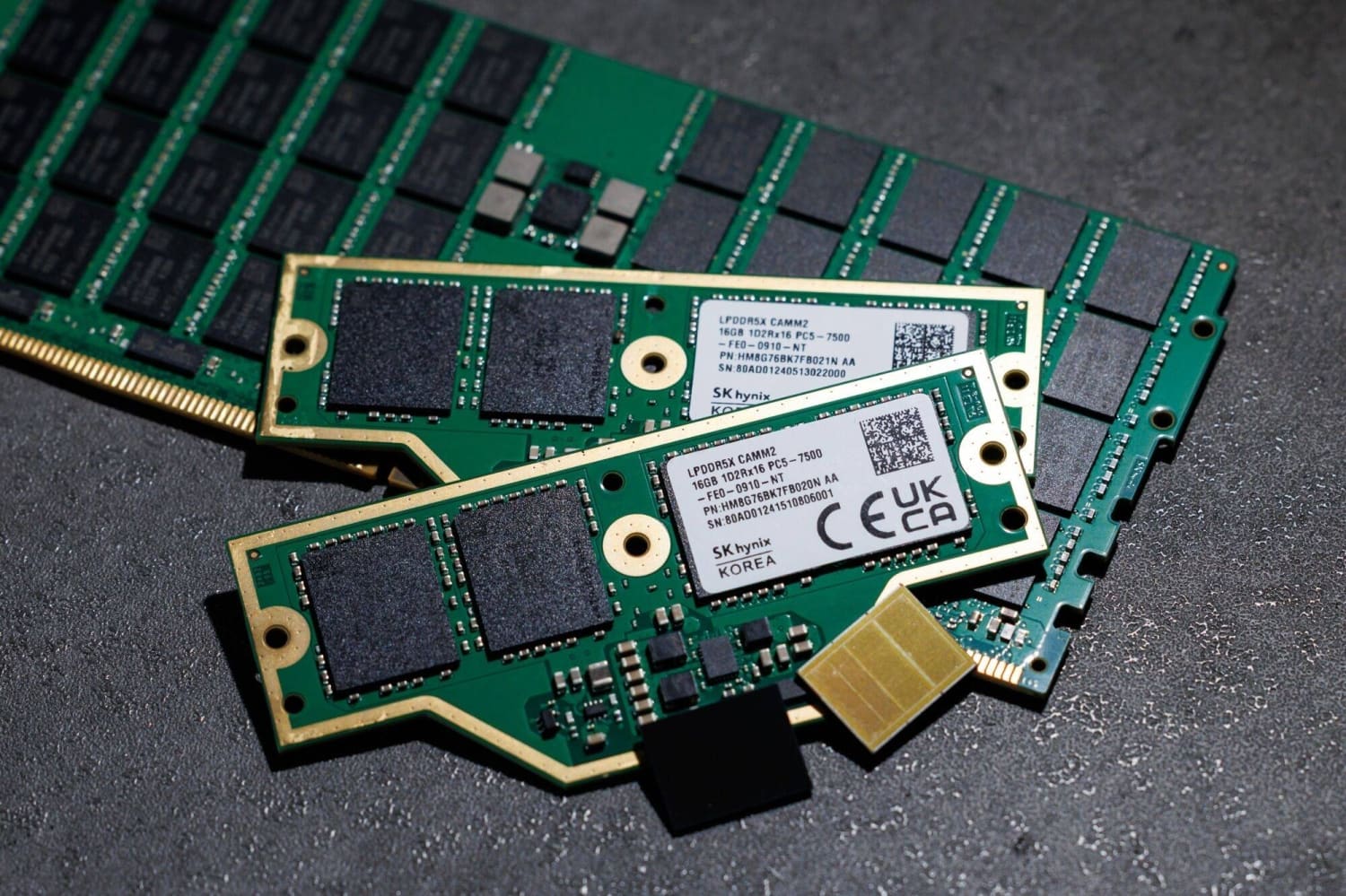
South Korea's Memory Chipmakers Post Record Profits on AI Boom
Samsung and SK Hynix deliver blockbuster earnings as high-bandwidth memory demand from data center operators defies skeptics
KEY TAKEAWAYS
- ·SK Hynix is projected to earn more profit in 2026 than the cumulative total across its prior 27 years, driven by high-bandwidth memory demand for AI servers.
- ·Both Samsung and SK Hynix are operating at full capacity with order backlogs extending into 2027, as hyperscale cloud providers deploy hundreds of thousands of AI accelerators.
- ·The earnings surge is lifting South Korea's semiconductor exports to record levels and driving equipment orders across Asian manufacturing ecosystems in Taiwan, Japan, and Southeast Asia.
Silicon Valley's Server Farms Drive Seoul's Windfall
South Korea's two memory chip giants are rewriting the industry playbook. Samsung Electronics and SK Hynix reported earnings that suggest the AI infrastructure buildout is accelerating faster than even optimistic forecasts predicted, with SK Hynix on track to post full-year profits larger than the sum of everything the company earned across nearly three decades of operations.
The numbers reflect a structural shift in semiconductor demand. Where previous memory cycles rode consumer electronics waves, laptops and smartphones, this surge is powered by hyperscale data centers stacking thousands of processors to train and run large language models. Each AI server requires far more high-bandwidth memory than traditional compute workloads, and the leading South Korean manufacturers control the majority of global supply for the advanced packaging technologies those systems need.
SK Hynix disclosed projections showing 2026 profit will exceed the cumulative total the company generated from its founding through 2025. That 27-year aggregate provides a stark baseline: memory has historically been a boom-and-bust sector, with brief peaks followed by prolonged troughs as oversupply cratered pricing. The current cycle looks different in both duration and margin profile.
Manufacturing Capacity Lags Orders
Both companies are running fabrication lines at maximum output and still report order backlogs stretching into next year. Samsung has redirected clean-room space previously allocated to commodity DRAM toward high-bandwidth memory modules, while SK Hynix is adding production lines at its facilities in South Korea.
The constraint is not demand but the technical complexity of stacking multiple memory dies with through-silicon vias and managing thermal loads in densely packed configurations. Yields improve slowly, and qualifying new capacity with hyperscale customers takes quarters. That lag between order and delivery is keeping prices elevated and margins well above historical averages.
Nvidia, the dominant supplier of AI accelerators, has publicly acknowledged that memory availability is gating system shipments. Cloud providers including Amazon Web Services, Microsoft Azure, and Google Cloud are each ordering chips by the hundreds of thousands, and every GPU requires matched memory bandwidth to avoid bottlenecks. The South Korean suppliers have become chokepoints in a supply chain where every other component, from power delivery to networking, is also stretched.
What the Trajectory Means for Asian Tech Ecosystems
The earnings momentum has ripple effects across the region. Taiwan Semiconductor Manufacturing Company benefits as the foundry partner for logic chips paired with Korean memory, while Japanese equipment makers such as Tokyo Electron see sustained orders for deposition and etching tools. Southeast Asian assembly and test operations, particularly in Malaysia and Vietnam, are expanding to handle the packaging workload.
South Korea's trade balance is feeling the impact. Semiconductor exports climbed to record levels in the first half of 2026, offsetting weaker performance in consumer electronics and autos. The government in Seoul has fast-tracked permits for fab expansions and is negotiating power supply agreements to support the energy-intensive manufacturing process.
Investors initially viewed the AI spending wave with caution, questioning whether capital expenditure at cloud providers could sustain the pace. The latest earnings suggest that concern was premature. Hyperscalers are still in the early stages of deploying inference infrastructure, and the shift from pilot projects to production workloads is driving a second leg of demand that extends the cycle.
Margin Durability Hinges on Technology Lead
The outsized profitability depends on maintaining a technology edge. SK Hynix ships the highest-density HBM3E modules in volume, a generation ahead of most competitors. Samsung has struggled with yield issues on its equivalent products but is closing the gap. Chinese manufacturers remain several nodes behind, constrained by equipment export controls that limit access to advanced lithography and deposition tools.
If the technology lead narrows, pricing power will erode quickly. Memory is ultimately a commodity market, and history shows that excess capacity triggers sharp corrections. For now, the combination of tight supply, high barriers to entry, and relentless demand growth is delivering a rare window of sustained profitability.
The second half of 2026 will test whether the momentum holds. Cloud providers are expected to report capital spending plans in coming earnings calls, and any pullback would ripple through the memory supply chain within a quarter. Until then, South Korea's chipmakers are capitalizing on a cycle that has already redefined what peak earnings look like in their industry.
RELATED STORIES

South Korea Taps Three Telecom Giants to Deliver Free AI Services Nationwide
Cheng Wei-Lun · 3 min

Samsung's Device Division Reports First Quarterly Loss as Chip Costs Surge
Cheng Wei-Lun · 3 min
Samsung and SK Hynix Turn Down KEPCO's Multibillion-Dollar Prepayment Demand
Cheng Wei-Lun · 4 min

South Korea Records Highest September Export Start on Semiconductor Demand
Tran Quoc Bao · 3 min
Spot something wrong? Email editor@briefasia.com. We log every correction publicly.