Technology · Dev
South Korea's Chip Exports Shift to Taiwan as AI Demand Fuels Advanced Packaging Rush
High-bandwidth memory from Korean fabs increasingly heads to TSMC facilities for integration into AI accelerators, reshaping regional semiconductor trade flows.
KEY TAKEAWAYS
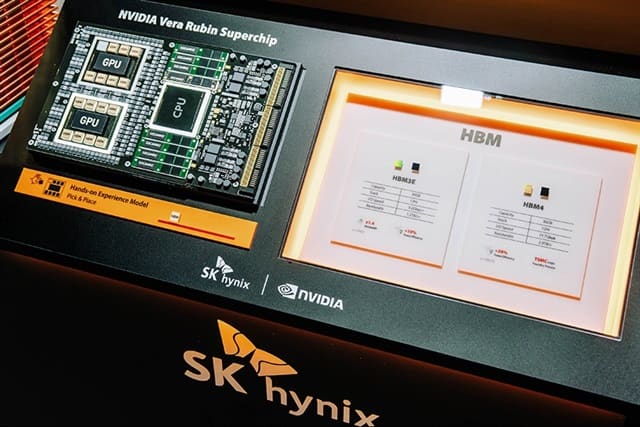
- ·South Korean semiconductor exports to Taiwan are increasing as high-bandwidth memory moves to TSMC facilities for advanced packaging into AI accelerators.
- ·TSMC's technical lead in CoWoS and InFO packaging keeps Taiwan at the center of AI chip assembly despite Samsung's own packaging investments.
- ·The trade pattern highlights regional specialization risks, with Korean memory suppliers dependent on Taiwanese integration capabilities for AI market access.
A New Trade Corridor Opens
A growing volume of South Korea's semiconductor exports now travels to Taiwan, pulled by the magnetic force of AI chip production. The shift reflects a fundamental change in how advanced processors reach market: Korean-made high-bandwidth memory crosses the strait to enter TSMC's advanced packaging lines, where chiplets and memory stacks become integrated AI accelerators.
The trade pattern underscores how artificial intelligence workloads have reordered semiconductor supply chains. HBM, the specialized memory architecture required for training large language models and running inference at scale, cannot simply be plugged into a server alongside a GPU. Modern AI chips demand tight physical integration, achieved through advanced packaging techniques that bond memory directly to compute dies with microscopic precision.
Packaging as the New Bottleneck
TSMC commands the most sophisticated capacity in this domain. The company's CoWoS (Chip-on-Wafer-on-Substrate) and InFO (Integrated Fan-Out) platforms enable the dense, high-bandwidth connections that AI accelerators require. As demand for these capabilities surges, Taiwan has effectively become the final assembly point for many of the world's most powerful processors.
South Korean manufacturers, led by SK Hynix and Samsung, produce the majority of global HBM supply. Their fabs in Icheon, Cheongju, and Pyeongtaek turn out memory stacks engineered to feed data-hungry AI models. But the journey from Korean clean room to data center passes through Taiwan, where TSMC integrates these memory modules with logic dies from Nvidia, AMD, and other fabless designers.
The routing reflects competitive realities. While Samsung operates its own advanced packaging lines and has invested heavily in expanding capacity, TSMC maintains a technological and scale advantage that keeps it at the center of the AI supply chain. Nvidia, the dominant AI chip designer, relies primarily on TSMC for both logic fabrication and final packaging. That dependency pulls Korean memory suppliers into Taiwan's orbit.
Regional Implications
The export shift carries weight beyond logistics. For South Korea, it signals both opportunity and constraint. Rising AI chip demand translates directly into higher memory sales, supporting Korea's semiconductor sector even as legacy DRAM and NAND markets soften. But the country's role as a component supplier, rather than an integrator, limits its capture of value and strategic influence.
Taiwan's position strengthens correspondingly. The island already holds the leading edge in logic fabrication; adding dominance in advanced packaging creates a second chokepoint in the AI supply chain. Policymakers in Seoul, Tokyo, Beijing, and Washington watch this concentration with varying degrees of unease.
For the broader Asian semiconductor ecosystem, the trade flow illustrates how specialization drives interdependence. No single geography commands the full stack. Korean memory feeds Taiwanese packaging, which combines with American chip designs and Dutch lithography tools to produce systems deployed globally. The model delivers efficiency but creates vulnerability.
Capacity Race
Both Taiwan and South Korea are racing to expand advanced packaging capacity, anticipating continued AI growth. TSMC has announced multibillion-dollar investments in new CoWoS lines and next-generation packaging platforms. Samsung is building out its own capabilities in Pyeongtaek and exploring heterogeneous integration techniques that could challenge TSMC's lead.
The competition will shape where future chips are assembled and which companies capture margin. For now, the current flows to Taiwan, pulled by TSMC's technical edge and customer relationships. Whether that pattern persists or fragments depends on how quickly rivals close the gap and whether geopolitical pressures force diversification.
The semiconductor industry has always been global by necessity. AI has made it more so, linking Korean memory fabs to Taiwanese packaging facilities in a supply chain that must function seamlessly to meet demand. The exports flowing across the strait represent more than trade statistics; they map the critical path for the technology reshaping economies across Asia and beyond.
What Comes Next
Observers will track whether Korean chipmakers accelerate their own packaging investments to reduce reliance on Taiwan, or whether the efficiency of specialization keeps current patterns intact. The answer will influence not only corporate strategies but also national industrial policies across the region.
Taiwan's dominance in both logic fabrication and advanced packaging creates a concentration that few governments find comfortable. Yet dismantling that concentration would require years of investment and risk losing the scale efficiencies that have made the current system so productive. The tension between resilience and efficiency defines much of the debate over semiconductor supply chains today.
For the companies involved, the immediate priority remains meeting demand. AI chip orders continue to outpace capacity, keeping both Korean memory fabs and Taiwanese packaging lines running at high utilization. The strategic questions can wait; the data centers cannot.
RELATED STORIES
Samsung and SK Hynix Turn Down KEPCO's Multibillion-Dollar Prepayment Demand
Cheng Wei-Lun · 4 min

South Korea Records Highest September Export Start on Semiconductor Demand
Tran Quoc Bao · 3 min
LG Pivots to AI-Defined Vehicle Platform as Korea Chases China's Self-Driving Lead
Jun-ho Seo · 3 min
SK Hynix May Fast-Track Gwangju Fab Investment Alongside Yongin Expansion
Jun-ho Seo · 3 min
Spot something wrong? Email editor@briefasia.com. We log every correction publicly.