Finance · Deals
SMIC Captures Pricing Power as Mature-Node Demand Surges
China's leading foundry posted a 25.3% gross margin in Q2 2026, breaking a two-year pattern of volume growth without profitability gains
KEY TAKEAWAYS
- ·SMIC reported $3.01 billion in Q2 2026 revenue with gross margin reaching 25.3%, up from 20.1% in the prior quarter.
- ·The margin expansion marks the first quarter in two years that the foundry converted high utilization into pricing power amid tight mature-node capacity.
- ·Sustained profitability above 25% would enable SMIC to fund further expansion and signal structural strength in mature-node manufacturing economics.
Margin Expansion Signals Market Shift
Semiconductor Manufacturing International Corporation reported second-quarter revenue of $3.01 billion for the three months ended June 30, 2026, marking a 20.0% sequential increase and 36.1% year-over-year growth. The Shanghai-based foundry posted a gross margin of 25.3%, up from 20.1% in the first quarter.
The margin figure represents a departure from the company's performance over the preceding eight quarters. Throughout that period, SMIC expanded production volume but struggled to translate capacity utilization into profitability gains. The June quarter marks the first time in this cycle that the foundry has successfully converted a full order book into improved pricing.
Capacity Meets Demand
The shift reflects tightening supply conditions in mature-node manufacturing, particularly for processes at 28 nanometers and above. These older technologies remain essential for power management chips, display drivers, and sensor components used across consumer electronics, automotive systems, and industrial equipment.
Demand for mature-node capacity has intensified as artificial intelligence workloads drive requirements for peripheral chips that support advanced processors. While leading-edge logic chips grab headlines, the supporting silicon for power delivery, signal processing, and connectivity increasingly determines system performance. This dynamic has pushed workload into foundries capable of handling high-volume production at established process nodes.
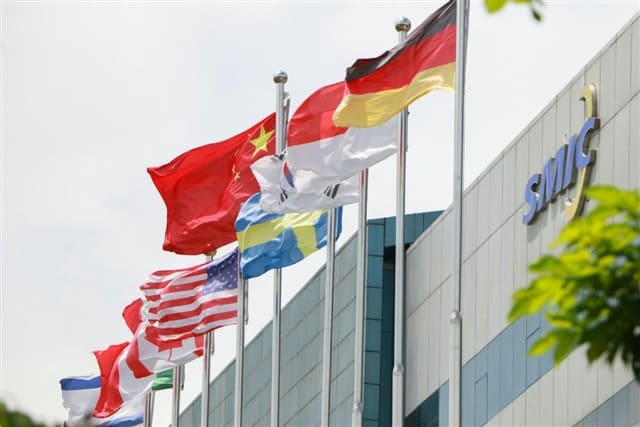
SMIC operates as China's largest contract chipmaker and has spent recent years adding capacity across multiple facilities. The company's 12-inch wafer fabs in Beijing, Shanghai, and Shenzhen run processes ranging from 28nm down to its most advanced nodes. Its 8-inch lines handle older geometries still in high demand for specialized applications.
From Volume to Value
The margin improvement suggests SMIC has reached a threshold where demand outstrips available capacity, allowing the foundry to negotiate higher wafer prices. For much of 2024 and 2025, the company prioritized filling newly expanded fabs, often accepting orders at rates that kept utilization high but margins compressed.
Industry observers note that pricing power in the foundry business tends to emerge in concentrated bursts rather than gradual trends. When customers face allocation risk, they accept higher prices. When excess capacity exists, foundries compete on cost. The June quarter data indicates SMIC has entered the former regime.
The company's revenue growth also reflects a geographic concentration of demand. Export restrictions have limited access to cutting-edge manufacturing for certain Chinese chip designers, pushing more business toward domestic foundries. At the same time, international customers seeking diversified supply chains have increased orders at Chinese fabs for mature-node products that fall outside restricted categories.
Implications for Regional Capacity
The financial results carry implications for capacity planning across Asia's foundry sector. If SMIC sustains gross margins above 25%, the company gains resources to fund further expansion without relying as heavily on subsidies or external financing. Higher profitability also signals to competitors that mature-node investment remains viable despite the industry's focus on advanced processes.
Taiwan, South Korea, and Japan have all announced capacity additions in mature nodes over the past year, responding to automotive and industrial demand. SMIC's ability to command pricing power in this segment may accelerate those plans, as rival foundries seek to capture similar economics.
The June quarter represents a single data point, and sustaining margin expansion will depend on order flow in the second half of 2026. Seasonal patterns typically see demand peak in the middle quarters, with some softness in the final months of the year. Whether SMIC maintains its pricing leverage through that cycle will determine if the margin story is structural or transitory.
For now, the company's results demonstrate that China's foundry sector has reached a scale where market dynamics, not just policy support, drive financial performance. The shift from volume growth to margin expansion marks a maturation of SMIC's business model and a recalibration of the competitive landscape in mature-node manufacturing.
RELATED STORIES
Hua Hong Turns Profit as Pricing Power Returns to China's Chip Foundries
Cheng Wei-Lun · 3 min

Tencent's AI Spending Push Sends Free Cash Flow Negative
Cheng Wei-Lun · 2 min

Lenovo Posts 43% Revenue Jump as Memory Costs Reshape PC Market
Cheng Wei-Lun · 3 min

China's Quant Funds Face Scrutiny as Market Turmoil Fuels Volatility Debate
Cheng Wei-Lun · 4 min
Spot something wrong? Email editor@briefasia.com. We log every correction publicly.