Technology · AI
SK Telecom Launches Subsidiary to Deploy 15GW AI Data Center Network
South Korea's largest carrier establishes SK Hyper to anchor domestic AI infrastructure buildout through 2035

KEY TAKEAWAYS
- ·SK Telecom created SK Hyper to develop 15 gigawatts of AI data center capacity by 2035, one of Northeast Asia's largest announced buildouts.
- ·The subsidiary aligns with South Korea's national AI strategy, aiming to reduce reliance on foreign cloud providers and anchor domestic compute infrastructure.
- ·SK Hyper will compete with local carriers and hyperscalers, leveraging SK Telecom's 5G network and enterprise customer base for edge-cloud integration.
Carrier Pivots to Infrastructure
SK Telecom has established SK Hyper, a new subsidiary tasked with building and operating 15 gigawatts of AI data center capacity by 2035. The move signals the carrier's strategic pivot into large-scale compute infrastructure, leveraging its telecommunications backbone to serve the growing demand for AI workloads across South Korea and the region.
The subsidiary will focus exclusively on AI data center development, a domain that requires sustained capital, grid integration, and operational expertise distinct from traditional telecom services. By creating a separate entity, SK Telecom can isolate the investment cycle and pursue partnerships or financing structures tailored to data center economics.
National AI Strategy Alignment
SK Hyper's formation directly supports South Korea's "AI three major powers" initiative, a government-led effort to position the country among the global leaders in artificial intelligence compute, talent, and application. The strategy emphasizes domestic infrastructure to reduce reliance on foreign cloud providers and to capture value from AI-driven industries including semiconductor design, autonomous systems, and biotechnology.
Seoul has identified data center capacity as a bottleneck. Domestic demand for GPU clusters and low-latency inference infrastructure has surged, driven by enterprises deploying large language models, computer vision pipelines, and real-time analytics. SK Telecom's commitment to 15GW of capacity represents one of the largest announced buildouts in Northeast Asia outside China.
Scale and Timeline
Fifteen gigawatts of power capacity translates to facilities capable of housing hundreds of thousands of high-performance GPUs, assuming standard power-per-rack densities for AI training and inference workloads. The 2035 timeline suggests a phased rollout, with initial sites likely coming online within the next two to three years to meet immediate demand.
SK Telecom has not disclosed specific site locations, but industry observers expect facilities near Seoul, Busan, and other metropolitan areas where fiber connectivity and power grid access converge. The carrier's existing network assets provide a natural advantage in interconnect and edge deployment, enabling low-latency links between data centers and enterprise customers.
Competitive Landscape
SK Hyper enters a regional market already crowded with hyperscale operators, local carriers, and specialist data center REITs. Competitors include KT Corporation, which has announced its own AI infrastructure investments, and LG CNS, which operates enterprise cloud services. International players such as Equinix and Digital Realty have also expanded in South Korea, targeting multinational clients seeking regional compute nodes.
The differentiation for SK Hyper will hinge on integration with SK Telecom's 5G and fiber networks, enabling hybrid edge-cloud architectures that reduce latency for applications like autonomous vehicles and smart manufacturing. The carrier's enterprise customer base provides a built-in demand pipeline, particularly among conglomerates in automotive, electronics, and finance.
Capital and Execution Risk
Building 15GW of data center capacity will require multi-billion-dollar capital outlays over the next decade. SK Telecom will need to secure power purchase agreements, navigate local permitting, and recruit specialized talent for facility design and operations. Execution risk is significant, particularly as global supply chains for cooling systems, backup generators, and high-voltage equipment remain tight.
The subsidiary structure may facilitate joint ventures or infrastructure funds, allowing SK Telecom to share capital burden while retaining operational control. Data center assets have attracted institutional investors seeking stable, long-duration returns, and SK Hyper could tap this pool to accelerate deployment.
Broader Implications
SK Hyper's launch reflects a broader trend of telecom carriers repositioning themselves as infrastructure providers for the AI era. Traditional voice and data revenue streams face margin pressure, while data center and cloud services offer higher growth and strategic relevance. Carriers in Japan, Taiwan, and Southeast Asia are pursuing similar strategies, leveraging network assets and customer relationships to capture a share of AI capex.
For South Korea, the initiative strengthens the case for domestic AI sovereignty, ensuring that critical compute resources remain within national borders and under regulatory oversight. As AI workloads become embedded in defense, healthcare, and public services, control over the underlying infrastructure takes on strategic importance beyond commercial returns.
RELATED STORIES
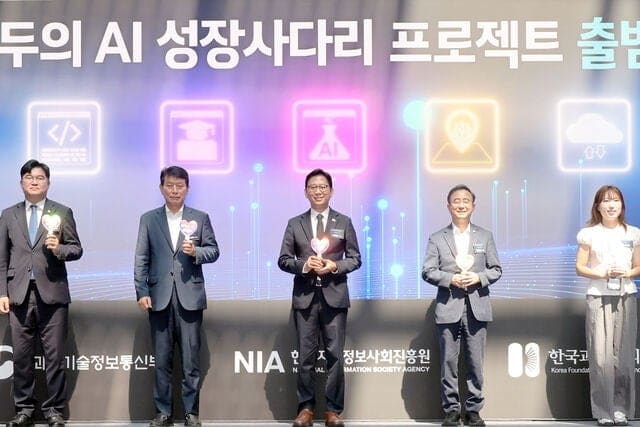
South Korea Taps Three Telecom Giants to Deliver Free AI Services Nationwide
Cheng Wei-Lun · 3 min

South Korea Records Highest September Export Start on Semiconductor Demand
Tran Quoc Bao · 3 min
Samsung and SK Hynix Turn Down KEPCO's Multibillion-Dollar Prepayment Demand
Cheng Wei-Lun · 4 min
LG Pivots to AI-Defined Vehicle Platform as Korea Chases China's Self-Driving Lead
Jun-ho Seo · 3 min
Spot something wrong? Email editor@briefasia.com. We log every correction publicly.