Finance · Deals
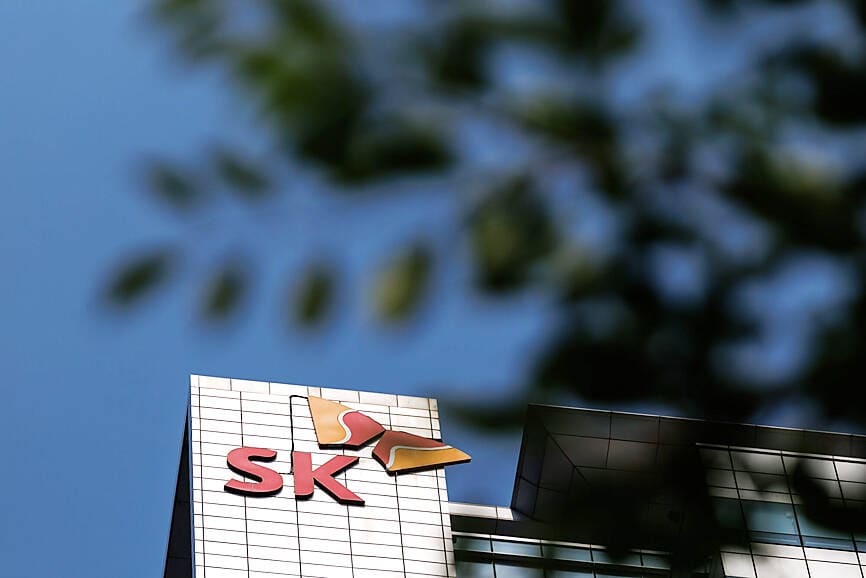
SK Hynix Sets Low Fee Structure for Massive US Share Sale
The Korean chipmaker plans to pay banks just 0.5 percent on a deal that could raise $26.5 billion, reflecting investor appetite for AI-linked semiconductor plays
KEY TAKEAWAYS
- ·SK Hynix is structuring its US share sale with a 0.5 percent banking fee, potentially raising $26.5 billion based on its $1.1 trillion market capitalization.
- ·The Korean chipmaker's stock has surged 770 percent over twelve months, driven by its position as the leading high-bandwidth memory supplier to Nvidia.
- ·South Korea's central bank warned that leveraged ETFs tied to SK Hynix and Samsung intensify market concentration and could amplify volatility during corrections.
A Lean Deal Structure
SK Hynix is preparing to compensate investment banks at roughly 0.5 percent of proceeds from its upcoming US listing, according to people with knowledge of the transaction. The fee arrangement, while modest by historical standards for deals of this magnitude, reflects the relative ease of marketing a company already familiar to global institutional investors.
The Korean memory chipmaker indicated it would issue up to 2.5 percent of total shares outstanding. At the company's current market capitalization of approximately $1.1 trillion, the offering could generate around $26.5 billion in gross proceeds. That fee rate would translate to more than $130 million in total compensation for the banking syndicate, split among Bank of America, Citigroup, Goldman Sachs, and JPMorgan Chase. SK Hynix retains the option to pay discretionary incentives above the base rate, though final terms remain under discussion.
The low percentage underscores a structural shift in large-cap equity capital markets. When a company carries both name recognition and a proven growth narrative tied to artificial intelligence infrastructure, underwriting risk diminishes. Bankers are effectively executing a distribution exercise rather than pioneering a new equity story.
AI Tailwinds and Volatile Fundamentals
SK Hynix has emerged as the dominant supplier of high-bandwidth memory, a critical component in data-center AI systems. The company secured its position as the go-to provider for Nvidia, whose processors power the majority of large-scale machine-learning workloads. Investor conviction in long-term demand for memory and storage has propelled the stock up 770 percent over the past twelve months, even after a 20 percent correction from last month's peak.
Yet that rally has introduced sharp volatility. Shares listed in Seoul swung as much as 15 percent lower in a single session last week, then rebounded 10 percent the following day. The whipsaw moves complicate pricing decisions for the US offering, particularly around setting a discount that balances issuer dilution against investor demand.
For bankers, the dual-listing dynamic adds a layer of execution risk. Arbitrage flows between Seoul and New York could widen if market sentiment shifts during the roadshow or book-building window. Still, the company's entrenchment in AI supply chains offers a powerful anchor for the equity story.
Regulatory Concerns Over Concentration
The planned share sale comes as South Korean regulators flag systemic risks tied to single-stock leveraged exchange-traded funds linked to SK Hynix and Samsung Electronics. The Bank of Korea warned in a submission to lawmakers that the two companies already account for more than half of the domestic equity market's capitalization and trading volume. Expanding investment in leveraged products tied to individual names could deepen that concentration, amplify price swings, and intensify one-way trading flows.
The central bank cautioned that a correction in either stock could trigger cascading losses for retail investors, while redemptions and portfolio rebalancing by ETF managers would exacerbate volatility. It plans to enhance monitoring of single-stock leveraged products and their impact on financial stability. Last month, the head of South Korea's Financial Supervisory Service publicly expressed regret over allowing the launch of such instruments, citing their growing negative side effects.
The regulatory scrutiny underscores a broader tension in Seoul's capital markets. Policymakers want to channel domestic savings into equities and support homegrown technology champions, yet the resulting concentration creates fragility. A sharp move in SK Hynix shares, whether driven by cyclical memory pricing or a shift in AI capex sentiment, now carries knock-on effects across retail portfolios and derivative markets.
Pricing in a Crowded Window
The US listing arrives during a busy stretch for Asian technology offerings. Investors have absorbed a wave of secondary placements and convertible issuance from semiconductor, cloud infrastructure, and hardware names across the region. Demand for exposure to AI remains robust, but allocations are finite, and funds must weigh relative value across competing opportunities.
SK Hynix benefits from timing and narrative alignment. Memory supply discipline has held firmer than in prior cycles, and hyperscale cloud providers continue to signal multi-year investment horizons for AI infrastructure. The company's revenue visibility, while subject to chip-pricing volatility, extends further than most cyclical hardware plays.
The modest fee structure suggests management and the syndicate banks are confident the deal will clear without heavy lifting. If execution proceeds smoothly, the offering will set a benchmark for other Asian technology giants contemplating cross-border capital raises. If volatility resurfaces or demand softens, the low fee may look less like efficiency and more like underestimation of market risk.
RELATED STORIES
Seoul Markets Tumble as Tech Selloff Ripples Across Asia
Cheng Wei-Lun · 3 min
Samsung Electronics Drops 8% as Market Questions Buyback Strategy
Cheng Wei-Lun · 2 min
Index Funds Face Hidden Concentration Risk From AI Boom
Cheng Wei-Lun · 3 min
SK Hynix Union Rejects Wage Deal in Razor-Thin Vote
Cheng Wei-Lun · 3 min
Spot something wrong? Email editor@briefasia.com. We log every correction publicly.