Technology · AI
SK hynix Posts Record Profit as AI Chip Demand Defies Bubble Fears
The South Korean chipmaker's Q2 net profit surged thirteen-fold year-on-year, fueled by data center infrastructure buildout and high-bandwidth memory sales to Nvidia
KEY TAKEAWAYS
- ·SK hynix reported second-quarter net profit of 94 trillion won ($64 billion), up 1,242 percent year-on-year, marking its strongest quarterly performance on record.
- ·Operating profit reached 60 trillion won as demand for high-bandwidth memory chips from AI data center projects continues to outpace supply despite market concerns about overvaluation.
- ·The company plans 40 trillion won in capital expenditure this year while its shares have fallen 33 percent over the past month amid broader investor caution on AI sustainability.
Record Performance Amid Market Turbulence
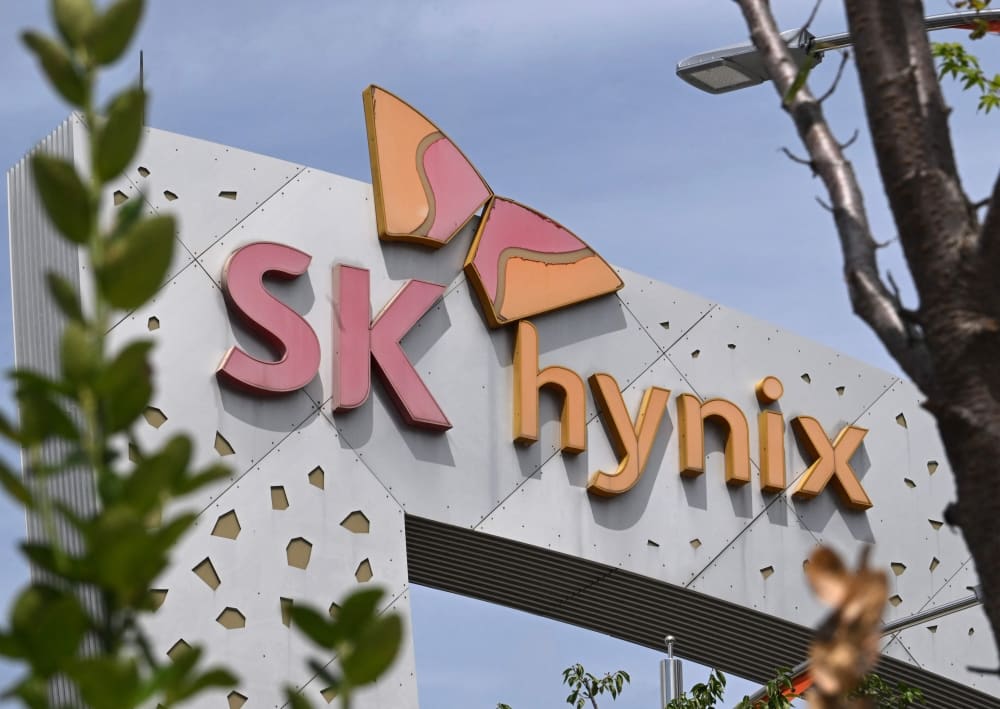
SK hynix delivered its strongest quarterly performance on record, with second-quarter net profit climbing 1,242 percent year-on-year to 94 trillion won ($64 billion). The Icheon-based memory chip specialist attributed the surge to relentless demand from artificial intelligence infrastructure projects, even as broader market sentiment around AI valuations has turned cautious.
Operating profit between April and June jumped 557 percent from the prior year to 60 trillion won, according to SK hynix. Revenue reached 79 trillion won, with the gap between net profit and revenue widened by a one-time transaction involving the company's stake in flash memory producer Kioxia, another firm riding the AI wave.
The figures underscore how deeply Asia's semiconductor ecosystem has become intertwined with the generative AI boom. SK hynix supplies high-bandwidth memory chips to Nvidia, the dominant player in AI accelerators, positioning the Korean firm at the center of a global race to build data centers capable of training and deploying large language models.
Dismissing Slowdown Signals
Market observers have flagged potential warning signs in recent weeks. Some hyperscalers are exploring rental arrangements for data center capacity rather than committing to greenfield construction, while new high-efficiency AI models promise to reduce memory requirements per workload. Both trends have raised questions about whether the infrastructure investment cycle is reaching a plateau.
Park Joon-deok, marketing chief of SK hynix's AI microchip division, addressed those concerns directly during an investor call. He characterized the shift toward data center rentals and more efficient models not as a retreat from AI investment but as a natural progression toward monetizing the massive infrastructure already deployed.
"We view these developments not as a scaling back of AI investment, but rather as a process of maximizing the utilization of the massive AI infrastructure built to date and accelerating its monetization," Park said.
The company emphasized that major technology firms continue to expand their AI infrastructure budgets, with additional supply requests accumulating as models grow more complex and memory-intensive. SK hynix noted that these investments are increasingly backed by revenue from AI services, suggesting a more sustainable demand trajectory than speculative buildout.
Capital Deployment and Market Volatility
SK hynix plans to invest around 40 trillion won this year, maintaining an aggressive capital expenditure posture despite recent share price declines. The company's stock fell 14 percent in a single session earlier this week, part of a broader selloff that has hit South Korean chipmakers. SK hynix shares are down 33 percent over the past month, while larger rival Samsung Electronics has dropped 41 percent in the same period.
The pullback reflects a combination of factors: concerns about AI sector overvaluation, geopolitical tensions in the Middle East unsettling global investors, and uncertainty about whether memory chip demand can sustain its current trajectory. KB Securities analyst Kim Dong-won noted in a recent analysis that supply shortages are likely to persist through 2028, with memory chip prices expected to rise at least 30 percent in the third quarter.
Earlier this month, SK hynix raised $26.5 billion through an American Depositary Receipt listing in the United States, one of the largest equity offerings on record. Parent firm SK Group separately announced a $500 billion collaboration with Nvidia focused on AI infrastructure investment, signaling continued confidence in the sector's long-term prospects.
Regional Competitive Dynamics
The earnings report arrives as Samsung Electronics prepares to announce its own second-quarter results, with the company forecasting operating profit growth of 1,800 percent year-on-year. The parallel performance of South Korea's two leading memory chipmakers highlights the country's central role in supplying the physical infrastructure underpinning the AI industry.
Both companies have benefited from a structural shift in data center architecture. As AI workloads demand faster data transfer between processors and memory, high-bandwidth memory has become a critical bottleneck. SK hynix's early specialization in this segment has given it a lead in a market where supply constraints remain acute and pricing power remains firmly with producers.
The divergence between soaring earnings and falling share prices reflects a broader tension in Asian technology markets. Investors are weighing near-term profitability against questions about peak demand, potential oversupply in 2027, and the risk that new chip architectures could reduce memory intensity. For now, SK hynix's order book suggests those concerns remain speculative, with hyperscale customers continuing to place orders well in advance of delivery.
RELATED STORIES
Memory Makers Gain Leverage as AI Server Costs Climb
Cheng Wei-Lun · 3 min
Samsung and SK Hynix Turn Down KEPCO's Multibillion-Dollar Prepayment Demand
Cheng Wei-Lun · 4 min

South Korea Records Highest September Export Start on Semiconductor Demand
Tran Quoc Bao · 3 min
SK Hynix May Fast-Track Gwangju Fab Investment Alongside Yongin Expansion
Jun-ho Seo · 3 min
Spot something wrong? Email editor@briefasia.com. We log every correction publicly.