Sustainability · Nature
Singapore Releases Millions of Lab-Bred Mosquitoes to Fight Dengue
City-state deploys Wolbachia-infected male insects in public housing estates as part of disease-control strategy
KEY TAKEAWAYS
- ·Singapore's National Environment Agency releases millions of Wolbachia-infected male mosquitoes weekly in public housing estates to disrupt Aedes mosquito reproduction and reduce dengue transmission.
- ·The Wolbachia method relies on cytoplasmic incompatibility, where eggs from matings between infected males and wild females fail to hatch, suppressing mosquito populations without chemical pesticides.
- ·Early results from pilot zones show promise, and the program could serve as a regional model if it proves scalable and cost-effective across Southeast Asia's dengue-endemic areas.
A Thermos Full of Mosquitoes
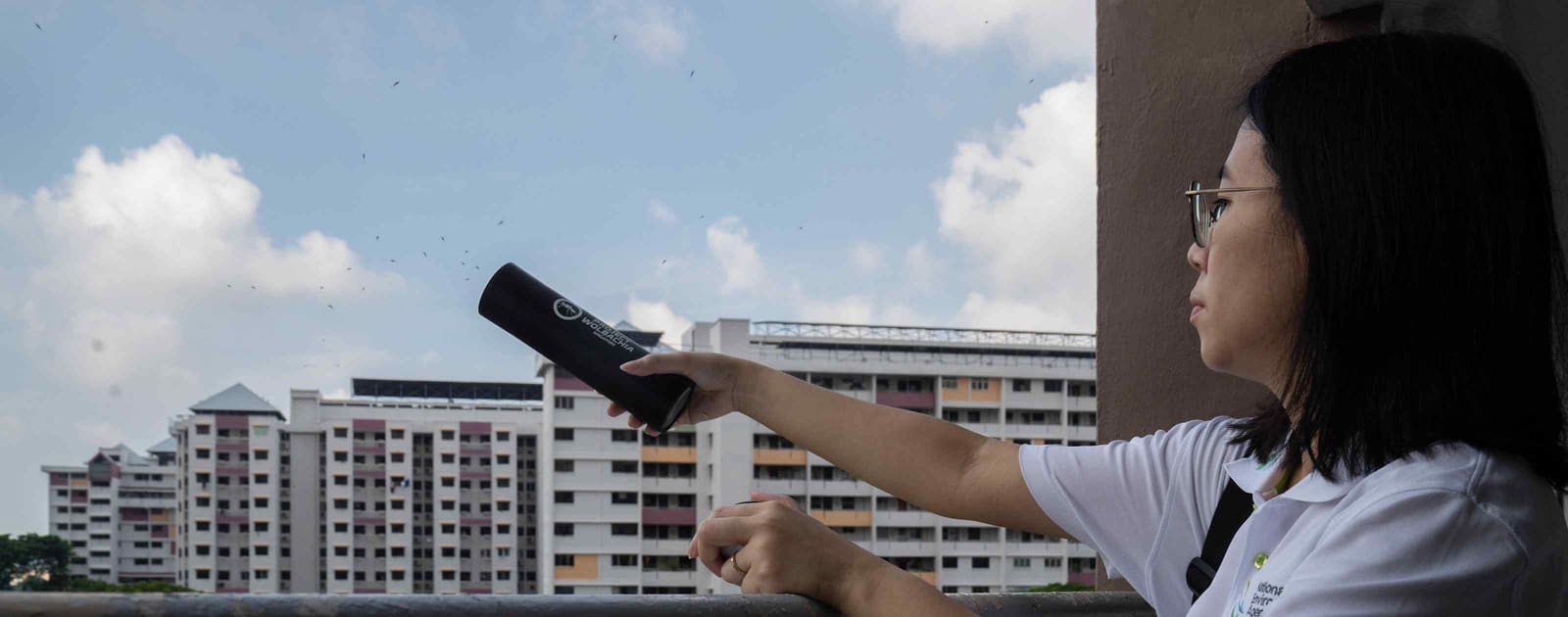
On a humid morning in late May, a staffer from Singapore's National Environment Agency walked through a public housing estate in the city's northeast carrying what looked like an ordinary black thermos. Inside, however, were thousands of male mosquitoes, bred in laboratories and infected with a bacterium called Wolbachia, ready to be released into the wild.
The cylinder is part of Singapore's escalating campaign against dengue, a sometimes-deadly virus transmitted by Aedes mosquitoes. Rather than relying solely on insecticides or elimination of breeding sites, the National Environment Agency is deploying a biological weapon: male mosquitoes that carry Wolbachia bacteria. When these lab-bred males mate with wild females, the resulting eggs do not hatch, disrupting the reproductive cycle and suppressing mosquito populations over time.
The approach represents a significant shift in how Asian governments are tackling vector-borne diseases. Singapore has been scaling up its mosquito-breeding program to produce millions of these modified insects each week, targeting neighborhoods across the densely populated island nation.
How the Wolbachia Method Works
The Wolbachia strategy hinges on a phenomenon called cytoplasmic incompatibility. Male mosquitoes infected with the bacterium are released into the environment, where they mate with wild females. If the female does not carry the same Wolbachia strain, the embryos fail to develop, effectively reducing the next generation of mosquitoes without the use of chemical pesticides.
Crucially, only male mosquitoes are released. Males do not bite humans or transmit disease; they feed on nectar. The biting, disease-spreading females remain the target. By flooding an area with Wolbachia-infected males, authorities aim to tilt the reproductive odds in their favor, driving down mosquito populations in targeted zones.
The technique has been tested in several countries, but Singapore's program is among the most ambitious in scale and geographic coverage. The National Environment Agency has been conducting field releases in public housing estates, where high-density living and shared outdoor spaces create ideal conditions for mosquito breeding.
Scaling Up Production
Behind the field releases lies a sophisticated breeding operation. Singapore's mosquito production facilities rear millions of male Aedes mosquitoes each week, separating them from females at the pupal stage to ensure only non-biting males are released. The insects are infected with Wolbachia in laboratory conditions, then packaged into portable containers for distribution across the city.
The logistics are complex. Mosquitoes have short lifespans, so timing is critical. Releases must be coordinated with weather conditions, population density, and existing dengue case data to maximize effectiveness. Staffers visit release sites multiple times per week, deploying the insects in batches to maintain pressure on wild mosquito populations.
Singapore's investment in this approach reflects the persistent threat dengue poses. The city-state has experienced periodic dengue outbreaks despite aggressive public health campaigns urging residents to eliminate standing water and other breeding sites. In years with high transmission, thousands of cases have been recorded, straining healthcare resources and prompting calls for more innovative control measures.
Regional Context and Challenges
Singapore is not alone in confronting dengue. Across Southeast Asia, the virus remains endemic, with countries like Thailand, Vietnam, Indonesia, and the Philippines reporting tens of thousands of cases annually. Climate change, urbanization, and increased mobility have expanded the geographic range of Aedes mosquitoes, making traditional control methods less effective.
Other governments are watching Singapore's Wolbachia program closely. If the approach proves successful in reducing dengue transmission without significant ecological side effects, it could serve as a model for regional deployment. However, challenges remain. Public acceptance of releasing lab-bred mosquitoes is not universal, and the method requires sustained investment in breeding infrastructure and field operations.
There are also questions about long-term efficacy. Mosquito populations can rebound quickly if releases are discontinued, and there is ongoing research into whether wild mosquitoes might develop resistance or behavioral adaptations. For now, the Wolbachia strategy is viewed as one tool among many, complementing traditional vector control and public education efforts.
What Comes Next
As Singapore continues its releases, data collection will be critical. Health officials are monitoring dengue case counts, mosquito population density, and Wolbachia prevalence in wild populations to assess whether the program is achieving its objectives. Early results from pilot zones have been promising, with some areas reporting reduced mosquito numbers and lower dengue incidence.
The broader implications extend beyond Singapore. If Wolbachia-based suppression proves scalable and cost-effective, it could reshape how tropical and subtropical cities manage vector-borne diseases. For a region where dengue has long been a public health burden, the black thermos carried through housing estates may signal a turning point in the fight against the virus.
RELATED STORIES
Tuas Power Wins Rights to Build Singapore's Newest Gas Turbine Plant
Priyanka V. Rao · 4 min

Korean Fried Chicken Chain Mom's Touch Enters Singapore Market
Lim Hui Ying · 2 min

Gen Z Founders Launch Singapore Bullion Startup With S$500,000 Pooled Capital
Lim Hui Ying · 3 min

Singapore's Retail Fund Push Faces Test as South Korea's Leveraged ETF Losses Mount
Cheng Wei-Lun · 3 min
Spot something wrong? Email editor@briefasia.com. We log every correction publicly.