Asia · Politics
Singapore Rejects Claims It Benefits From Indonesia's Economic Turbulence
Senior ministers respond to social media backlash after foreign capital flight and rupiah depreciation sparked investor sentiment shift in June
KEY TAKEAWAYS
- ·Singapore officials rejected accusations the city-state is profiting from Indonesia's economic slowdown after the rupiah fell past 18,000 per US dollar in June and billions in foreign capital exited.
- ·Minister of State Zhulkarnain Abdul Rahim stated Singapore's progress depends on Indonesia's growth under President Prabowo Subianto's administration and regional stability.
- ·The dispute emerged after international financial coverage prompted Indonesian social media users to launch boycott campaigns targeting Singaporean commercial platforms.
Diplomatic Response to Online Tensions
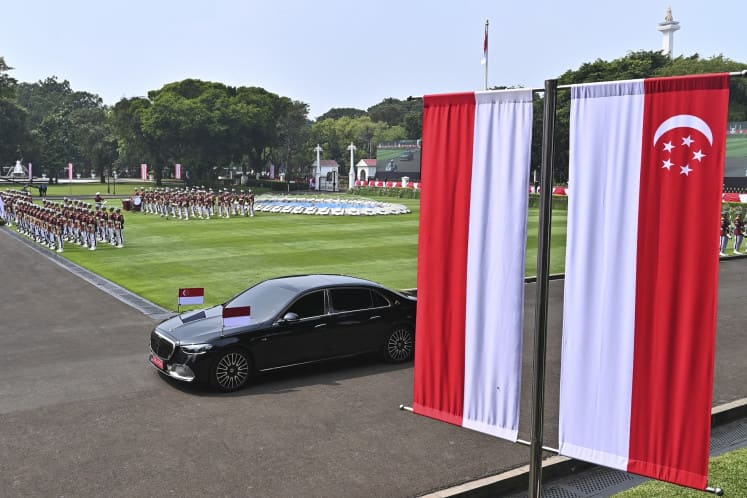
Singapore's government has pushed back against mounting accusations that it is benefiting from Indonesia's recent economic difficulties, with senior officials emphasizing their commitment to regional stability and bilateral cooperation.
The dispute emerged in June after foreign investors withdrew billions of dollars from Indonesian markets, prompting international financial coverage that Indonesian social media users interpreted as evidence of Singaporean opportunism. The rupiah slid past 18,000 per US dollar during the period, marking its position as Asia's worst performing currency.
Minister of State for Foreign Affairs Zhulkarnain Abdul Rahim addressed the controversy during a July 16 briefing with Indonesian journalists, stating that online criticism does not reflect the actual state of relations between the two nations. The minister expressed support for President Prabowo Subianto's administration and its efforts to create conditions for economic growth.
Capital Flight and Currency Pressure
The tensions followed international financial coverage in June that highlighted policy uncertainty and currency depreciation under the current Indonesian administration. When a Singaporean outlet republished the analysis, Indonesian social media users launched a counter-campaign targeting the city-state's commercial interests, including calls to boycott e-commerce platforms operating from Singapore.
The rupiah's decline to record lows represented a significant challenge for Southeast Asia's largest economy, with the currency weakness coinciding with substantial portfolio outflows. Indonesian users framed the coverage as evidence of Singapore positioning itself to attract capital diverted from its neighbor.
Bilateral Stakes
Singapore's response underscores the delicate balance the city-state maintains in its relationship with Indonesia, a country with which it shares deep economic and strategic ties. The two governments hold annual leadership retreats to coordinate on bilateral issues, with the most recent session taking place in early July in Jakarta.
Rahim's remarks positioned Singapore's prosperity as linked to Indonesian growth, emphasizing that regional progress depends on stability across ASEAN member states. The minister avoided directly addressing the social media campaigns, instead framing Singapore's interest in terms of shared regional development.
Regional Financial Dynamics
The episode highlights how capital mobility in Southeast Asia can strain diplomatic relationships, particularly when investors shift allocations between neighboring markets. Singapore's role as a regional financial hub means it often absorbs flows exiting other ASEAN economies during periods of volatility, a dynamic that can fuel resentment even when the city-state's government takes no active role in directing those movements.
For Indonesia, the challenge lies in stabilizing investor confidence while managing currency pressures that have persisted since the change in administration. The government faces scrutiny over policy clarity as it seeks to reverse the outflow trend and restore the rupiah's position relative to regional peers.
The diplomatic exchange reveals how economic performance disparities can quickly translate into political friction in an interconnected region, even between long-standing partners. Singapore's emphasis on mutual progress reflects an awareness that sustained tension could complicate cooperation on trade, investment, and security matters that both governments consider essential.
RELATED STORIES

CIMB Commits to 55% Dividend Floor as Regional Portfolio Offsets Indonesia Pressure
Priyanka V. Rao · 4 min

Singapore Targets High-Value Data Centre Workloads as Neighbors Scale Up Capacity
Cheng Wei-Lun · 3 min
Vietnam Draws $7.5 Billion From Singapore in Seven Months
Priyanka V. Rao · 3 min

Southeast Asian Firms Race to Raise Green Debt as Region Falls Behind on Renewables
Priyanka V. Rao · 3 min
Spot something wrong? Email editor@briefasia.com. We log every correction publicly.