Asia · Politics
Singapore Turns to Regional Cooperation as El Niño Fire Season Looms
The city-state is mobilizing multilateral frameworks with Indonesia and neighbors to head off transboundary haze before peak drought conditions arrive.
KEY TAKEAWAYS
- ·Singapore is mobilizing multilateral frameworks with Indonesia and regional partners as forest fires rise across multiple Indonesian provinces in the first half of the year.
- ·El Niño conditions threaten a repeat of the 2015 haze crisis, when air pollution reached hazardous levels and caused billions in economic losses across Southeast Asia.
- ·Peak dry conditions are forecast for the third quarter, the traditional window for severe transboundary haze episodes in the region.
A Familiar Threat Returns
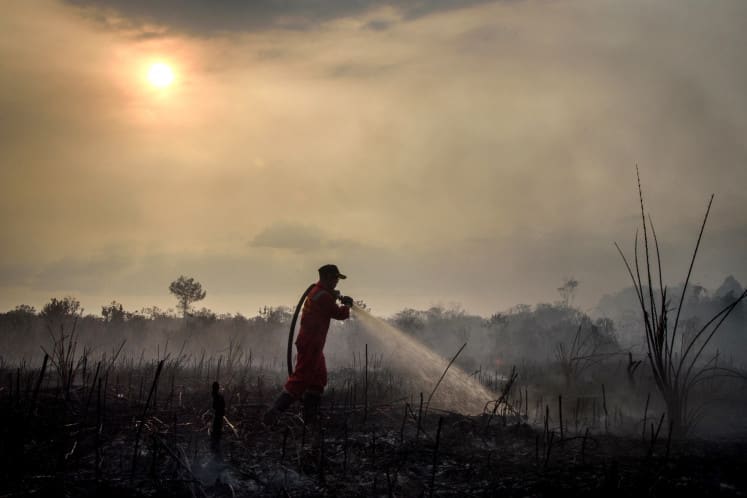
Singapore is tightening coordination with fire-prone neighbors ahead of what meteorologists warn could be a severe El Niño-driven dry season. The effort comes as Indonesia reports an uptick in forest fires across multiple provinces in the first half of this year, raising concerns that the region may soon face air quality crises reminiscent of past episodes.
The city-state's diplomatic push centers on multilateral mechanisms designed to share real-time fire data, coordinate aerial surveillance, and deploy rapid-response firefighting assets. Singapore has historically relied on bilateral and ASEAN-level frameworks to manage haze, which routinely blankets the Lion City when peatland and forest fires rage across Sumatra and Kalimantan during prolonged dry spells.
El Niño's Expanding Footprint
El Niño conditions suppress rainfall across maritime Southeast Asia, turning peat swamps and secondary forests into tinderboxes. The phenomenon last triggered widespread haze in 2015, when air pollution readings in Singapore spiked above hazardous thresholds for weeks and economic losses across the region ran into billions of dollars.
Indonesian authorities have recorded a rise in hotspot detections this year, concentrated in provinces with extensive peatland cover. While officials have not released consolidated figures, satellite monitoring by regional environmental agencies shows fire activity trending above the five-year average for the January-June period.
Singapore's Ministry of the Environment and Water Resources has convened technical working groups with counterparts in Indonesia, Malaysia, and Brunei to review contingency protocols. The discussions include pre-positioning haze mitigation equipment, synchronizing cloud-seeding operations, and establishing joint command centers that can escalate responses when air quality deteriorates.
Lessons from the 2015 Crisis
The 2015 haze episode exposed gaps in cross-border information sharing and response speed. Singapore deployed aircraft and personnel to assist Indonesian firefighting efforts, but coordination bottlenecks delayed deployment of resources to the most critical hotspots. The ASEAN Agreement on Transboundary Haze Pollution, which Indonesia ratified in 2014, has since provided a legal framework for deeper cooperation, though enforcement and capacity constraints persist.
Singapore has invested in domestic air filtration infrastructure and public health protocols, but the island's vulnerability to external fire sources remains unchanged. Prevailing winds during the southwest monsoon carry smoke plumes directly over the city-state, and even moderate fire seasons can disrupt aviation, outdoor commerce, and public health.
The government has also encouraged private sector participation in haze mitigation, including support for zero-burn agricultural techniques and sustainable plantation management in neighboring countries. Several Singaporean firms with upstream supply chains in Indonesia have committed to fire-free land clearing, though adoption across smallholder farms remains uneven.
Regional Diplomacy at Work
Singapore's emphasis on multilateralism reflects a pragmatic calculation. The city-state lacks the land mass to generate its own haze but bears the economic and public health consequences of fires hundreds of kilometers away. By embedding its interests within ASEAN structures, Singapore aims to build collective accountability and share the financial burden of prevention and response.
Indonesia, which holds the largest expanse of peatland in the region, has strengthened its own fire management institutions since 2015, including a moratorium on new peat concessions and expanded enforcement against illegal burning. However, resource constraints and the sheer scale of at-risk areas mean that international cooperation remains essential.
Malaysia and Brunei, which also experience haze from Sumatran and Bornean fires, have aligned their monitoring systems with Singapore's, creating a networked early-warning architecture. The three countries conduct joint exercises and maintain standby agreements for mutual aid, including aircraft and specialist firefighting teams.
What Comes Next
Meteorological agencies across the region are closely monitoring sea surface temperatures in the Pacific, which drive El Niño intensity. Current forecasts suggest that peak dry conditions could arrive in the third quarter, the traditional window for severe haze episodes.
Singapore's diplomatic outreach is entering a critical phase. The success of multilateral frameworks will be tested in the coming months as fire pressure mounts. For a city-state that imports nearly all its food and water but cannot escape its neighbors' smoke, regional solidarity is not an option but a necessity.
RELATED STORIES

CIMB Commits to 55% Dividend Floor as Regional Portfolio Offsets Indonesia Pressure
Priyanka V. Rao · 4 min

Singapore Targets High-Value Data Centre Workloads as Neighbors Scale Up Capacity
Cheng Wei-Lun · 3 min
Vietnam Draws $7.5 Billion From Singapore in Seven Months
Priyanka V. Rao · 3 min
Southeast Asian Firms Race to Raise Green Debt as Region Falls Behind on Renewables
Priyanka V. Rao · 3 min
Spot something wrong? Email editor@briefasia.com. We log every correction publicly.