Asia · Business
Singapore Stands Alone as Southeast Asia's Only High-Income Economy
World Bank threshold of $14,375 GNI per capita leaves most ASEAN members in middle-income category despite decades of growth
KEY TAKEAWAYS
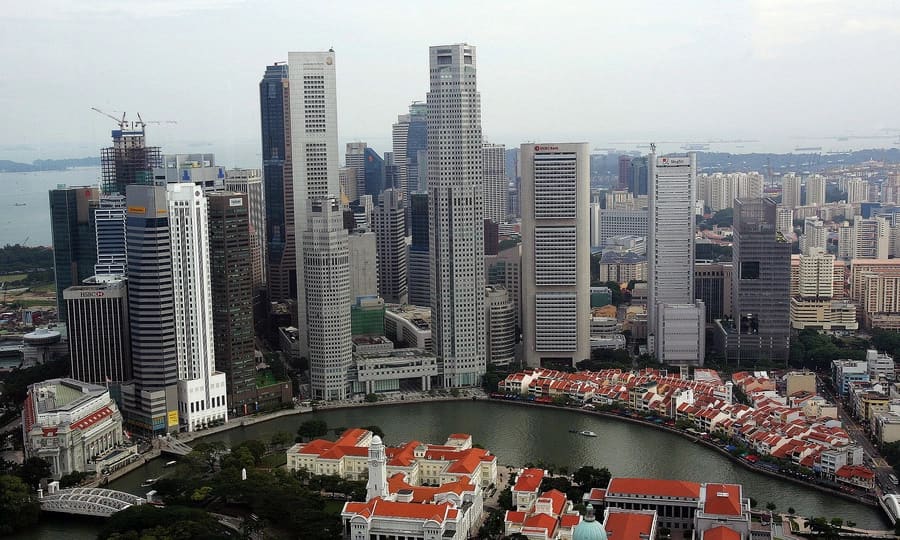
- ·Singapore is the only Southeast Asian country classified as high-income by the World Bank, which sets the threshold at $14,375 GNI per capita.
- ·Malaysia comes closest to graduation among ASEAN peers but remains trapped between middle-income growth constraints and advanced-economy requirements.
- ·The income gap reflects structural differences in governance, infrastructure, and economic diversification that have compounded over decades across the region.
The Lone Graduate
Singapore remains the only Southeast Asian country classified as a high-income economy under the World Bank's current standards, which set the bar at gross national income per capita of $14,375 or more. The city-state's position reflects a development trajectory that has left its regional neighbors trailing despite decades of economic expansion across ASEAN.
The classification system divides the world's economies into four income groups based on GNI per capita, calculated using the Atlas method. High-income status represents the top tier, distinguishing countries with mature economies, advanced infrastructure, and substantial purchasing power from those still climbing the development ladder.
Southeast Asia's Development Divide
The region's ten other members - Brunei, Malaysia, Thailand, Indonesia, Vietnam, the Philippines, Cambodia, Laos, Myanmar, and Timor-Leste - fall below the threshold, though several have made considerable strides. Malaysia has hovered near the boundary for years, while Thailand and Indonesia have built substantial manufacturing bases that drive middle-income growth.
Singapore crossed into high-income territory in the 1980s and has maintained that status through strategic positioning as a financial hub, technology center, and logistics gateway. Its GNI per capita now exceeds $70,000, placing it among the world's wealthiest nations on a per-person basis. The gap between Singapore and its neighbors reflects differences in economic structure, governance quality, and decades of compounding growth advantages.
Regional Implications
The single-country result carries weight for ASEAN's collective ambitions. The bloc has promoted itself as an integrated economic zone with combined GDP approaching $4 trillion, yet the income disparity between Singapore and the rest underscores persistent barriers to convergence. Infrastructure quality, regulatory environments, and human capital development vary sharply across borders.
Vietnam and the Philippines have posted strong growth rates in recent years, driven by manufacturing relocations and remittance flows, but both remain firmly in the lower-middle-income band. Cambodia and Laos continue to rely heavily on agriculture and face structural constraints that limit productivity gains. Myanmar's political instability has stalled economic progress, while Timor-Leste remains dependent on oil revenue.
Path to Graduation
Economists point to several factors that determine whether a country crosses the high-income line. Sustained productivity growth, export diversification, stable institutions, and investment in education and technology all contribute. Countries that have successfully graduated - South Korea, Taiwan, and more recently Poland - typically required two to three decades of consistent policy execution and structural reform.
For Southeast Asia, the question is whether the next wave of graduates will emerge in the coming decade. Malaysia appears closest, with per capita income around $12,000, but has struggled with what analysts call the middle-income trap, where wage growth outpaces productivity gains and countries lose competitive advantages without achieving advanced-economy status.
Thailand faces similar challenges, balancing tourism revenue and manufacturing exports while managing political uncertainty. Indonesia's sheer size offers scale advantages, but per capita income remains constrained by a large rural population and infrastructure gaps across its archipelago.
What the Threshold Means
The World Bank adjusts income thresholds periodically to account for inflation and purchasing power changes. The current $14,375 mark represents a meaningful break point where economies typically exhibit characteristics like universal healthcare access, advanced education systems, and diversified industrial bases. Countries below this level often face constraints in public service delivery and remain vulnerable to commodity price swings or external shocks.
Singapore's solitary status does not diminish the progress made elsewhere in the region. Real incomes have risen substantially across ASEAN over the past three decades, lifting hundreds of millions out of poverty. But the high-income designation remains a benchmark that only one Southeast Asian nation has achieved, highlighting how difficult the final development leap can be.
The classification matters for more than prestige. High-income status affects borrowing costs, attracts different types of investment, and shapes international negotiations on trade and climate policy. For Southeast Asia's emerging economies, the question is not whether they will follow Singapore, but when - and what policy choices will determine the timeline.
RELATED STORIES
Vietnam Draws $7.5 Billion From Singapore in Seven Months
Priyanka V. Rao · 3 min

Singapore Eyes Global Investment Court as UN Talks Near Final Stage
Priyanka V. Rao · 3 min

Singapore Targets High-Value Data Centre Workloads as Neighbors Scale Up Capacity
Cheng Wei-Lun · 3 min
Singapore Economists Lift 2026 Growth Outlook to 5% as Chip Exports Surge
Priyanka V. Rao · 3 min
Spot something wrong? Email editor@briefasia.com. We log every correction publicly.