Lifestyle · Health
Singapore InsurTech LivWell Bets on Integrated Health Platforms in Vietnam
The company is moving beyond reimbursement-only models, adding preventive care and chronic disease tools as out-of-pocket health costs remain stubbornly high.
KEY TAKEAWAYS
- ·Singapore InsurTech LivWell is expanding its OneHealth platform in Vietnam to integrate preventive care, telemedicine, and wellness tracking alongside traditional insurance, after signing partnerships with InSmart and DiaB on July 7.
- ·Vietnamese households still pay approximately 40 percent of healthcare expenses out of pocket, double the World Health Organization's recommended ceiling, despite existing public and private coverage.
- ·LivWell plans to launch condition-specific insurance products starting with cancer, where patients can shoulder up to 70 percent of treatment costs and 68 percent of affected families face catastrophic health expenditure.
Reframing Employee Benefits
LivWell, a Singapore-headquartered InsurTech, is reconfiguring its approach to workplace health coverage in Vietnam, shifting from a claims-first model to a year-round wellness architecture.
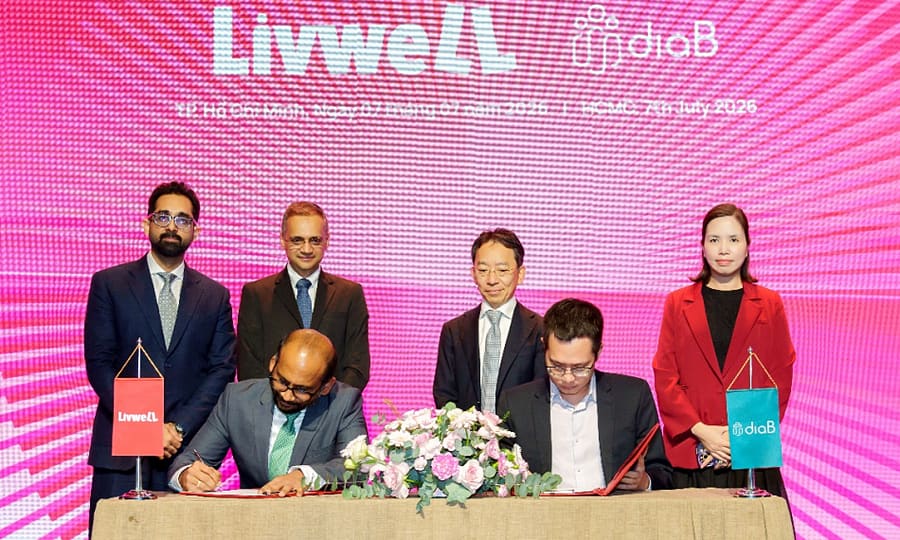
The firm announced the evolution of its OneHealth platform at a Ho Chi Minh City gathering on July 7, where it formalized partnerships with two local firms: InSmart for claims processing integration and DiaB for telemedicine and nutrition services.
OneHealth now bundles insurance underwriting, health tracking apps, workplace screening programs, and incentive schemes into a single employer interface. The goal is to surface health data and utilization patterns that help companies manage benefits spend while employees engage with preventive services rather than waiting for acute episodes.
According to LivWell, Vietnamese households still finance roughly 40 percent of their healthcare costs directly, well above the 15 to 20 percent ceiling the World Health Organization considers sustainable. That gap persists even where public and private insurance nominally exist, pointing to coverage holes and high deductibles.
Two Partnerships, Two Layers
The InSmart tie-up embeds claims submission and benefits tracking inside the LivWell mobile app, reducing administrative friction for employees. The DiaB collaboration adds remote doctor consultations, personalized meal planning, and management protocols for chronic conditions such as diabetes.
Nikhil Verma, co-founder and group chief executive of LivWell, said the company wants health benefits woven into daily routines instead of activated only during medical crises. The platform is designed to keep wellness visible and actionable throughout the year.
Employers gain a dashboard view of workforce health trends and program uptake, useful for steering benefits budgets and spotting utilization anomalies. Employees use the app to log biometric data, schedule screenings, and join company-sponsored wellness challenges.
Cancer-Focused Insurance in the Pipeline
Beyond the platform expansion, LivWell disclosed plans to design insurance products tailored to people already living with serious conditions. The first product will target cancer patients.
Citing data from K Hospital, the company noted that patients often pay up to 70 percent of oncology treatment costs out of their own pockets. A 2017 study found that 68 percent of Vietnamese families dealing with cancer faced catastrophic health expenditure, a threshold at which medical bills force cuts to food, education, or housing.
Balakrishnan Ambat, co-founder and chief executive of LivWell Vietnam, framed the move as part of a broader shift in how the industry thinks about risk. Rather than pricing only healthy lives and excluding the sick, condition-specific products aim to provide financial scaffolding for people navigating complex, expensive care.
Employer Uptake and Scale
LivWell reports serving more than 320,000 users and working with over 450 companies since 2020, including small and medium-sized enterprises that historically lacked access to structured wellness programs.
The firm cited internal research showing that seven out of ten adults believe wellness initiatives improve productivity, a data point that resonates with employers weighing the return on benefits investment.
By layering preventive tools onto traditional insurance rails, LivWell is betting that employers will pay for upstream interventions if they reduce downstream claims and absenteeism. The condition-focused products, meanwhile, test whether the market will support coverage for populations insurers have long avoided.
Vietnam's rising middle class, growing chronic disease burden, and persistent out-of-pocket cost pressures create a fertile environment for models that blend insurance, care delivery, and digital engagement. Whether that blend can operate profitably at scale remains the open question for LivWell and the cohort of regional InsurTechs chasing the same thesis.
RELATED STORIES

American Cherry Prices Surge 95% in Vietnam as Harvest Shrinks
Priyanka V. Rao · 2 min

Vietnam's Trade Turnover Hits $770 Billion as Imports Surge Past Exports
Jun-ho Seo · 2 min

Samsung's Vietnam Operations Post 23% Profit Jump to $2.3 Billion
Tran Quoc Bao · 3 min

Mixue Shutters 89 Stores Across Southeast Asia Amid Profit Decline
Siti Nuraini · 3 min
Spot something wrong? Email editor@briefasia.com. We log every correction publicly.