Real Estate · Offices
Singapore Capital Leads Southeast Asian Surge in Hong Kong Property Deals
Buyers from the region accounted for more than 11 per cent of commercial transactions valued above HKD 50 million this year, overtaking mainland Chinese investors in a shrinking foreign pool.
KEY TAKEAWAYS
- ·Southeast Asian investors accounted for HKD 3.37 billion, or 11 per cent, of Hong Kong commercial property transactions above HKD 50 million through mid-September 2026.
- ·Singapore-based buyers including DBS Bank and Wee Hur Holdings executed major deals while Western investors withdrew entirely from the market this year.
- ·Mainland Chinese buyers contributed only 5.8 per cent of total transactions, down from nearly 34 per cent in 2025.
Shift in Capital Sources
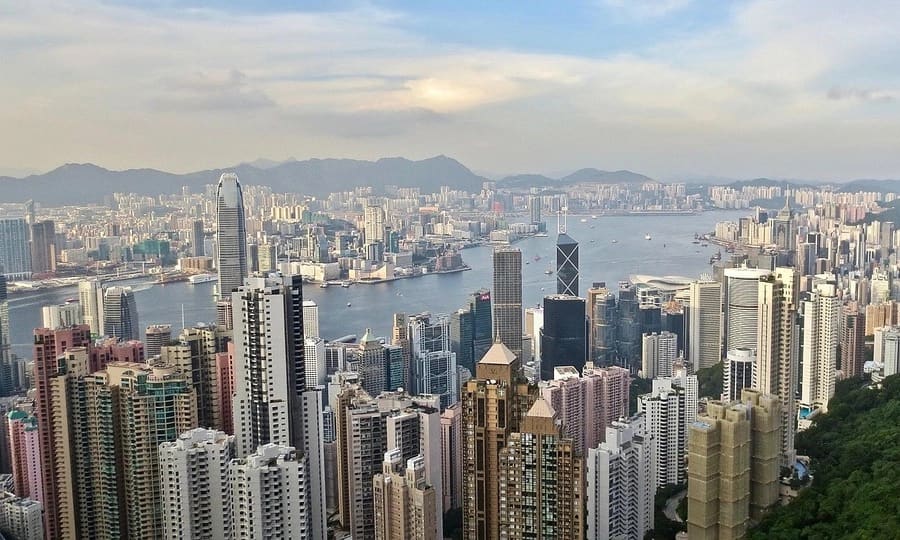
Southeast Asian investors have overtaken mainland Chinese buyers as the largest non-local purchasers of Hong Kong commercial property in 2026, driven primarily by Singapore-based capital. The shift marks a notable change in the territory's investment landscape as Western capital has largely withdrawn from the market.
Through mid-September, transactions involving commercial properties valued above HKD 50 million reached HKD 30.36 billion (USD 3.87 billion), according to data from property consultancy Savills. Southeast Asian buyers accounted for HKD 3.37 billion of that total, representing more than 11 per cent of all deals. Hong Kong-based capital dominated at 83.2 per cent, while mainland Chinese investors contributed 5.8 per cent.
The regional share becomes more striking when measured against the non-local pool alone. "Southeast Asia's share has risen against a much smaller non-local pool - it is roughly two-thirds of all non-local investment this year," said Nicholas To, senior associate director for investment at Savills Hong Kong.
Reversal from 2025
The composition of foreign buyers has reversed sharply from the previous year. In 2025, mainland investors led non-local acquisitions with nearly 34 per cent of the HKD 47.32 billion total. Buyers from the United States and Canada followed at 16 per cent, while Southeast Asian investors ranked third with a 3.7 per cent share. European capital contributed two per cent.
This year, Western investors have been entirely absent from Hong Kong's commercial property market, according to Savills data. The withdrawal has concentrated foreign capital flows into a narrower set of regional sources, with Singapore emerging as the most active.
Singapore Acquisitions
Singaporean entities have executed several significant transactions in 2026. DBS Bank (Hong Kong) acquired approximately 14,121 square metres across multiple floors at The Center for about HKD 2.62 billion. The purchase represents one of the largest single deals by a Southeast Asian buyer in the territory this year.
Wee Hur Holdings purchased One Bedford Place, an office building in Tai Kok Tsui spanning 184,041 square feet, for HKD 748.8 million. The acquisition reflects continued appetite for secondary office assets among Singaporean investors seeking yields in Hong Kong's commercial sector.
Market Context
The shift in buyer composition comes as Hong Kong's commercial property market navigates a period of price adjustment and uncertainty. Elevated interest rates, geopolitical tensions, and changes in office demand patterns have weighed on valuations across core and secondary districts.
For Southeast Asian investors, particularly those from Singapore, Hong Kong remains attractive due to currency dynamics, established legal frameworks, and the territory's role as a gateway to mainland China. Singapore-based banks, family offices, and listed property groups have maintained investment discipline while Western institutions have pulled back from Asian real-estate allocations.
The concentration of local capital at more than 83 per cent underscores that domestic buyers continue to dominate the market. However, the emergence of Southeast Asian investors as the primary foreign participant signals a reorientation of cross-border capital flows within the region, with Singapore positioning itself as a key source of outbound real-estate investment into Greater China markets.
The trend also highlights Hong Kong's evolving investor base. As traditional sources of foreign capital from North America and Europe retreat, the territory is drawing capital from geographically closer markets with stronger trade and financial linkages to the Chinese economy. Whether this shift proves durable will depend on interest rate trajectories, Hong Kong's economic performance, and the trajectory of regional capital markets over the coming quarters.
RELATED STORIES
Southeast Asian Exporters Brace for Renewed US Tariff Pressure
Anand Sundaram · 5 min
Hong Kong Awards First Northern Metropolis Land to Mainland-Local Consortium
Cheng Wei-Lun · 3 min
Hong Kong Property Prices Forecast to Climb 15% as Buyers Return
Tran Quoc Bao · 3 min
Jollibee Plans Hong Kong Spinoff for International Portfolio
Anand Sundaram · 3 min
Spot something wrong? Email editor@briefasia.com. We log every correction publicly.