Real Estate · Hotels
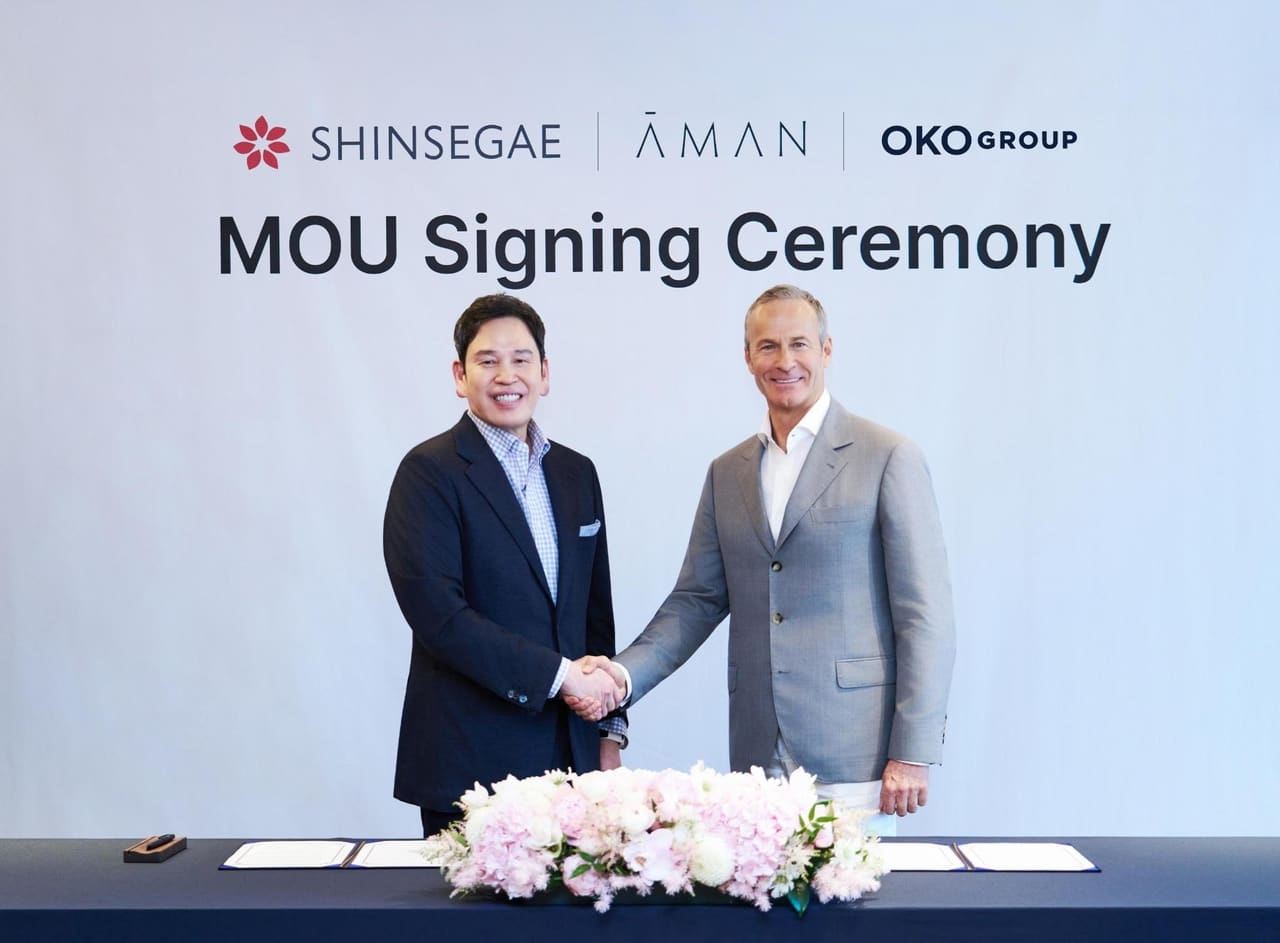
Shinsegae and OKO Group Launch $500 Million Joint Venture for Aman and Janu Projects
The partnership will develop ultra-luxury hotels and residences across South Korea and international markets, marking Shinsegae's latest push into premium hospitality real estate.
KEY TAKEAWAYS
- ·Shinsegae Group and OKO Group established a joint venture with $500 million in initial capital to develop Aman and Janu hotels and residences in South Korea and international markets.
- ·The partnership targets the ultra-luxury hospitality segment, where branded residences command premium pricing and strong absorption in Asia's gateway cities.
- ·First project locations and timelines will reveal the joint venture's strategic priorities as competition intensifies among luxury hotel brands expanding across the region.
Strategic Alliance in Ultra-Luxury Hospitality
Shinsegae Group has entered a strategic partnership with OKO Group to pursue development opportunities in the ultra-luxury hotel segment. The collaboration will focus on properties operating under the Aman and Janu brands, two of the hospitality industry's most exclusive marques. Aman Group operates both labels, with Aman positioned at the pinnacle of luxury accommodation and Janu targeting a slightly broader but still affluent demographic.
The partnership, announced Tuesday, centers on a joint venture structure with initial committed capital of $500 million, according to Shinsegae Group. The vehicle will pursue development of branded hotels and residences in South Korea and select international markets. Beyond hospitality assets, the two companies plan to explore mixed-use commercial real estate opportunities across geographies.
Asia's Appetite for Branded Residences
The timing reflects sustained demand for branded residential product in Asia's gateway cities. Seoul, Tokyo, Singapore, and Hong Kong have seen developers pair luxury hotel operators with high-end condominiums, a model that delivers premium pricing and faster absorption. Buyers value the cachet of a globally recognized brand alongside access to hotel-grade services such as concierge, housekeeping, and dining.
Aman has cultivated a particularly strong following among ultra-high-net-worth individuals in the region. The brand's properties in Bhutan, Japan, and Thailand have become pilgrimage sites for a loyal clientele willing to pay nightly rates that often exceed $1,500. Janu, introduced more recently, represents Aman Group's effort to capture a segment that prioritizes design and service but accepts a slightly less rarefied experience.
Shinsegae's entry into this space builds on the conglomerate's existing retail and hospitality portfolio. The group operates department stores, duty-free shops, and the Shilla hotel chain, which includes properties in Seoul and Jeju. Partnering with OKO Group, a New York-based developer with experience in luxury residential towers, gives Shinsegae access to expertise in structuring and executing complex mixed-use projects.
Capital Flows and Market Positioning
An initial commitment of $500 million positions the joint venture to pursue multiple projects simultaneously. Development costs for an Aman property typically range from $300 million to over $1 billion, depending on location, scale, and whether the project includes residences. Janu developments tend to fall on the lower end of that spectrum, though still far above mid-market hotel brands.
OKO Group brings a track record in high-profile residential developments, including projects in Manhattan and Miami. The firm's familiarity with ultra-luxury product and its ability to navigate financing structures for large-scale real estate will complement Shinsegae's operational strength in the Korean market and its regional brand recognition.
The partnership also reflects a broader trend of Asian conglomerates seeking to diversify revenue streams through real estate. Hospitality assets, particularly those with residential components, offer both recurring income from hotel operations and capital gains from residential sales. Branded residences in particular have proven resilient, with strong performance even during periods of broader market volatility.
Regional Expansion and Competitive Landscape
While details on specific project locations remain undisclosed, the joint venture's mandate to pursue opportunities both domestically and abroad suggests a multi-market strategy. South Korea's luxury hospitality sector has room for additional supply, particularly in Seoul's central business district and resort destinations like Jeju Island. Internationally, Southeast Asian cities such as Bangkok, Manila, and Jakarta present opportunities, as do secondary markets in Japan and Australia.
Competition in the ultra-luxury segment is intensifying. Brands such as Four Seasons, Rosewood, and Six Senses are expanding their footprints in Asia, often through partnerships with local developers. Aman's differentiation lies in its minimalist aesthetic, exclusivity, and relatively small property count, which preserves brand equity but limits scale. Janu's positioning as a more accessible sibling brand allows Aman Group to grow without diluting the flagship.
For Shinsegae, the partnership represents a calculated move into a segment adjacent to its existing Shilla hotel business. While Shilla properties occupy the luxury tier, they cater to a broader audience that includes business travelers and group bookings. Aman and Janu target a narrower, wealthier cohort, one that prioritizes privacy, design, and personalized service over convention facilities and high occupancy rates.
The joint venture's success will hinge on site selection, capital discipline, and execution. Ultra-luxury hospitality is notoriously difficult to scale; operational excellence and brand consistency are paramount. Shinsegae and OKO Group will need to balance ambition with realism, ensuring that each project meets the exacting standards Aman and Janu guests expect while delivering acceptable returns to investors.
As the partnership moves from announcement to execution, the first project locations and timelines will offer insight into the joint venture's strategic priorities and risk appetite. For now, the $500 million commitment signals confidence that demand for ultra-luxury hospitality in Asia remains robust, even as macroeconomic headwinds test other real estate sectors.
RELATED STORIES

South Korea's Alcohol Production Hits 27-Year Low as Wellness Trends Reshape Drinking Culture
Cheng Wei-Lun · 3 min

South Korea Breaks Full-Year Export Record in September
Tran Quoc Bao · 3 min

SK Chemicals Targets Europe's Can-Coating Shift After BPA Ban
Cheng Wei-Lun · 2 min
Samsung Biologics Plans $2.2 Billion Rights Offering to Fund Peptide Acquisition
Jun-ho Seo · 3 min
Spot something wrong? Email editor@briefasia.com. We log every correction publicly.