Technology · AI
South Korean Retailer Shinsegae Lands AI Research Spot at Top Machine Learning Conference
The department store chain's hyperpersonalization technology, built with Seoul National University, will be presented at ICML 2026
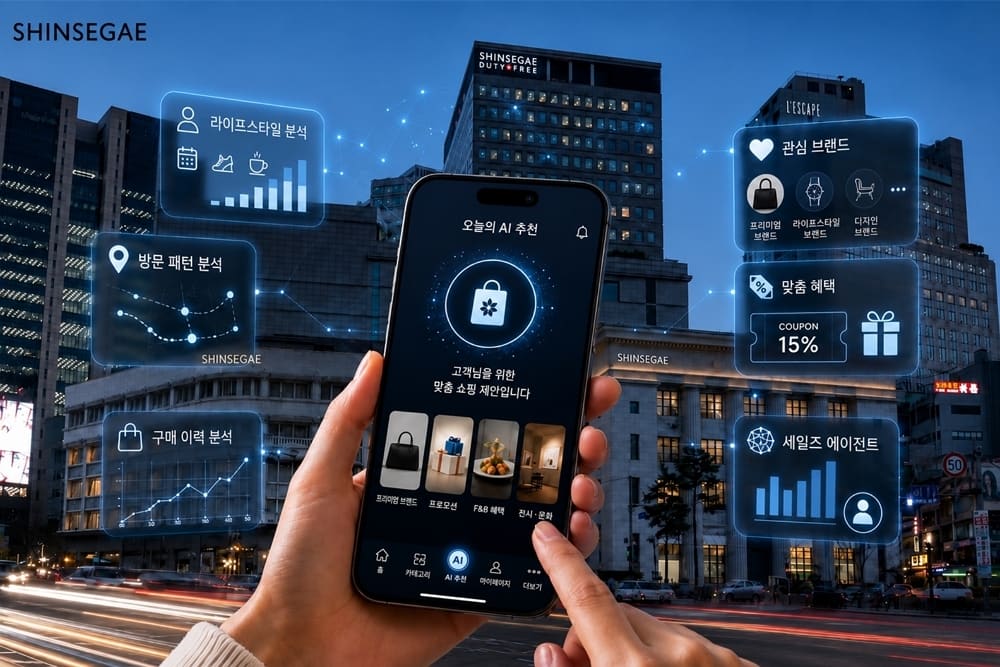
KEY TAKEAWAYS
- ·Shinsegae Department Store's AI hyperpersonalization research, built with Seoul National University, has been accepted at ICML, one of the most selective machine learning conferences globally.
- ·The technology tailors shopping experiences to individual customers using purchase history and contextual signals, part of South Korea's intensifying retail AI competition.
- ·Acceptance at ICML signals Shinsegae is producing original AI research rather than only deploying existing tools, which may aid talent recruitment and intellectual property development.
Retail Meets Academic AI
Shinsegae Department Store announced Thursday that research on its artificial intelligence-driven hyperpersonalization platform has been accepted for presentation at the International Conference on Machine Learning, placing the South Korean retailer among a select group of companies whose work will appear at the elite AI research forum.
The technology emerged from a year-long partnership between Shinsegae and Seoul National University's Graduate School of Data Science, formalized through a memorandum of understanding signed in 2025. ICML, widely regarded as one of the three most competitive venues for machine learning research alongside NeurIPS and ICLR, typically draws submissions from leading technology firms and top-tier research labs.
Acceptance rates at ICML have hovered between 21 and 28 percent in recent years, making the selection a notable validation for a retail operation venturing into core AI research rather than simply deploying off-the-shelf tools.
What Hyperpersonalization Means in Practice
The system at the heart of the accepted paper focuses on hyperpersonalization, an approach that tailors shopping experiences to individual customers by analyzing purchase history, browsing patterns, and contextual signals such as time of day or local weather. Unlike broad segmentation, which groups customers into demographic buckets, hyperpersonalization attempts to predict what a single shopper wants in a given moment.
Shinsegae operates a network of premium department stores across South Korea, competing with Lotte and Hyundai for high-spending urban consumers. The company has invested heavily in digital infrastructure over the past three years, launching mobile apps, loyalty programs, and in-store recommendation kiosks. The AI work now recognized by ICML likely underpins some of these customer-facing features, though Shinsegae has not disclosed technical specifics such as model architecture or training data scale.
Asia's Retail AI Arms Race
South Korea's major retail groups have been racing to embed AI into operations, driven by intense competition and a tech-savvy consumer base. Lotte Shopping has partnered with Naver to integrate large language models into its e-commerce search, while Hyundai Department Store has tested computer vision systems for inventory management.
The push reflects broader trends across Asia, where retailers in China, Japan, and Southeast Asia are deploying recommendation engines, dynamic pricing algorithms, and automated supply-chain tools. Chinese platforms such as Alibaba and JD.com have set the pace, using AI to manage logistics networks spanning hundreds of millions of parcels daily. Japanese convenience store chains, including Seven-Eleven Japan, have piloted demand-forecasting models to reduce food waste.
Shinsegae's ICML acceptance suggests the company is moving beyond implementation into original research, a shift that could yield intellectual property and talent-recruitment advantages. Publishing at top-tier conferences signals to AI researchers that a company is engaged in work worth citing, which can help attract doctoral graduates who might otherwise gravitate toward pure tech firms.
University Partnerships as Innovation Channels
The collaboration with Seoul National University follows a model increasingly common in Asia, where corporations fund academic labs in exchange for access to cutting-edge methods and graduate-student talent. Similar arrangements exist between Samsung and KAIST, between Grab and the National University of Singapore, and between Tencent and Tsinghua University.
These partnerships allow universities to secure industry funding and real-world datasets, while companies gain research credibility and a pipeline of potential hires. For Shinsegae, the relationship with Seoul National's data science school offers a direct line to one of South Korea's top sources of machine learning expertise.
The structure also spreads risk. If the research fails to yield commercial results, the financial hit is shared, and the academic output still holds value. If it succeeds, the company can file patents and integrate the technology into production systems ahead of competitors.
Next Steps
Shinsegae has not announced whether the hyperpersonalization system will be rolled out chain-wide or remain confined to pilot stores. The company is expected to present the paper at ICML 2026, which will take place in mid-2026, offering a platform to share technical details with the global AI community and potentially attract partnership inquiries from other retailers or technology vendors.
The acceptance also positions Shinsegae as a case study in how traditional industries can contribute to foundational AI research, rather than merely consuming it. Whether that research translates into a measurable edge in customer retention or revenue per visit will become clearer as the technology moves from conference proceedings to store floors.
RELATED STORIES
South Korea Taps Three Telecom Giants to Deliver Free AI Services Nationwide
Cheng Wei-Lun · 3 min
Samsung Display Restarts Asan OLED Campus as Foldable Phones Stage Recovery
Cheng Wei-Lun · 4 min
South Korean Chip Materials Suppliers Ride AI Boom to Profit Surge
Cheng Wei-Lun · 3 min

Nexon Commits $179M to Gaming IP Fund Targeting Asian Developers
Cheng Wei-Lun · 3 min
Spot something wrong? Email editor@briefasia.com. We log every correction publicly.