Finance · Markets
Seoul's Tech Rally Stumbles as AI Doubts Trigger 10% Two-Day Drop
Chipmakers SK Hynix and Samsung face steep losses after Meta signals capacity concerns, testing the resilience of Asia's AI-fueled equity surge
KEY TAKEAWAYS
- ·South Korea's KOSPI index fell more than 10% over two trading sessions, driven by sharp losses in SK Hynix and Samsung Electronics.
- ·Concerns about excess AI infrastructure capacity, triggered by Meta's commentary, fueled the selloff in memory chip suppliers.
- ·Despite the correction, the KOSPI remains among the top-performing global indexes in 2026, still up significantly year-to-date.
Sharp Reversal in Seoul
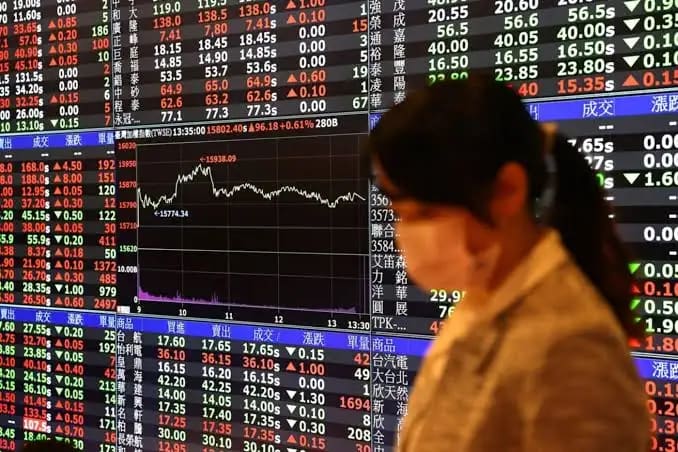
South Korea's equity benchmark suffered its steepest two-day decline in recent memory, with the KOSPI index shedding more than 10% across consecutive sessions as investor confidence in the artificial intelligence supply chain wavered. The losses centered on semiconductor manufacturers, which had powered the index to among the strongest gains globally earlier this year.
SK Hynix and Samsung Electronics, the nation's largest chipmakers by market capitalization, led the retreat. Both stocks triggered multiple trading halts as sell orders overwhelmed buyers, with SK Hynix dropping 8% on the second day alone. Samsung Electronics followed closely, erasing weeks of accumulated gains as trading volumes surged past typical daily averages.
Meta's Signal and the Capacity Question
The catalyst for the selloff traced back to Meta Platforms' recent commentary around its infrastructure spending plans. The social media giant's signals raised questions about whether the pace of AI data center buildouts might be outstripping near-term demand, a concern that rippled through Asian chip suppliers whose revenues depend heavily on hyperscaler capital expenditure cycles.
South Korean memory chip producers have benefited disproportionately from the AI boom. High-bandwidth memory (HBM) modules, essential for training large language models, became a primary revenue driver for SK Hynix over the past 18 months. Any hint of a slowdown in orders from U.S. technology customers carries outsized weight for Seoul-listed equities.
Broader weakness in U.S. technology shares added pressure. The Nasdaq Composite had already declined ahead of the KOSPI's rout, as profit-taking spread through semiconductor and software names that had climbed sharply in the first half of the year. Asian markets, opening hours later, absorbed that sentiment and amplified it.
Trading Halts and Volatility Spikes
Circuit breakers activated multiple times across Seoul's main board as the speed and scale of declines exceeded automated thresholds designed to curb panic selling. SK Hynix paused trading twice within the first hour of the session, while Samsung Electronics halted once. Trading resumed after cooling-off periods, but the downward momentum persisted through the close.
Volatility indexes for South Korean equities spiked to levels not seen since early 2024, reflecting heightened uncertainty about the durability of AI-driven earnings growth. Options markets showed a sharp increase in demand for downside protection, with put volume on KOSPI futures climbing to multiples of recent averages.
Institutional investors, including domestic pension funds and foreign asset managers, were net sellers. Data from the Korea Exchange showed foreign investors offloaded approximately $1.2 billion in South Korean equities over the two-day period, reversing a pattern of steady inflows that had characterized the first quarter.
Context of a Year-Long Rally
Despite the correction, the KOSPI remains one of the top-performing major indexes globally in 2026. The benchmark had climbed more than 28% from the start of the year through its recent peak, fueled by optimism around artificial intelligence infrastructure spending and robust earnings from memory chip exporters.
Seoul's equity market benefited from a confluence of factors: strong corporate earnings revisions, a weaker Korean won that boosted export competitiveness, and a global scramble for exposure to AI supply chains. Analysts had flagged valuation concerns in recent weeks, noting that price-to-earnings multiples for leading chipmakers had stretched beyond historical norms.
The pullback, while severe in percentage terms, represents a retracement of roughly one-third of the year-to-date gains. Some market observers view the decline as a healthy correction rather than the start of a sustained bear phase, though much depends on whether U.S. technology spending holds up through the second half of the year.
Regional Ripple Effects
The selloff in Seoul reverberated across other Asian technology hubs. Taiwan's TAIEX, home to TSMC and other semiconductor manufacturers, declined 3.2% in sympathy, while Tokyo's Nikkei 225 dipped modestly as investors reassessed exposure to chip equipment makers. Hong Kong's Hang Seng Tech Index also softened, though losses there were more contained.
Currency markets reflected the shift in risk appetite. The Korean won weakened against the U.S. dollar, falling to its lowest level in three weeks as portfolio flows reversed. The yen strengthened modestly as traders sought safer assets, while emerging Asian currencies broadly underperformed.
South Korea's bond market saw a flight to safety, with yields on 10-year government debt declining as investors rotated out of equities. Credit spreads on corporate bonds issued by technology firms widened slightly, though remained well within normal ranges.
What Comes Next
Attention now turns to upcoming earnings reports from SK Hynix and Samsung Electronics, both scheduled within the next four weeks. Guidance on order pipelines and inventory levels will be scrutinized for signs of whether the AI infrastructure cycle is merely pausing or entering a more prolonged slowdown.
Regulatory dynamics also loom. U.S. export controls on advanced semiconductor technology to China continue to evolve, with potential implications for South Korean manufacturers that supply both Western and Chinese customers. Any tightening of restrictions could further complicate revenue forecasts.
Market participants will also monitor central bank commentary. The Bank of Korea has maintained a cautious stance on monetary policy, balancing concerns about inflation with the need to support growth. A sharp equity market correction could influence the timing of any future rate adjustments, though policymakers have historically been reluctant to react directly to stock price movements.
For now, Seoul's tech-heavy index sits at a crossroads. Whether the recent drop marks a brief interruption in a multi-year AI expansion or the beginning of a more fundamental reassessment will depend on data points that unfold over the coming quarter.
RELATED STORIES
Samsung Electronics Drops 8% as Market Questions Buyback Strategy
Cheng Wei-Lun · 2 min
Seoul Markets Tumble as Tech Selloff Ripples Across Asia
Cheng Wei-Lun · 3 min
Korean Stocks Retreat as Nvidia Earnings Loom
Cheng Wei-Lun · 2 min
SK Hynix Union Rejects Wage Deal in Razor-Thin Vote
Cheng Wei-Lun · 3 min
Spot something wrong? Email editor@briefasia.com. We log every correction publicly.