Real Estate · Homes
Seoul Targets Wealthy Homeowners With Property Tax Overhaul
South Korea's finance ministry proposes higher levies on multiple homes and properties above $2.1 million as housing affordability pressures mount
KEY TAKEAWAYS
- ·South Korea's finance ministry proposes raising property holding tax rates by up to 2.3 percentage points on homes above 3 billion won ($2.1 million) while cutting taxes for single-home owners below that threshold.
- ·President Lee Jae Myung's approval rating fell to 51 percent in late July, with housing affordability cited as the top concern for the first time since he took office in June 2025.
- ·The tax overhaul coincides with the Bank of Korea's first interest rate increase in three and a half years, signaling coordinated fiscal and monetary tightening to cool the property market.
Tax Burden Shift
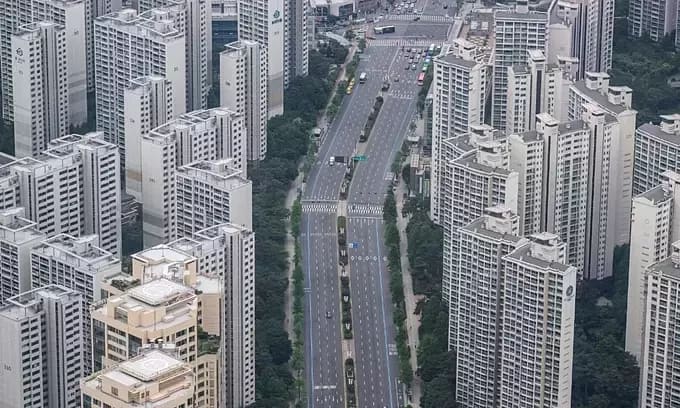
South Korea's finance ministry unveiled a property tax proposal Monday that redistributes the fiscal load upward, targeting owners of expensive homes and multiple properties while offering relief to middle-class single-home residents. The plan arrives as President Lee Jae Myung faces mounting political pressure over housing affordability in Seoul and other major cities.
Finance Minister Koo Yun-cheol announced the measures following a closed-door presidential meeting on domestic markets. The proposal raises real estate holding tax rates by as much as 2.3 percentage points depending on property value, with the steepest increases reserved for homes priced above 3 billion won, roughly $2.1 million at current exchange rates.
Households owning a single residence valued below that threshold will see their tax burden decrease. Properties between 3 billion and 4 billion won face graduated increases, while those in the 4 billion to 5 billion won range will encounter what Koo termed "normalized" rates - a signal that earlier tax breaks for high-end properties are being rolled back.
The ministry also proposes expanding property tax exemptions for owner-occupiers while narrowing them for investors and secondary-home owners, a move designed to tilt the market toward residential use rather than speculative holding.
Political Stakes
The tax overhaul reflects the administration's struggle to contain voter frustration. House prices climbed for the thirteenth consecutive month in June, posting their largest monthly gain since November 2021. President Lee's approval rating slipped to 51 percent in late July, according to Gallup Korea, with housing policy cited as the leading source of dissatisfaction for the first time since he took office in June 2025.
Last month the administration convened a series of public forums on property policy, an acknowledgment that rising prices are eroding political capital. The presidency's messaging has sharpened accordingly: "We will reform real estate taxes in a reasonable manner to establish a residence-oriented housing market under the principle that a home is a place for living, not buying," Koo said Monday.
That language underscores a philosophical shift away from treating residential property as an investment vehicle, a stance that resonates in Seoul's Gangnam district and other high-value neighborhoods where prices have outpaced wage growth for years.
Monetary and Fiscal Convergence
The tax proposal lands in tandem with tighter monetary policy. The Bank of Korea raised interest rates last month for the first time in three and a half years, driven by concerns that record semiconductor export earnings are feeding inflation and asset price bubbles. The central bank signaled additional rate increases ahead, adding to borrowing costs for home buyers and property developers alike.
The fiscal and monetary squeeze represents a coordinated effort to cool demand without triggering a hard landing. By raising taxes on high-end properties and multiple holdings, the government aims to dampen speculative activity while leaving first-time buyers and single-home families relatively unscathed.
Broader Industrial Incentives
The annual tax code revision also includes measures aimed at onshoring critical industries. The ministry plans to introduce tax exemptions for domestic production in solar energy, wind power, rechargeable batteries, semiconductors, key materials, and AI robotics - sectors Seoul views as strategic amid intensifying U.S.-China technology competition.
Those incentives reflect a broader industrial policy agenda: deepening supply chain resilience in the region while capturing value-added manufacturing at home. South Korea's semiconductor and battery industries have benefited from export tailwinds, but the government is wary of overheating and wants to channel capital into productive capacity rather than property speculation.
Parliamentary Timeline
The finance ministry plans to submit the full package to parliament by September 3. Legislative approval is not guaranteed, particularly for measures that raise taxes on constituents in Seoul's wealthiest districts, but the administration's public framing - emphasizing fairness and housing accessibility - suggests it is prepared for a fight.
The proposal's fate will test whether South Korea's political establishment can balance the interests of property owners, who form a significant voting bloc, against younger voters priced out of homeownership. With approval ratings softening and housing affordability dominating public discourse, the Lee administration has little room to delay.
RELATED STORIES
Seoul Stocks Drop on Mideast Tensions and Oil Price Surge
Tran Quoc Bao · 3 min

Samsung Electronics Drops 8% as Market Questions Buyback Strategy
Cheng Wei-Lun · 2 min
Samsung and SK Hynix Turn Down KEPCO's Multibillion-Dollar Prepayment Demand
Cheng Wei-Lun · 4 min
South Korea's Export Surge Powers Economic Upturn Through Third Quarter
Jun-ho Seo · 4 min
Spot something wrong? Email editor@briefasia.com. We log every correction publicly.