Finance · Markets
Seoul Shares Extend Decline Despite Early Bargain Hunting
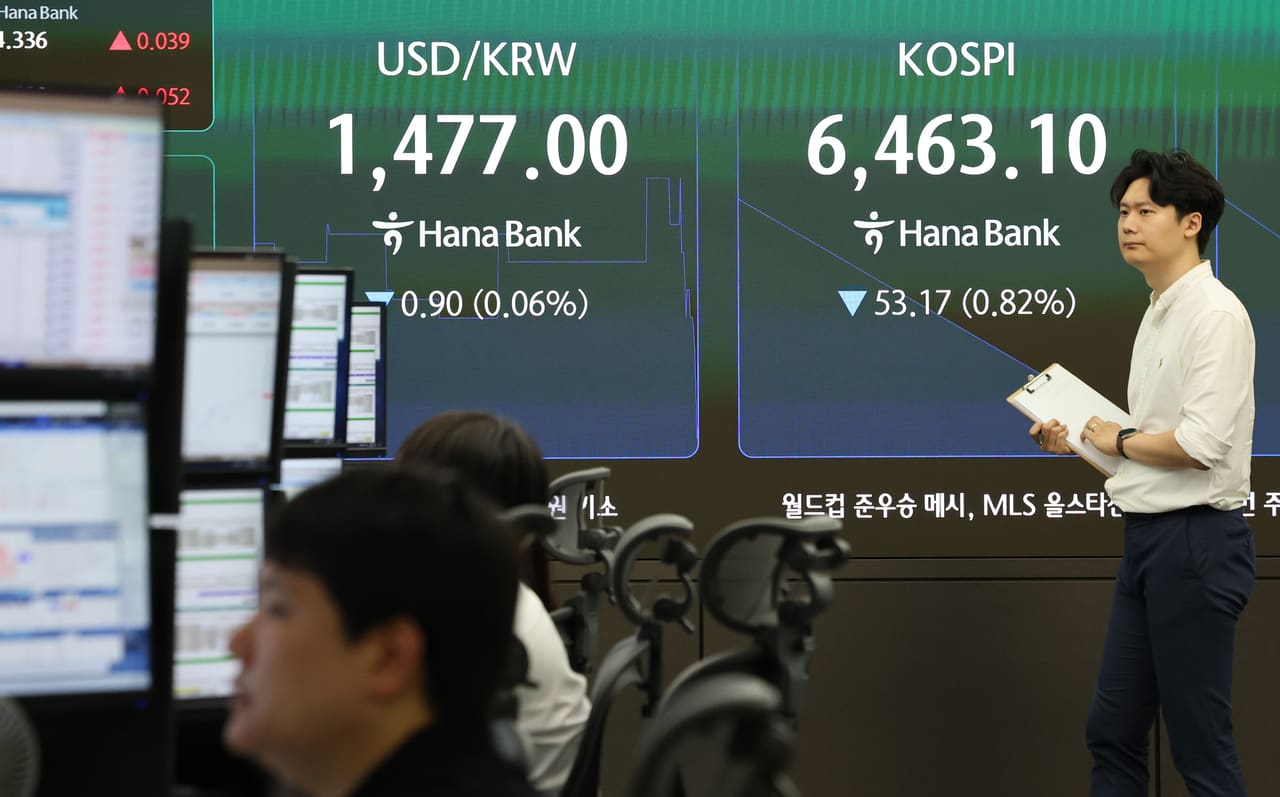
The Kospi fell 0.59 percent by mid-morning as Middle East tensions outweighed buying interest in technology stocks, extending losses from a 10.8 percent drop over two days.
KEY TAKEAWAYS
- ·Seoul's Kospi index fell 0.59 percent to 6,477.71 by mid-morning Tuesday after opening 0.58 percent higher on brief bargain hunting in technology stocks.
- ·The decline extends a two-day selloff totaling 10.8 percent, with Friday's 6.37 percent drop followed by Monday's 4.46 percent fall amid Middle East tensions.
- ·The rapid reversal within fifteen minutes of opening suggests algorithmic selling and weak investor conviction despite attractive valuation levels in beaten-down names.
Morning Reversal
Seoul's main equity gauge opened in positive territory Tuesday morning before reversing course within minutes, as investors' appetite for beaten-down technology names proved short-lived against a backdrop of heightened Middle East tensions.
The Korea Composite Stock Price Index shed 38.56 points to trade at 6,477.71 by 9:15 a.m. local time, a 0.59 percent decline from the previous close. The early-session swing came after the index opened 0.58 percent higher on buying interest in technology heavyweights that had been battered in recent sessions.
The benchmark has now extended a two-day losing streak that saw it fall 6.37 percent on Friday and another 4.46 percent on Monday, bringing cumulative losses to 10.8 percent over the two-day period. The sharp selloff left many large-cap names trading at levels that typically attract bargain hunters, though that support failed to hold through the morning session.
Regional Risk Appetite
The failed bounce in Seoul mirrors broader risk-off sentiment across Asian markets, where investors continue to weigh the implications of escalating geopolitical tensions in the Middle East. While the specific catalyst for Tuesday's reversal remains unclear, the pattern suggests institutional caution is overriding tactical buying at current valuation levels.
Technology shares, which bore the brunt of last week's losses, saw initial buying interest that quickly evaporated. The sector's heavy weighting in the Kospi means its direction typically sets the tone for the broader index, and the inability of buyers to sustain upward momentum through the first fifteen minutes of trade signaled weak conviction.
Overnight trading in New York offered little support, with major U.S. indexes closing lower as investors digested a range of cross-currents. The lack of a positive lead from Wall Street removed a potential tailwind for Asian markets at the open.
Technical Pressure
The Kospi's trajectory through Tuesday morning suggests traders remain unwilling to commit capital ahead of greater clarity on both regional security risks and the trajectory of global technology demand. After two consecutive sessions of heavy selling, the index is now testing support levels that have historically marked inflection points, but follow-through remains absent.
Market participants will be watching whether the index can stabilize above the 6,450 level in coming sessions, or whether further declines bring the 6,300-6,350 range into play. Volume patterns in the opening minutes indicated participation from both institutional and retail investors, though neither group appeared willing to defend the early gains.
The speed of the reversal, from a 0.58 percent gain at the open to a 0.59 percent loss within fifteen minutes, points to algorithmic selling and stop-loss triggers rather than fundamental reassessment. That technical dynamic suggests volatility may persist until external catalysts provide clearer direction.
Broader Implications
Seoul's difficulty finding footing comes at a moment when regional equity markets are navigating multiple crosscurrents: shifting expectations around central bank policy, uncertainty over semiconductor demand cycles, and geopolitical risks that have moved from abstract concern to concrete market factor.
The Kospi's performance in the coming sessions will offer insight into whether the recent selloff represents a healthy correction within an intact uptrend, or the beginning of a deeper retracement. For now, the inability of buyers to sustain even modest early gains suggests the path of least resistance remains lower in the near term.
Investors will be looking to upcoming earnings reports from major index constituents and any developments on the geopolitical front for catalysts that might shift sentiment. Until those materialize, the pattern of brief rallies followed by renewed selling pressure appears likely to continue.
RELATED STORIES

Samsung Electronics Drops 8% as Market Questions Buyback Strategy
Cheng Wei-Lun · 2 min
Samsung Biologics Plans $2.2 Billion Rights Offering to Fund Peptide Acquisition
Jun-ho Seo · 3 min
Index Funds Face Hidden Concentration Risk From AI Boom
Cheng Wei-Lun · 3 min
Seoul Markets Tumble as Tech Selloff Ripples Across Asia
Cheng Wei-Lun · 3 min
Spot something wrong? Email editor@briefasia.com. We log every correction publicly.