Finance · Markets
Seoul Sells Dollars in Rare Currency Move as Won Surges to Nine-Month High
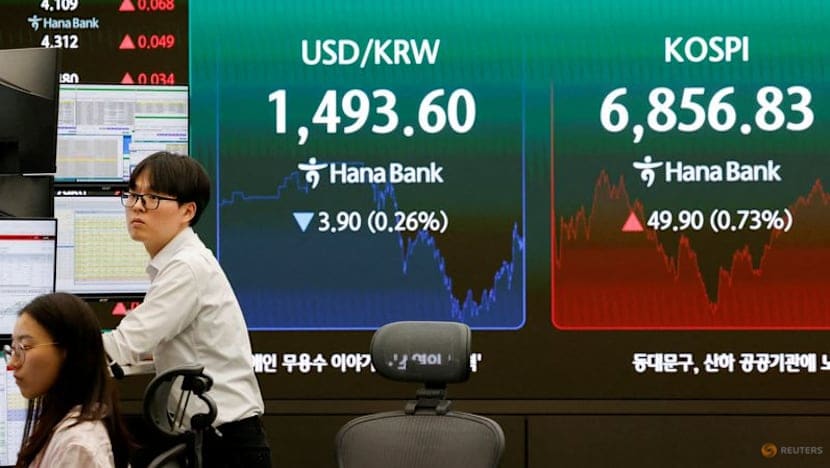
South Korea joined Japan in coordinated foreign exchange intervention Thursday, pushing the won up 2% and marking one of its strongest monthly rallies since the 2009 financial crisis.
KEY TAKEAWAYS
- ·South Korea sold dollars Thursday in a rare intervention, strengthening the won 2 percent to 1,418.0 per dollar, its highest level since October.
- ·The move was coordinated with Japan's yen-buying operations and follows public commitments by both governments to cooperate closely on foreign exchange issues.
- ·The won has gained more than 8 percent this month, on track for its largest monthly rally since March 2009, after hitting a 17-year low in June.
Coordinated Dollar Sales Push Won Higher
South Korea's foreign exchange authorities sold dollars Thursday in a rare market intervention, driving the won to a nine-month peak, according to a market source familiar with the matter. The move came as Japanese officials simultaneously executed yen-buying operations in New York trading sessions, pulling the yen back from four-decade lows.
The won strengthened 2 percent Thursday to 1,418.0 per dollar, its firmest level since late October. The currency has appreciated more than 8 percent this month, positioning it for its largest monthly gain since March 2009 when global markets were recovering from the financial crisis.
Last month the won touched 1,561.50 per dollar, a 17-year low that intensified pressure on Seoul's policymakers. The recent rally represents a sharp reversal for the currency, which has been battered by capital outflows and a widening interest-rate differential with the United States.
Seoul and Tokyo Signal Joint Approach
A South Korean currency trader noted that the timing and scope of the interventions suggest coordination between Seoul and Tokyo. Both governments have publicly emphasized close communication on foreign exchange matters in recent weeks.
Moon Ji-sung, deputy finance minister for international affairs, told reporters the government is maintaining close coordination with the United States and Japan on currency issues. "We will continue to cooperate," Moon said.
In early July, South Korea's vice finance chief said during a press conference that Seoul was in close communication with Japan and other key allies regarding foreign exchange developments. Days later, Japan's top currency diplomat echoed those remarks, noting that Tokyo was communicating closely with Seoul's foreign exchange officials because the financial markets of both countries sometimes move in tandem.
A foreign exchange official at South Korea's finance ministry declined to confirm the intervention when contacted.
Regional Pressures Mount on Asian Currencies
The coordinated action underscores mounting pressure on Asian central banks and finance ministries as the dollar's strength this year has strained regional currencies. Japan's yen and South Korea's won have been particularly vulnerable, given both economies' reliance on energy imports priced in dollars and their exposure to shifts in U.S. monetary policy.
Japan's intervention Thursday marked another attempt to arrest the yen's slide, which has complicated the Bank of Japan's efforts to normalize monetary policy after years of ultra-loose settings. For South Korea, a weaker won raises import costs and feeds into inflation, complicating the Bank of Korea's rate decisions.
The scale and timing of Thursday's operations suggest both governments view current currency levels as disorderly or driven by speculative flows rather than fundamentals. Coordinated interventions are relatively rare in the foreign exchange market, typically reserved for moments when officials judge that market moves have become destabilizing.
What Comes Next
Market participants will watch whether the recent gains in the won and yen prove durable or whether renewed dollar strength reverses the interventions' effects. Much depends on the trajectory of U.S. interest rates and broader risk sentiment in global markets.
Seoul's willingness to intervene directly signals that officials have a line in the sand for currency weakness, even as they balance concerns about competitiveness for exporters. The coordination with Tokyo also points to a broader regional effort to manage currency volatility without triggering accusations of competitive devaluation.
For now, the won's 8 percent monthly rally has provided some breathing room. Whether that holds will depend on both domestic policy settings and the external environment, particularly the Federal Reserve's next moves and capital flows across Asia's emerging markets.
RELATED STORIES

Japan Deploys $96.5 Billion in Currency Intervention to Halt Yen's Slide
Aiko Nakamura · 3 min
Seoul Stocks Drop on Mideast Tensions and Oil Price Surge
Tran Quoc Bao · 3 min

Samsung Electronics Drops 8% as Market Questions Buyback Strategy
Cheng Wei-Lun · 2 min

Samsung Biologics Plans $2.2 Billion Rights Offering to Fund Peptide Acquisition
Jun-ho Seo · 3 min
Spot something wrong? Email editor@briefasia.com. We log every correction publicly.