Finance · Markets
Seoul Market Plunges 5% as Memory Chip Rally Cracks
KOSPI triggered circuit breaker as SK Hynix tumbled 10% on profit-taking, while Samsung Electronics shed 6% amid questions over sustainability of AI-driven semiconductor gains

KEY TAKEAWAYS
- ·South Korea's KOSPI fell 5.14% to 7,091.57 on Monday, triggering a sidecar circuit breaker as SK Hynix dropped 10.32% and Samsung Electronics declined 6.14%.
- ·Foreign investors pulled 1.04 trillion won out of Korean equities, the largest single-day outflow since March, amid concerns the memory chip pricing cycle has peaked.
- ·Battery and auto stocks diverged upward, with LG Energy Solution gaining 2.61% and POSCO Holdings adding 1.59%, while 543 of 912 traded issues declined.
Circuit Breaker Triggered
South Korea's KOSPI benchmark dropped 384 points to 7,091.57 by mid-morning Monday, a 5.14% decline that marked the index's steepest fall since May. The selloff intensified enough to activate a sidecar trading curb at the 6.13% threshold, temporarily freezing algorithmic trades as investor confidence in memory chipmakers evaporated.
SK Hynix, the world's second-largest memory chipmaker, led the retreat with a 10.32% slide. The drop came despite the company's shares surging 12.8% in their Nasdaq debut Friday, a listing that had been positioned as validation of the firm's leadership in high-bandwidth memory for AI accelerators. Investors pivoted from celebration to profit-taking within a single trading session.
Samsung Electronics, the other pillar of Korea's semiconductor industry, fell 6.14%. The twin declines erased roughly $35 billion in combined market value and sent ripples through the broader technology sector.
Peak Cycle Anxiety
Han Ji-young, an analyst at Kiwoom Securities, pointed to unresolved concerns about the memory chip cycle. Despite SK Hynix's successful cross-listing, doubts persist over whether demand for AI memory products can sustain current pricing and margin levels through the second half of 2026.
Memory chip spot prices have climbed steadily since late 2024, driven by insatiable appetite for high-bandwidth memory modules used in Nvidia's H200 and next-generation AI training systems. Yet analysts warn that capacity expansions by Samsung, SK Hynix, and Micron could flood the market by early 2027, pressuring the pricing environment that has buoyed earnings for the past eighteen months.
Monday's selloff suggests institutional investors are positioning ahead of that inflection point. Foreign investors offloaded 1.04 trillion won ($690.73 million) in Korean equities during the session, the largest single-day outflow since March.
Divergence Across Sectors
Not all corners of the market mirrored the chip carnage. Battery maker LG Energy Solution climbed 2.61%, continuing its rebound as European automakers lock in supply contracts ahead of stricter emissions rules in 2027. Steelmaker POSCO Holdings added 1.59%, supported by expectations of infrastructure spending tied to Korea's Green New Deal programs.
Hyundai Motor and Kia edged up 0.11% and 0.20% respectively, shrugging off broader market weakness as both companies reported June export figures that beat internal forecasts. Samsung BioLogics rose 2.44%, buoyed by news of a contract manufacturing agreement with a U.S. biotech firm.
Of 912 traded issues, 543 declined while 346 advanced, underscoring the concentrated nature of Monday's pain.
Currency and Debt Moves
The won weakened 0.47% to 1,505.6 per dollar on the onshore settlement platform, its softest level in three weeks. The currency's slide accelerated after the KOSPI breached the 7,100 support level, prompting automated sell orders from momentum-following funds.
In debt markets, September futures on three-year treasury bonds slipped 0.11 point to 102.99. The most liquid three-year Korean treasury bond yield climbed 5 basis points to 3.813%, while the benchmark ten-year yield rose 5.1 basis points to 4.275%. The move reflects a modest flight to safety, though the magnitude was muted compared to the equity rout.
What Comes Next
Seoul's correction arrives at a delicate moment for Asia's semiconductor supply chain. Taiwan's TAIEX and Tokyo's Nikkei 225 both opened lower in sympathy, though neither approached Korea's losses. Investors will watch whether Tuesday's session brings stabilization or extends the selloff into a broader reassessment of regional tech valuations.
SK Hynix's dual-listing structure, designed to attract deeper pools of U.S. institutional capital, now faces its first stress test. If the Nasdaq-listed shares diverge sharply from the Seoul-listed parent, arbitrage flows could amplify volatility in both markets.
For Korea's export-driven economy, the chipmaker retreat carries implications beyond equity portfolios. Semiconductors account for roughly 18% of the nation's total exports, and any sustained downturn in chip earnings would weigh on GDP growth forecasts for the second half of 2026.
RELATED STORIES
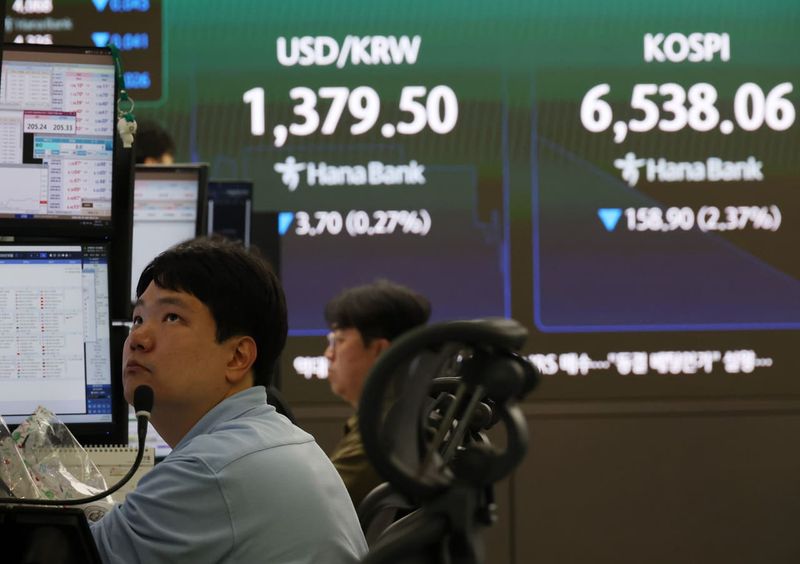
Seoul Markets Tumble as Tech Selloff Ripples Across Asia
Cheng Wei-Lun · 3 min
Samsung Electronics Drops 8% as Market Questions Buyback Strategy
Cheng Wei-Lun · 2 min
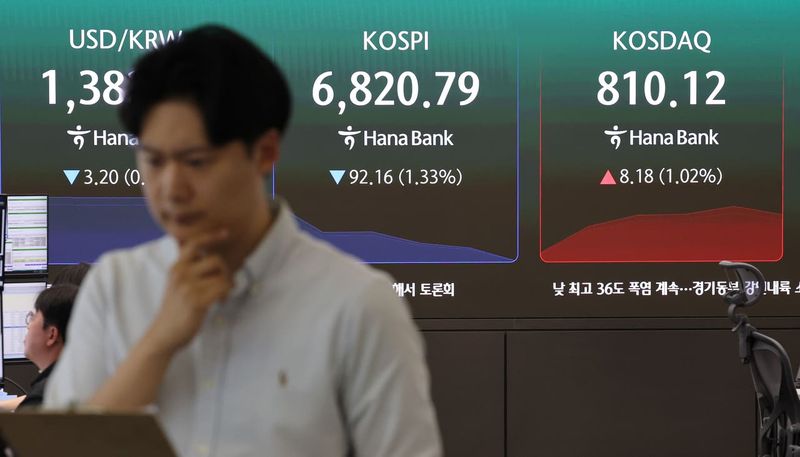
Korean Stocks Retreat as Nvidia Earnings Loom
Cheng Wei-Lun · 2 min
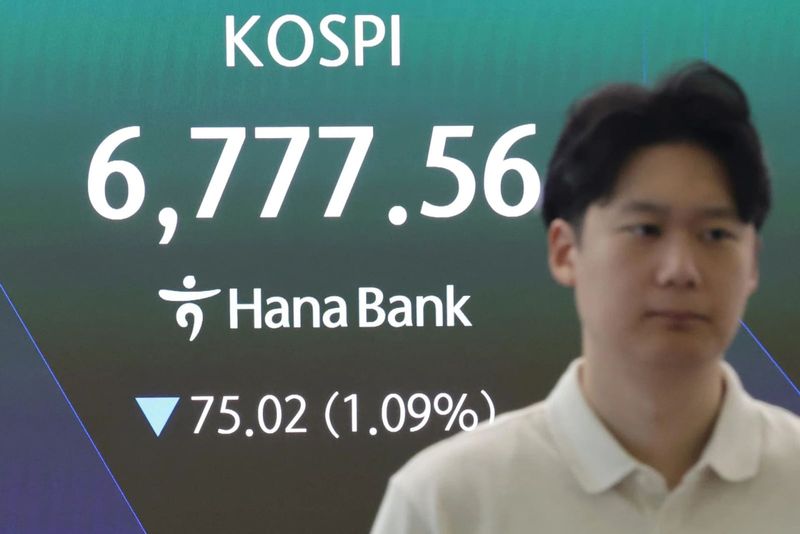
Index Funds Face Hidden Concentration Risk From AI Boom
Cheng Wei-Lun · 3 min
Spot something wrong? Email editor@briefasia.com. We log every correction publicly.