Finance · Markets
Seoul Market Opens Down 2.7 Percent as Middle East Tensions Weigh on Investor Sentiment
The KOSPI dropped 191 points in early trading Friday, tracking Wall Street's decline as geopolitical risk overshadows recent rally momentum
KEY TAKEAWAYS
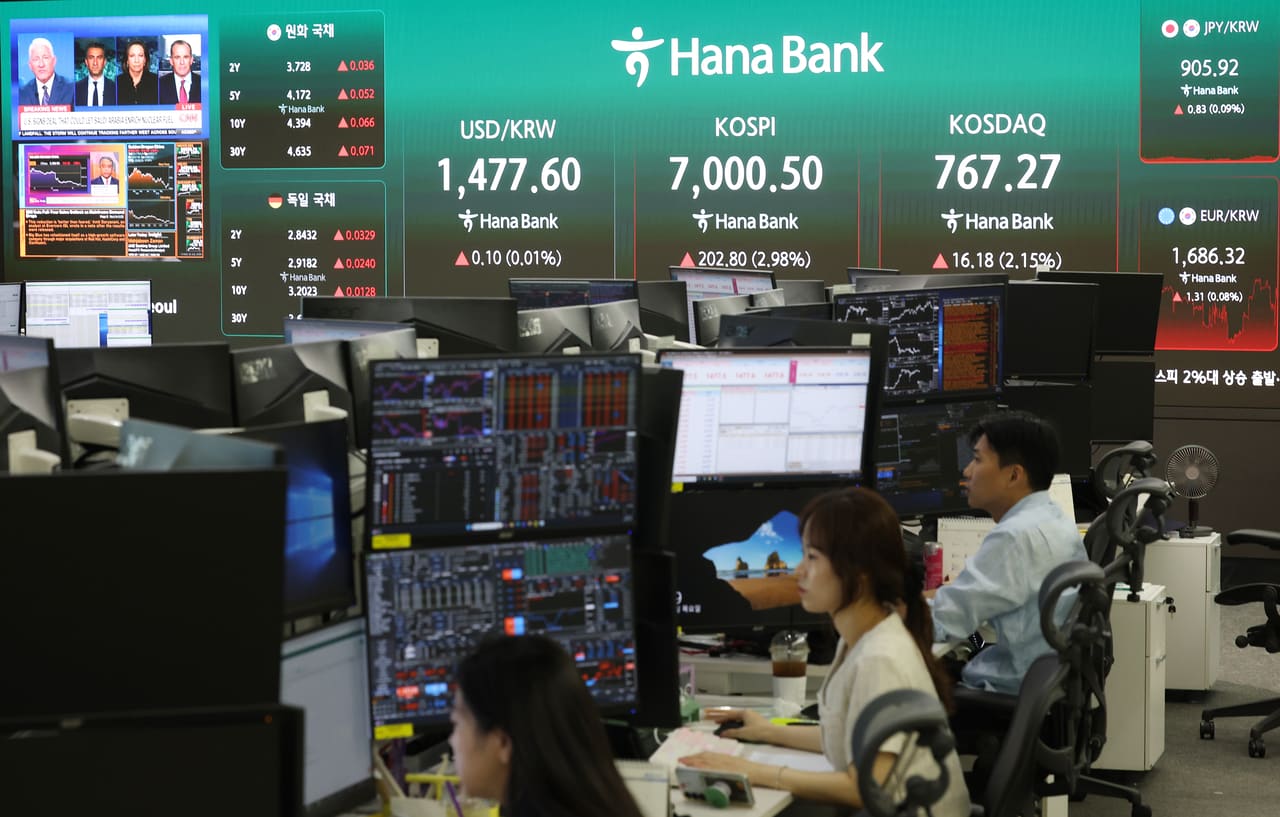
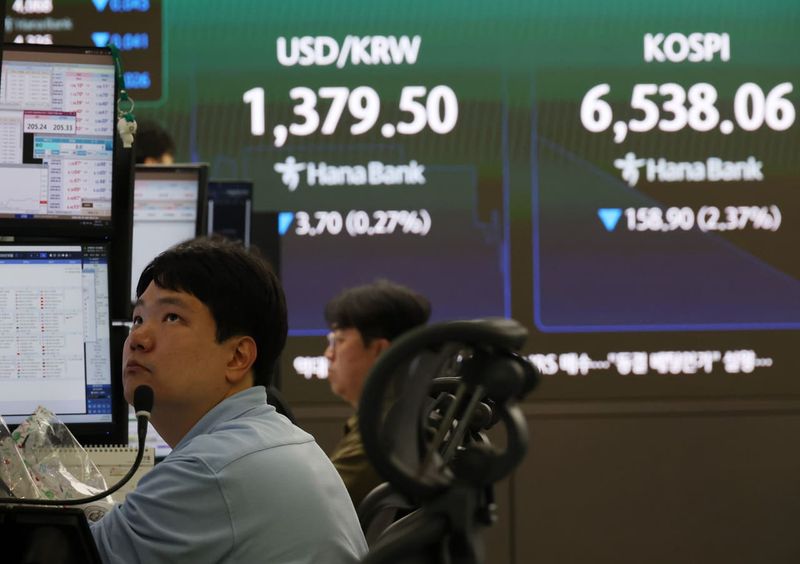
- ·South Korea's KOSPI index dropped 191.3 points to 6,905.59 in early Friday trading, a 2.7 percent decline driven by escalating US-Iran tensions.
- ·The selloff followed overnight losses on Wall Street, where the S&P 500 fell 1.21 percent and the Nasdaq dropped 2.15 percent on Middle East uncertainty.
- ·Energy-dependent South Korea faces margin pressure from potential oil price spikes, prompting investors to lock in recent gains and reassess risk exposure.
Early Session Decline
South Korea's stock market opened sharply lower Friday morning, with the benchmark Korea Composite Stock Price Index shedding 191.3 points to reach 6,905.59 at 9:15 a.m. local time. The 2.7 percent drop marked a reversal of the recent upward momentum that had characterized Seoul trading over the past several sessions.
The decline came as investors moved to secure gains accumulated during the previous rally, spooked by deteriorating conditions in the Middle East. Escalating friction between Washington and Tehran has reignited concerns about energy supply stability and broader geopolitical risk, factors that typically drive capital away from equity markets in export-dependent economies like South Korea.
Wall Street Sets the Tone
Seoul's downturn followed overnight losses across US markets, where major indices retreated on persistent uncertainty surrounding the Middle East conflict. The S&P 500 closed down 1.21 percent, while the technology-focused Nasdaq Composite dropped 2.15 percent. Both benchmarks had enjoyed strong performances earlier in the week, making Friday's pullback particularly notable for Asian traders monitoring sentiment cues from New York.
The correlation between US and Korean equity performance remains tight, particularly as South Korean tech exporters derive significant revenue from American customers. When US tech stocks stumble, Seoul's semiconductor and electronics manufacturers typically feel the ripple effect within hours.
Geopolitical Risk Premium
The current tensions between the United States and Iran represent a fresh layer of uncertainty for markets that had only recently begun pricing in a more stable global environment. Energy markets have responded with heightened volatility, and equity investors across Asia are reassessing risk exposure in light of potential supply disruptions.
For South Korea, a nation that imports virtually all of its crude oil and natural gas, Middle East instability carries direct economic implications. Higher energy costs translate quickly into margin pressure for manufacturers and higher input costs across the industrial base. The KOSPI's sensitivity to oil price swings has historically been pronounced, and Friday's early trading reflected that dynamic.
Profit-Taking Amplifies Move
Beyond geopolitical factors, technical considerations also played a role in Friday's decline. After a sustained period of gains, market participants appeared ready to book profits, and the overnight weakness in US markets provided the catalyst. Volume in early Seoul trading suggested broad-based selling rather than concentrated moves in specific sectors, indicating a shift in overall risk appetite rather than company-specific news.
The combination of external pressure and internal profit-taking created a feedback loop that accelerated the morning decline. As the KOSPI breached key technical levels, additional selling emerged from algorithmic and momentum-driven strategies.
Regional Context
Seoul's weakness mirrored similar moves across other Asian trading hubs, where investors digested the same mix of geopolitical headlines and Wall Street signals. The region's equity markets have become increasingly synchronized in their response to global risk events, particularly those involving energy security or US foreign policy.
South Korea's position as a major exporter of technology goods and intermediate manufacturing products makes its equity market a useful barometer for broader Asian sentiment. When the KOSPI sells off sharply, it often signals that investors are bracing for weaker demand conditions or heightened uncertainty that could affect supply chains spanning the region.
Market Outlook
The trajectory for Seoul stocks in the coming sessions will depend heavily on developments in the Middle East and any policy responses from Washington or other major capitals. If tensions escalate further, additional downside pressure is likely. Conversely, any signs of diplomatic progress could provide relief and allow buyers to re-enter the market.
Energy prices will remain a critical variable. Should crude oil spike significantly, South Korean manufacturers will face a dual headwind of higher input costs and potentially weaker global demand as other economies grapple with inflation pressures. The interplay between geopolitical risk and corporate fundamentals will determine whether Friday's decline marks the start of a deeper correction or merely a brief pause in the recent uptrend.
Investors will also watch for any statements from South Korean policymakers or central bank officials regarding market stability measures. While intervention in equity markets is rare, signals of concern from authorities can influence sentiment and positioning.
For now, the focus remains on external factors beyond Seoul's control, a familiar dynamic for a market deeply integrated into global trade and capital flows.
RELATED STORIES
Samsung Electronics Drops 8% as Market Questions Buyback Strategy
Cheng Wei-Lun · 2 min
Samsung Biologics Plans $2.2 Billion Rights Offering to Fund Peptide Acquisition
Jun-ho Seo · 3 min
Index Funds Face Hidden Concentration Risk From AI Boom
Cheng Wei-Lun · 3 min
Seoul Markets Tumble as Tech Selloff Ripples Across Asia
Cheng Wei-Lun · 3 min
Spot something wrong? Email editor@briefasia.com. We log every correction publicly.