Technology · AI
Seoul Sends Delegation to San Francisco for Nvidia AI Talks
President Lee leads government and industry leaders in Silicon Valley meetings as South Korea accelerates national AI strategy
KEY TAKEAWAYS
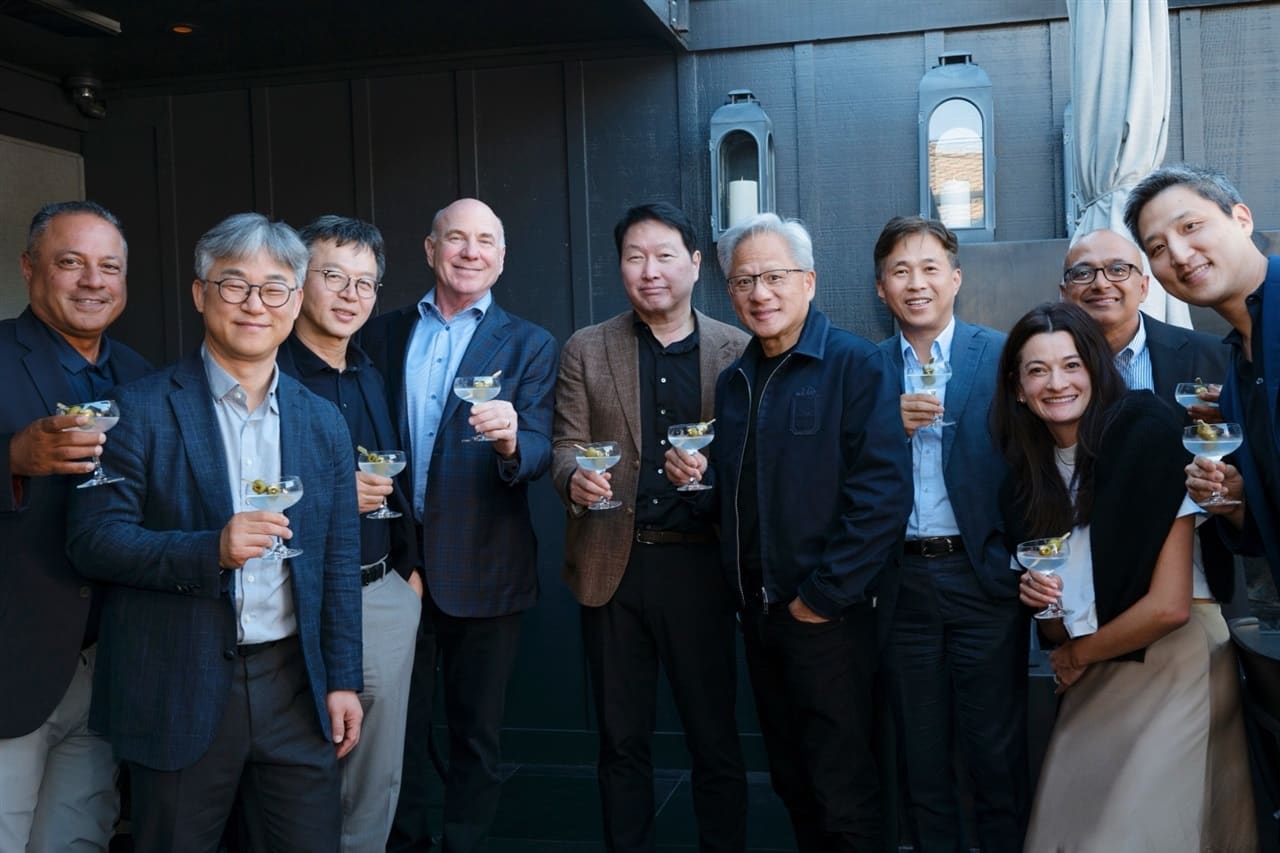
- ·South Korean President Jae Myung Lee led a delegation of government officials, executives, and researchers to San Francisco for AI-focused meetings with Nvidia and technology partners.
- ·The summit reflects Seoul's strategy to leverage semiconductor manufacturing strength into AI platform development and reduce reliance on foreign cloud infrastructure.
- ·South Korea joins Japan and Singapore in pursuing national AI strategies as Asian economies compete for investment and access to advanced computing resources.
Presidential Visit Signals Strategic Priority
President Jae Myung Lee traveled to San Francisco this week with a high-level delegation of government ministers, corporate executives, and research leaders for meetings centered on artificial intelligence partnerships. The summit, which included sessions with Nvidia and other technology firms, underscores Seoul's determination to secure a stronger foothold in the global AI supply chain.
The delegation's composition reveals the cross-sector nature of South Korea's AI ambitions. Cabinet-level officials joined executives from major conglomerates and directors of national research institutes, creating a unified front for technology diplomacy. The meetings took place against the backdrop of intensifying competition among Asian economies to attract AI investment and secure access to advanced computing infrastructure.
Nvidia at the Center
Nvidia has emerged as a focal point for governments seeking to build domestic AI capabilities. The company's graphics processing units power most large-scale AI training, making partnerships with Nvidia a strategic priority for nations with semiconductor manufacturing capacity or cloud ambitions. South Korea's existing strength in memory chips and display technology positions it as a natural collaborator, though the country has historically lagged behind Taiwan and the United States in logic chip production.
The San Francisco meetings likely covered topics ranging from data center expansion to joint research initiatives and potential supply agreements. South Korea operates several government-backed AI research centers and has allocated significant public funding to machine learning infrastructure, creating potential alignment with Nvidia's expansion plans in Asia.
Regional Context
South Korea's AI push unfolds as neighboring countries pursue parallel strategies. Japan has announced multibillion-dollar subsidies for domestic semiconductor production and AI research. Singapore continues to position itself as a regional hub for AI deployment in financial services and logistics. China, despite export restrictions on advanced chips, maintains substantial investment in AI applications and alternative architectures.
For Seoul, the challenge lies in translating hardware manufacturing prowess into software and platform leadership. South Korean firms dominate global markets for memory and smartphone displays, but the country's software sector remains smaller relative to its industrial base. Government officials have identified this gap as a priority, with AI viewed as a potential bridge between hardware strength and digital services.
Industrial Implications
The presence of corporate executives in the delegation signals private sector interest in securing partnerships that could accelerate product development. South Korean electronics manufacturers are racing to integrate AI features into consumer devices, from smartphones to home appliances, while industrial firms explore machine learning for factory automation and quality control.
Access to Nvidia's latest GPU architectures could accelerate these efforts, particularly for companies developing proprietary AI models or seeking to reduce reliance on cloud platforms operated by U.S. or Chinese firms. South Korea's telecommunications providers have also expressed interest in AI-driven network optimization and edge computing applications, areas where collaboration with chip designers could yield commercial advantage.
What Comes Next
The San Francisco summit represents one component of a broader strategy that includes domestic R&D investment, regulatory reforms to enable data sharing, and efforts to attract foreign AI talent. South Korea has begun streamlining visa procedures for researchers and engineers, while universities have expanded computer science programs to address workforce shortages.
Whether these meetings translate into concrete agreements remains to be seen. Previous high-level technology summits have sometimes yielded memoranda of understanding that fail to produce measurable outcomes. The true test will be whether Seoul can leverage its manufacturing base and research capacity to move beyond hardware supply relationships into co-development of AI platforms and applications.
For now, the delegation's presence in Silicon Valley sends a clear message about national priorities. As AI reshapes industries from healthcare to defense, South Korea intends to participate not merely as a component supplier but as a full partner in the technology's evolution.
RELATED STORIES
South Korea Taps Three Telecom Giants to Deliver Free AI Services Nationwide
Cheng Wei-Lun · 3 min
Samsung Display Restarts Asan OLED Campus as Foldable Phones Stage Recovery
Cheng Wei-Lun · 4 min
Samsung's Device Division Reports First Quarterly Loss as Chip Costs Surge
Cheng Wei-Lun · 3 min
South Korean Chip Materials Suppliers Ride AI Boom to Profit Surge
Cheng Wei-Lun · 3 min
Spot something wrong? Email editor@briefasia.com. We log every correction publicly.