Technology · Dev
Seoul Court Hears Patent Battle Over Critical HBM Manufacturing Equipment
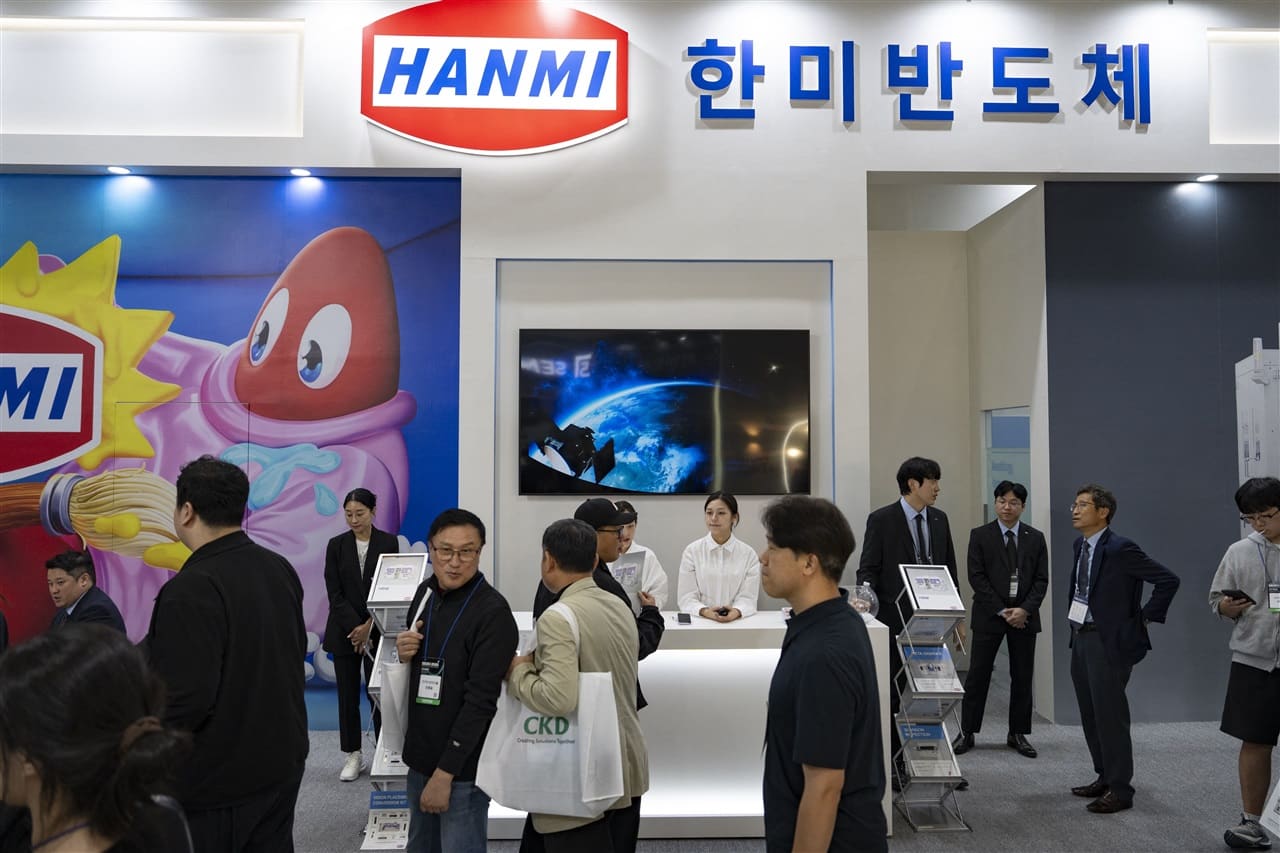
Hanmi Semiconductor and Hanwha Semitech face off over thermocompression bonding technology as demand for high-bandwidth memory accelerates across Asia's chip sector
KEY TAKEAWAYS
- ·Hanmi Semiconductor and Hanwha Semitech are disputing patents for thermocompression bonders used to stack DRAM chips in high-bandwidth memory modules.
- ·The legal case centers on equipment critical for HBM production as memory makers ramp capacity to meet AI-driven demand across Asia.
- ·A court ruling could affect equipment availability, licensing terms, and market access for future HBM generations including HBM4 designs entering pilot production.
Legal Clash Over Chip Stacking Technology
A Seoul courtroom has become the latest arena in the intensifying competition for high-bandwidth memory manufacturing dominance. Hanmi Semiconductor and Hanwha Semitech are contesting patent rights over thermocompression bonders, specialized equipment that stacks DRAM chips vertically to create HBM modules.
The dispute centers on TC bonding technology, which applies heat and pressure to bond memory dies in the tight vertical configurations that HBM architectures demand. As artificial intelligence workloads push memory bandwidth requirements higher, the equipment that enables these advanced packaging techniques has become a strategic chokepoint in the semiconductor supply chain.
Both companies are established players in South Korea's semiconductor equipment sector. Hanmi Semiconductor has supplied advanced packaging tools to major memory manufacturers, while Hanwha Semitech entered the space through acquisitions and internal development aimed at capturing share in next-generation memory production.
The HBM Equipment Race
Thermocompression bonders represent a small but critical segment of the semiconductor capital equipment market. Unlike traditional wire bonding or flip-chip processes, TC bonding enables the fine-pitch interconnects and thermal management required for stacking eight or more DRAM dies in a single HBM package.
Memory producers in South Korea, Taiwan, and increasingly Japan are ramping HBM capacity to meet demand from GPU makers and AI accelerator designers. That expansion has triggered a parallel race among equipment vendors to secure intellectual property positions in bonding, testing, and inspection tools specific to advanced memory packaging.
Patent litigation in this space typically revolves around process parameters, tool architecture, and control algorithms that differentiate one vendor's bonder from another. The outcome of the Hanmi-Hanwha case could influence licensing terms and market access for future HBM generations, including HBM4 designs now entering pilot production.
Implications for Asia's Memory Supply Chain
South Korea remains the epicenter of HBM production, with the country's two dominant memory makers controlling the majority of global output. Equipment suppliers based in Korea enjoy proximity advantages, but they also face intense scrutiny over intellectual property as the technology matures and competition tightens.
Legal disputes over packaging equipment have grown more common as the industry shifts from planar scaling to three-dimensional integration. Courts in Seoul, Tokyo, and Taipei have all adjudicated cases involving bonding patents, thermal compression methods, and hybrid bonding techniques in recent years.
For memory manufacturers, equipment availability and patent clarity matter as much as chip design. A ruling that limits one supplier's ability to ship TC bonders could force production delays or require costly redesigns to accommodate alternative toolsets. That risk is particularly acute for HBM4, where tighter tolerances and higher die counts push existing bonding technology to its limits.
The case also underscores the broader trend of equipment vendors asserting intellectual property as a competitive lever. As semiconductor manufacturing becomes more specialized, the companies that control key process tools gain leverage over the fabs that depend on them.
What Comes Next
The Seoul court has not announced a timeline for its decision. Both Hanmi Semiconductor and Hanwha Semitech continue to ship equipment to customers while the case proceeds, though the legal uncertainty may affect contract negotiations and capacity planning at memory fabs.
Industry observers expect the dispute to hinge on technical details, including the scope of existing patents, the novelty of each company's bonding methods, and prior art in thermocompression processes. Expert testimony and patent claim construction will likely determine whether the court finds infringement or validates independent development.
Beyond the immediate parties, the case carries implications for equipment suppliers across Asia. A ruling that establishes broad patent coverage for TC bonding techniques could trigger licensing demands or force smaller vendors to design around protected methods. Conversely, a narrow interpretation of the patents could open the field to additional competitors and accelerate equipment commoditization.
As HBM transitions from a niche product to a mainstream memory architecture, control over the tools that make it possible has become a strategic priority. The Seoul courtroom will help decide who holds that control.
RELATED STORIES

South Korea Taps Three Telecom Giants to Deliver Free AI Services Nationwide
Cheng Wei-Lun · 3 min

SK Hynix Eyes Deeper Collaboration With Japan's Chip Sector
Cheng Wei-Lun · 4 min
Memory Makers Gain Leverage as AI Server Costs Climb
Cheng Wei-Lun · 3 min
Samsung Display Restarts Asan OLED Campus as Foldable Phones Stage Recovery
Cheng Wei-Lun · 4 min
Spot something wrong? Email editor@briefasia.com. We log every correction publicly.