Finance · Markets
San Miguel Food and Beverage Earnings Slip 4% as Consumer Pressure Mounts
The Philippine conglomerate posted P22.1 billion in first-half profit, with food growth offset by weaker beer and spirits volumes amid inflation and regional trade disruptions.
KEY TAKEAWAYS
- ·San Miguel Food and Beverage reported net income of P22.1 billion in the first half of 2026, down four percent year-on-year, as inflation and geopolitical disruptions pressured consumer spending and export markets.
- ·The food division grew revenue five percent to P99.3 billion and net income eight percent to P6.4 billion, driven by feeds, Magnolia dairy, Purefoods meats, and affordable product lines.
- ·Beer revenue declined one percent to P73.7 billion, with international sales hit by Middle East shipping disruptions; beer net income fell 12 percent to P11.4 billion despite domestic price adjustments.
Profit Dips Despite Revenue Gains
San Miguel Food and Beverage Inc. recorded a net income of P22.1 billion in the first half of 2026, down four percent from the prior year, according to the company. Revenue climbed two percent to P205.3 billion over the same period, driven by expansion in its food business.
Chairman Ramon Ang attributed the earnings pressure to elevated inflation, slower economic growth, and geopolitical disruptions that dampened consumer spending and constrained certain export channels. Despite these headwinds, he noted that demand across core product categories held relatively stable.
The company is managing costs tightly, adding production capacity in areas where demand is growing, and ensuring its brands remain accessible to consumers, Ang said.
Food Division Drives Top-Line Growth
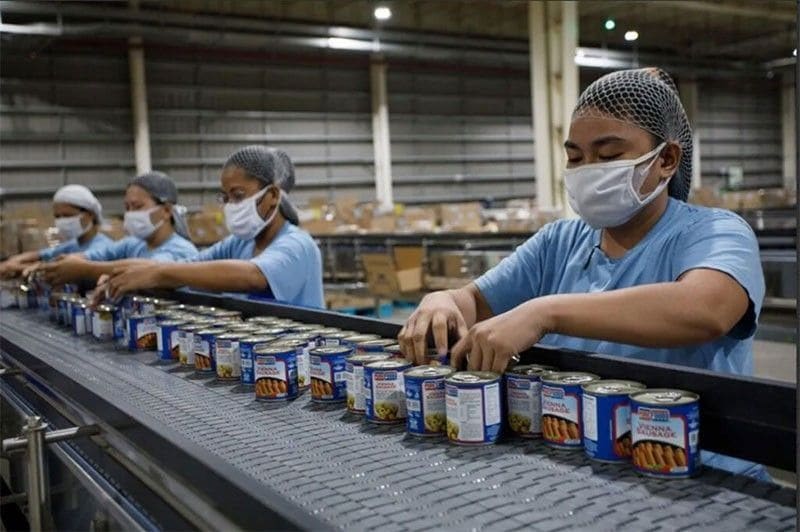
The food segment delivered the strongest performance, with revenue rising five percent to P99.3 billion. Growth came from the feeds business and sustained demand for branded products, including Magnolia dairy and coffee lines, Purefoods luncheon meats, and Pinoy Favorites. The company also saw gains from more affordable product ranges aimed at budget-conscious shoppers.
Net income from the food division increased eight percent to P6.4 billion, making it the fastest-growing profit center within the group.
Beer Revenue Flat as Discretionary Spending Weakens
Beer remained the largest contributor to overall earnings, though revenue edged down one percent to P73.7 billion. Domestic beer sales held steady at P66 billion, supported by price adjustments implemented earlier in the year to offset higher excise taxes. Those increases helped cushion the impact of softer volumes as consumers pulled back on discretionary purchases.
International beer operations generated $128.5 million in revenue, down from the previous year. The decline was driven by shipping disruptions in the Middle East, which delayed deliveries to the region and crimped sales. Net income from the beer division fell 12 percent to P11.4 billion.
Spirits Margin Improves Despite Volume Decline
The spirits business posted flat revenue of P32.3 billion, with higher pricing offsetting lower volumes. Profitability improved, with net income rising three percent to P4.4 billion, as the company captured better margins despite weaker consumer demand.
Outlook and Strategy
San Miguel Food and Beverage is navigating a challenging environment marked by inflation, currency volatility, and uneven regional demand. The company is leaning on its diversified portfolio, with strength in food helping to offset softness in beverages.
Management's focus on cost discipline, selective capacity expansion, and pricing flexibility will be critical as macroeconomic pressures persist. The ability to sustain volume in domestic beer and spirits markets, while stabilizing international operations, will shape performance in the second half of the year.
For investors watching Philippine consumer stocks, the results underscore the tension between top-line resilience and margin pressure in a high-inflation, high-tax environment. The food division's momentum offers a buffer, but the beer and spirits segments remain vulnerable to further weakening in discretionary income and external trade shocks.
RELATED STORIES

Philippines Central Bank Fielded 120,000 Customer Disputes in 2025
Priyanka V. Rao · 3 min
Philippines Debt Service Surges 60% in First Half on Higher Amortization
Priyanka V. Rao · 2 min
Philippine SSS Net Income Falls 28 Percent as Pension Hike Drives Up Costs
Priyanka V. Rao · 2 min
Philippine Economy Slows to 2.3% Growth in Second Quarter
Priyanka V. Rao · 2 min
Spot something wrong? Email editor@briefasia.com. We log every correction publicly.