Technology · Policy
Samsung and SK Hynix Test Chinese Etching Tools Amid Export Control Uncertainty
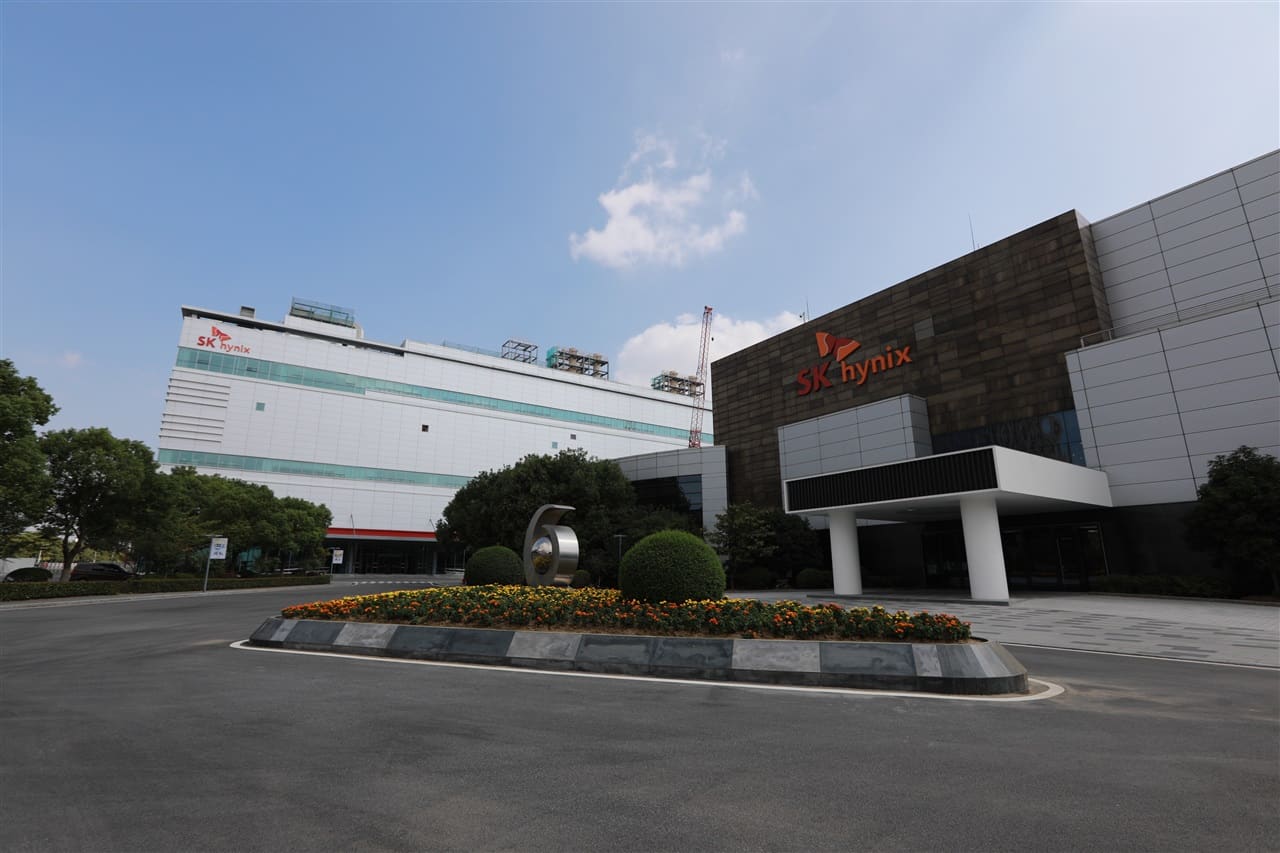
South Korea's memory giants have been evaluating AMEC equipment for their China operations since 2024, positioning for potential tighter US restrictions on semiconductor tooling.
KEY TAKEAWAYS
- ·Samsung Electronics and SK Hynix began testing etching equipment from China's AMEC in 2024 for possible use at their Chinese memory fabs.
- ·The trials provide a strategic hedge against potential expansion of US export controls that could restrict access to Western semiconductor tooling.
- ·AMEC's engagement with top-tier Korean chipmakers signals maturation of China's domestic equipment sector, though volume deployment remains uncertain.
Hedging Against Washington
Samsung Electronics and SK Hynix have been quietly evaluating etching equipment from Chinese toolmaker Advanced Micro-Fabrication Equipment since 2024, according to people familiar with the testing programs. The trials, conducted at facilities in China, represent a strategic hedge as both South Korean memory manufacturers navigate the increasingly fraught geopolitics of semiconductor supply chains.
Etching tools are critical for carving microscopic circuit patterns onto silicon wafers. The category has long been dominated by US-based Lam Research and Applied Materials, alongside Tokyo Electron from Japan. AMEC, a Shanghai-headquartered equipment maker, has emerged as China's most advanced domestic alternative in this segment, though it still trails the incumbents in process capability and installed base.
The testing window coincides with a period of escalating US export restrictions targeting China's semiconductor industry. Washington has progressively tightened rules on advanced chipmaking equipment sales to Chinese entities, and South Korean firms operating legacy memory fabs in China have faced recurring uncertainty over whether their own tool imports might be curtailed under future policy shifts.
Why Chinese Tools Matter Now
For Samsung and SK Hynix, the calculus is pragmatic. Both companies run mature DRAM and NAND flash production lines in China that serve cost-sensitive markets. These facilities do not produce cutting-edge chips but remain commercially significant. Any disruption to equipment supply for routine maintenance or capacity expansion would directly impact output and margins.
By qualifying AMEC etchers, the Korean manufacturers gain optionality. If US export controls expand to restrict even older-generation tools from American suppliers, having a pre-tested Chinese alternative in hand reduces downtime risk. The testing does not necessarily signal imminent large-scale procurement, but it establishes AMEC as a viable fallback supplier should access to Western equipment become constrained.
China has invested heavily in building a domestic semiconductor equipment industry under its national strategy to reduce reliance on foreign technology. AMEC has received state backing and has made measurable progress in etching, a technically demanding process that requires precision plasma chemistry and uniformity across wafer surfaces. The company's tools are already deployed in some Chinese fabs, though adoption by foreign multinationals would mark a notable validation.
The Geopolitical Chessboard
The move also reflects the broader reality facing Asian chipmakers: they are caught between the world's two largest economies, each wielding supply chain access as leverage. South Korea's semiconductor industry depends on both the US market for sales and China for manufacturing scale. Any policy shift in Washington or Beijing can ripple through production planning.
US officials have periodically signaled interest in extending controls beyond the most advanced nodes, raising concerns among memory makers that older equipment categories could eventually fall under licensing requirements. While no such rules have been formalized for legacy memory tools, the mere possibility has prompted contingency planning.
AMEC's engagement with Samsung and SK Hynix also suggests the Chinese equipment sector is maturing enough to attract serious evaluation from Tier 1 chipmakers, even if only as a secondary source. Whether the testing translates into volume orders will depend on performance benchmarks, cost competitiveness, and the pace of regulatory change in Washington.
What Comes Next
For now, the testing remains exploratory. Neither Samsung nor SK Hynix has disclosed plans to replace existing Western toolsets with Chinese equivalents at scale. But the fact that both companies initiated trials two years ago indicates this is not a reactive scramble but a deliberate, multi-year effort to map out alternative supply routes.
As US-China tech decoupling continues, expect more such hedging behavior across the semiconductor value chain. The era of single-source dependencies and frictionless cross-border equipment flows is giving way to a more fragmented, regionally diversified model. For equipment makers in China, Japan, South Korea, and the US, that fragmentation creates both risk and opportunity depending on where they sit on the board.
RELATED STORIES

LG Pivots to AI-Defined Vehicle Platform as Korea Chases China's Self-Driving Lead
Jun-ho Seo · 3 min
Memory Makers Gain Leverage as AI Server Costs Climb
Cheng Wei-Lun · 3 min
Samsung and SK Hynix Turn Down KEPCO's Multibillion-Dollar Prepayment Demand
Cheng Wei-Lun · 4 min

SK Hynix May Fast-Track Gwangju Fab Investment Alongside Yongin Expansion
Jun-ho Seo · 3 min
Spot something wrong? Email editor@briefasia.com. We log every correction publicly.