Technology · Dev
Samsung Recruits Energy Officials as Chip Expansion Strains Korea's Power Grid
The electronics giant is staffing its think tank with government power experts to navigate electricity constraints at its Yongin fab and proposed Honam semiconductor cluster.
KEY TAKEAWAYS
- ·Samsung Group is recruiting current and former government energy officials for its internal think tank to address power supply challenges at its Yongin fab and proposed Honam chip cluster.
- ·Advanced semiconductor fabs require gigawatt-scale electricity, and Korea's grid infrastructure may struggle to support Samsung's expansion without major upgrades and regulatory coordination.
- ·The move reflects a broader Asia trend where power availability has become a strategic constraint for chipmakers, data centers, and advanced manufacturing across the region.
Power Crunch Meets Chip Ambitions
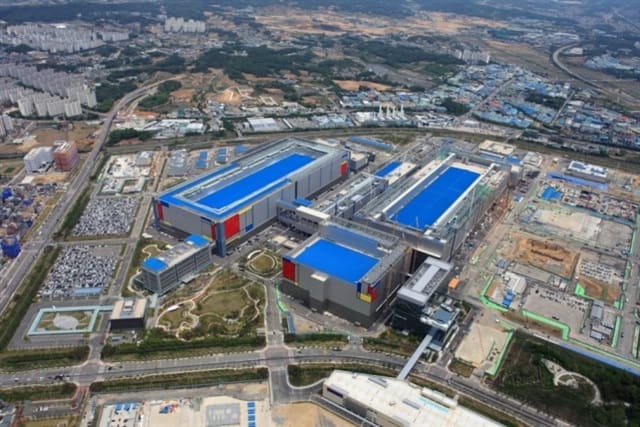
Samsung Group is bringing current and former government energy officials into its internal strategy unit as electricity infrastructure becomes a critical bottleneck for its semiconductor projects in South Korea. The recruitment drive reflects mounting pressure on Korea's transmission network as the conglomerate races to expand fabrication capacity at its Yongin campus and pursue a new manufacturing cluster in the southwestern Honam region.
The move comes at a time when advanced semiconductor production demands exponentially more energy. Leading-edge logic fabs can consume as much power as a small city, and memory production at scale requires stable, high-voltage supply around the clock. Any disruption or capacity shortfall can halt billions of dollars in output and delay product shipments to global customers.
Yongin and Honam at Stake
Samsung's Yongin site, located south of Seoul, is already under construction and slated to house multiple fabrication lines producing next-generation memory and logic chips. According to industry estimates, the complex will require gigawatt-scale electricity supply once fully operational. Local grid operators have raised concerns about whether existing substations and transmission lines can handle the load without upgrades.
The proposed Honam cluster presents an even larger challenge. Regional authorities in the southwest have been courting Samsung with land and incentives, but the area's power infrastructure lags behind the industrial corridors near Seoul and Gyeonggi Province. Building out the necessary transmission capacity could take years and require coordination across multiple government agencies, including the Ministry of Trade, Industry and Energy and state-owned grid operator Korea Electric Power Corporation.
Why Energy Expertise Matters Now
By embedding energy officials in its think tank, Samsung gains direct insight into regulatory timelines, subsidy programs, and grid planning decisions. Former bureaucrats bring institutional knowledge of how approvals move through ministries and where bottlenecks typically emerge. They can also help Samsung shape its proposals to align with national energy policy, which increasingly emphasizes renewable sources and grid resilience.
The strategy mirrors approaches taken by hyperscale data center operators in the United States and Europe, where companies have hired utility veterans to navigate permitting and secure dedicated power allocations. In Korea's case, the stakes are higher: semiconductor manufacturing is a pillar of export revenue, and any delay in capacity expansion hands an advantage to rivals in Taiwan and China.
Regional Implications
Korea is not alone in confronting this constraint. Taiwan Semiconductor Manufacturing Company has faced similar power supply questions as it builds new fabs in Arizona and considers sites in Japan and Europe. In each case, local grid capacity and the availability of renewable energy have become deal points alongside tax incentives and workforce availability.
Across Asia, governments are racing to upgrade electricity infrastructure to support AI data centers, electric vehicle production, and advanced manufacturing. Singapore recently announced grid investments to accommodate rising data center demand, while Japan is accelerating approvals for offshore wind projects to power industrial zones. Samsung's recruitment of energy officials signals that power supply is no longer a back-office concern but a strategic variable that can determine where and how fast chipmakers expand.
What Comes Next
Industry observers expect Samsung to formalize partnerships with KEPCO and provincial governments in the coming months. The company may also explore on-site power generation or dedicated renewable energy contracts to reduce reliance on the public grid. Such arrangements would require regulatory waivers and long-term commitments, underscoring the value of having energy policy insiders on the team.
For Korea's semiconductor ambitions, the test is whether infrastructure can keep pace with investment. Samsung's decision to bolster its energy team suggests the company is preparing for a prolonged negotiation over grid access, one that will shape the geography of Asia's chip industry for the next decade.
RELATED STORIES
Samsung and SK Hynix Turn Down KEPCO's Multibillion-Dollar Prepayment Demand
Cheng Wei-Lun · 4 min

Samsung's Device Division Reports First Quarterly Loss as Chip Costs Surge
Cheng Wei-Lun · 3 min

South Korea Records Highest September Export Start on Semiconductor Demand
Tran Quoc Bao · 3 min

South Korea Taps Three Telecom Giants to Deliver Free AI Services Nationwide
Cheng Wei-Lun · 3 min
Spot something wrong? Email editor@briefasia.com. We log every correction publicly.