Technology · Dev
Samsung Expands India Manufacturing With New HVAC Line for Data Centers
The facility in Pune will produce 6,500 units annually, targeting AI infrastructure demand across Asia-Pacific as hyperscale computing drives cooling requirements.
KEY TAKEAWAYS
- ·Samsung Electronics opened a new HVAC production line in Pune, India, with annual capacity of 6,500 units targeting AI data center demand across Asia-Pacific.
- ·The facility joins an existing FlaktGroup site in Noida and positions Samsung to serve India's rapidly expanding data center pipeline, which added over 400 megawatts of capacity in 2024.
- ·Cooling accounts for roughly 30 percent of data center energy consumption, making HVAC efficiency a key competitive factor as hyperscalers build out regional infrastructure.
New Capacity in Maharashtra
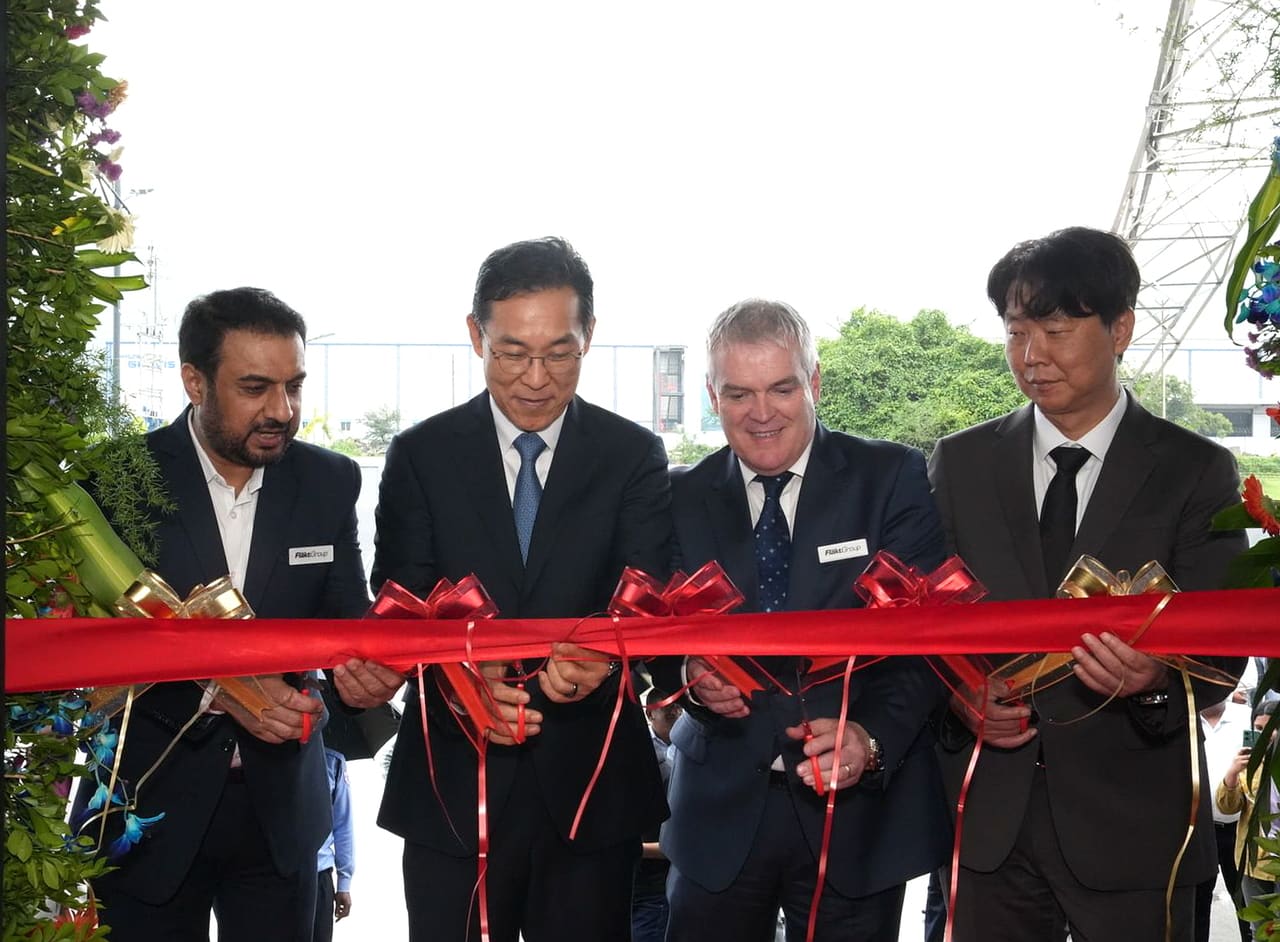
Samsung Electronics has brought a new heating, ventilation and air-conditioning production facility online in Pune, Maharashtra, according to the company. The plant will reach an annual output of 6,500 HVAC units when operating at full capacity, marking a fresh push into infrastructure that supports artificial intelligence workloads.
The Pune site joins an existing FlaktGroup facility in Noida, creating a two-location manufacturing base in India. Samsung acquired FlaktGroup in 2021 to bolster its presence in the commercial HVAC segment, and the new line extends that footprint into one of Asia's fastest-growing industrial corridors.
Data Center Cooling as a Growth Vector
The timing reflects a broader shift in HVAC demand. Traditional commercial and residential projects still dominate unit volumes, but data centers have emerged as a high-value segment with distinct technical requirements. AI training clusters generate heat densities that standard building systems cannot handle, and operators are willing to pay a premium for precision cooling.
India's data center pipeline has expanded rapidly over the past three years, driven by cloud hyperscalers, domestic digital infrastructure programs, and edge deployments tied to 5G rollout. The country added more than 400 megawatts of data center capacity in 2024 alone, and industry forecasts point to another 300 megawatts coming online in 2025.
Samsung's move positions the company to capture both the initial build-out and the recurring retrofit cycle as operators upgrade aging cooling infrastructure. The Pune facility will serve customers across India and the wider Asia-Pacific region, a geographic scope that includes emerging data center hubs in Indonesia, Vietnam, and the Philippines.
Supply Chain and Regional Dynamics
Manufacturing HVAC systems locally reduces lead times and import duties, two factors that matter in competitive bids for large infrastructure projects. India's production-linked incentive schemes have also made domestic assembly more attractive for electronics and industrial equipment makers.
The Pune plant will draw on a regional supplier network for compressors, heat exchangers, and control electronics. Maharashtra state hosts a cluster of component manufacturers that serve automotive and industrial clients, and Samsung can tap that base to scale production without building parallel supply chains from scratch.
FlaktGroup's Noida facility will continue to operate alongside the new line, allowing Samsung to segment production by product category or customer type. The dual-site structure also provides redundancy if one location faces disruptions, a consideration that has gained weight since the pandemic exposed single-point vulnerabilities in global manufacturing.
Asia-Pacific Data Center Landscape
The broader Asia-Pacific data center market is on track to exceed 3,000 megawatts of installed capacity by 2027, with India, Southeast Asia, and Australia accounting for much of the incremental growth. Hyperscalers including Amazon Web Services, Microsoft Azure, and Google Cloud have announced multibillion-dollar commitments to the region, and domestic players such as Reliance Jio and Tata Communications are expanding their own footprints.
Cooling represents roughly 30 percent of a data center's total energy consumption, and efficiency gains in HVAC systems translate directly to lower operating costs and carbon emissions. Operators are increasingly evaluating suppliers on metrics such as power usage effectiveness and water consumption, both of which hinge on cooling design.
Samsung's entry into this segment puts it in competition with established players including Carrier, Trane Technologies, and Johnson Controls, as well as specialized data center cooling providers such as Vertiv and Schneider Electric. The company's existing relationships with semiconductor and IT infrastructure clients may provide an advantage in cross-selling HVAC systems as part of integrated data center projects.
What Comes Next
The Pune facility is expected to ramp production over the coming quarters, with full capacity targeted for the second half of 2026. Samsung has not disclosed the capital investment behind the plant, but industry observers estimate that a greenfield HVAC line of this scale typically requires an outlay in the range of 50 million to 80 million dollars.
Future expansion will depend on how quickly the data center pipeline converts to operational capacity and whether AI workloads continue to drive heat density upward. If current trends hold, the Pune line may reach full utilization sooner than planned, setting the stage for additional capacity or product line extensions.
For now, Samsung's focus remains on execution: delivering units on schedule, meeting technical specifications, and building a service network capable of supporting critical infrastructure clients. In a market where uptime is measured in nines and cooling failures can cost millions in lost compute time, reliability is the entry ticket.
RELATED STORIES
Seoul Semiconductor Secures Indian Court Ban on Patent-Infringing LED Products
Priyanka V. Rao · 3 min
India Expands Chip Strategy Beyond Fabrication Into Packaging and Workforce
Priyanka V. Rao · 3 min

Rashi Peripherals and Restar Form Joint Venture to Expand Semiconductor Services in India
Priyanka V. Rao · 2 min

Yanolja Expands AI Concierge Platform to Global Hotels After India Deployment
Cheng Wei-Lun · 3 min
Spot something wrong? Email editor@briefasia.com. We log every correction publicly.