Asia · Business
Samsung's AI Windfall Creates Internal Pay Divide as Profit Soars 1,900%
Record earnings driven by chip demand for artificial intelligence threaten to widen compensation gap between divisions at South Korean tech giant
KEY TAKEAWAYS
- ·Samsung Electronics reported a 1,900 percent year-on-year jump in quarterly operating profit on July 7, driven almost entirely by memory chip demand for artificial intelligence applications.
- ·The profit concentration in AI-related divisions has created internal compensation disparities, with engineers in high-growth units receiving bonuses and pay scales that outpace colleagues in consumer electronics and legacy product lines.
- ·South Korea's tightening labor market for AI talent and rising union activity at Samsung are forcing the conglomerate to balance competitive pay for critical skills against broader workforce morale and equity concerns.
Record Quarter Exposes Structural Tensions
Samsung Electronics announced preliminary quarterly operating profit that jumped 1,900 percent year on year on July 7, powered by relentless global demand for memory chips used in artificial intelligence systems. For the world's largest memory chipmaker, it marked a third consecutive quarter of record earnings.
Yet the windfall carries a hidden cost. Inside Samsung's sprawling operations, the disparity between teams driving AI-related revenue and those in mature product lines is creating what labor observers call "wage envy," a friction point that threatens organizational cohesion even as headline numbers climb.
The dynamic reflects a broader challenge rippling through Asia's technology sector: how to reward employees in high-growth divisions without demoralizing talent elsewhere in the company. Samsung's AI chip engineers and product managers command premium compensation tied to the unit's performance, while colleagues in consumer electronics or legacy semiconductor lines see smaller bonuses despite contributing to the conglomerate's overall operations.
Why Compensation Gaps Matter Now
Three factors make this moment particularly sensitive. First, Samsung's profit acceleration is almost entirely attributable to one segment. Memory chips for AI training and inference workloads now account for the bulk of operating margin expansion, leaving other divisions with flat or declining contributions. When one team visibly drives nearly all incremental profit, justifying differentiated pay becomes harder to mask.
Second, South Korea's labor market for semiconductor and AI talent has tightened dramatically. Engineers with machine learning or advanced chip design skills can command signing bonuses and equity packages that dwarf traditional Samsung compensation bands. To retain these specialists, Samsung has reportedly introduced separate pay scales and performance incentives for AI-focused roles, a departure from its historically uniform HR structures.
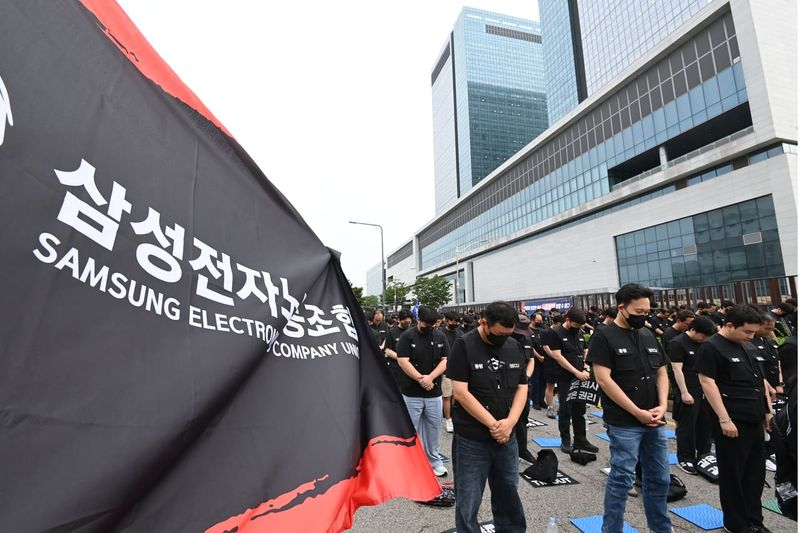
Third, union activity at Samsung has intensified. While the company long resisted organized labor, recent years have seen growing membership in employee groups that scrutinize pay equity. A compensation structure perceived as favoring one division risks galvanizing broader demands for transparency and parity, complicating Samsung's ability to offer competitive packages where it needs them most.
Regional Context and Competitive Pressure
Samsung's dilemma mirrors challenges facing other Asian hardware giants. SK Hynix, the South Korean rival also riding the AI memory boom, faces similar internal pressures. In Taiwan, TSMC has quietly adjusted compensation frameworks to retain engineers working on advanced packaging and high-bandwidth memory integration, areas critical to AI chip production. These moves, while necessary to compete for scarce talent, create ripple effects across the broader workforce.
The issue extends beyond hardware. Chinese cloud providers and AI startups flush with venture capital have poached talent from established firms by offering equity stakes and bonuses tied to product milestones rather than company-wide performance. This has forced incumbents to rethink rigid pay structures, but doing so without alienating existing employees requires delicate calibration.
For Samsung, the stakes are compounded by its conglomerate structure. Unlike pure-play chipmakers, it operates diverse businesses - from smartphones to home appliances to displays - under one corporate umbrella. Employees in divisions unrelated to AI may question why their contributions receive less recognition, even if market dynamics justify the disparity.
Managing the Fallout
Companies navigating this tension typically pursue one of three paths. Some adopt explicit tiered compensation frameworks, publicly acknowledging that different businesses command different pay scales based on market conditions. This approach prioritizes transparency but can breed resentment.
Others use one-time bonuses or project-based incentives to reward high-performing teams without permanently altering base salary structures. This preserves nominal equity but may fail to retain top talent if competitors offer more durable packages.
A third option involves investing heavily in reskilling programs, enabling employees in slower-growth divisions to transition into AI-related roles. Samsung has expanded internal training initiatives in machine learning and chip design, though the scale remains modest relative to workforce size.
None of these solutions is painless. Transparent tiering risks morale damage; temporary bonuses may not satisfy high-demand talent; and reskilling takes years to yield results. Samsung's choice will likely set a template for other Asian conglomerates wrestling with similar dynamics.
What Comes Next
The immediate pressure on Samsung will intensify if AI chip demand sustains its trajectory. Analysts expect memory pricing to remain elevated through the next fiscal year as hyperscalers and AI labs expand infrastructure. Each strong quarter widens the performance gap between Samsung's AI-linked units and the rest of the company, making compensation disparities harder to justify internally.
At the same time, any softness in consumer electronics or smartphone sales could sharpen internal divisions. Employees in those segments may view their stagnant bonuses as subsidizing rewards for colleagues in the chip business, even though corporate accounting does not work that way in practice.
For now, Samsung's leadership faces a balancing act: retain the engineers and product managers driving its most profitable growth without fracturing the organizational culture that enabled the company to dominate multiple hardware categories for decades. How it navigates this tension will offer lessons for every large Asian technology firm confronting the uneven economics of the AI boom.
RELATED STORIES
Samsung Workers Plan Protest Over Pay Gap Between Chip and Device Units
Jun-ho Seo · 3 min
South Korea Breaks Full-Year Export Record in September
Tran Quoc Bao · 3 min

SK Chemicals Targets Europe's Can-Coating Shift After BPA Ban
Cheng Wei-Lun · 2 min
SK Hynix Union Rejects Wage Deal in Razor-Thin Vote
Cheng Wei-Lun · 3 min
Spot something wrong? Email editor@briefasia.com. We log every correction publicly.