Finance · Markets
Ringgit Slips to Four-Week Low as Traders Return to Dollar
Malaysia's currency weakened alongside regional peers as investors awaited Federal Reserve minutes and fresh US economic data
KEY TAKEAWAYS
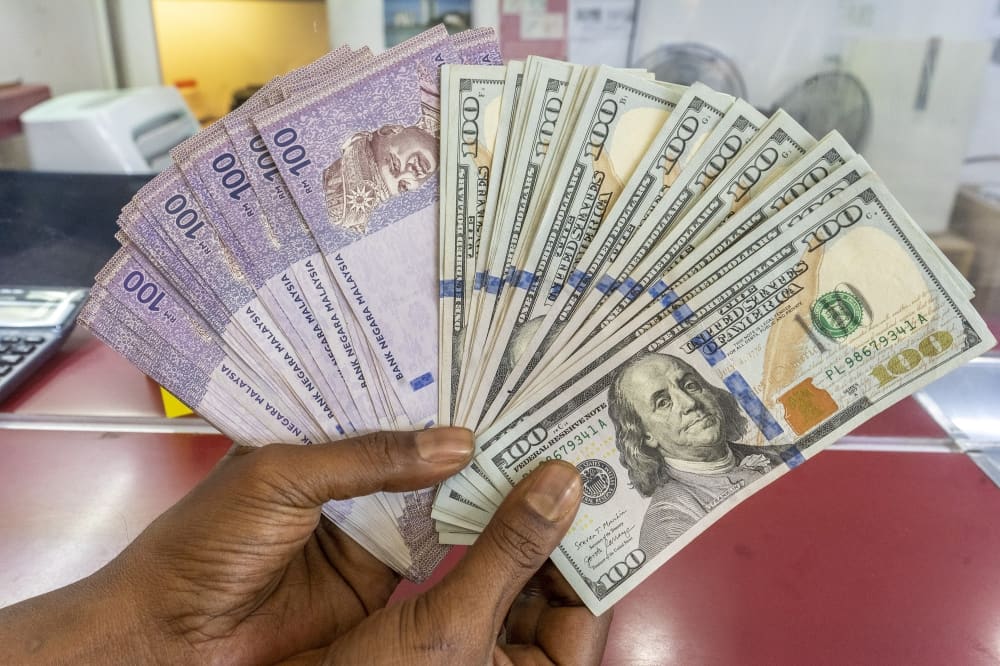
- ·The ringgit closed at 4.0825 per US dollar on Monday, weaker than Friday's 4.0690, as investors returned to the greenback ahead of Federal Reserve meeting minutes.
- ·Regional currencies including the Singapore dollar, Thai baht, and Philippine peso all weakened against the ringgit, reflecting broad dollar strength across Southeast Asia.
- ·Market focus shifts to the US ISM Services Index, expected at 54.2 for June, with results likely to influence near-term Federal Reserve policy expectations and currency flows.
Currency Reverses Recent Gains
The Malaysian ringgit weakened to 4.0825 per US dollar at Monday's close, retreating from the 4.0690 level recorded at the end of last week. The move reflected a broader pattern across Asian currencies as traders repositioned into dollar assets following a brief period of greenback weakness.
The shift came after investors digested a softer US employment report for June, which had initially pressured the dollar. However, that momentum proved short-lived as market participants turned their attention to upcoming Federal Reserve policy signals and fresh economic indicators from the world's largest economy.
Bank Muamalat Malaysia chief economist Mohd Afzanizam Abdul Rashid noted that investors remained cautious ahead of the Federal Reserve's June meeting minutes, scheduled for release later this week. The document is expected to provide insight into policymakers' thinking on interest rates and inflation management.
Regional Weakness Across the Board
The ringgit's decline was part of a wider pattern affecting Asian currencies. Most regional units traded softer against the dollar as traders awaited clarity on US monetary policy direction.
Among major currencies, the ringgit weakened to 4.6594 per euro from 4.6497 previously, and slipped to 5.4440 against the British pound from 5.4296. The sole exception was the Japanese yen, against which the ringgit strengthened to 2.5148 from 2.5214.
Within Southeast Asia, the Malaysian currency lost ground across the board. It fell to 3.1554 per Singapore dollar from 3.1483, and edged lower to 12.2403 per 100 Thai baht from 12.2384. The ringgit also depreciated to 226.8 per 10,000 Indonesian rupiah from 226.2, and weakened to 6.64 per 100 Philippine pesos from 6.61.
Data Watch: Services Sector in Focus
Market attention was shifting to the ISM Services Index for June, due for release Monday evening US time. Consensus estimates projected the index at 54.2 points, a modest decline from May's 54.5 reading. Any significant deviation from expectations could amplify currency movements, particularly if the data suggests faster-than-anticipated economic cooling or resilience.
The services sector accounts for the majority of US economic activity, making the ISM reading a key input for Federal Reserve policy deliberations. A stronger-than-expected print would likely reinforce expectations that the central bank will maintain tighter monetary policy for longer, supporting the dollar. Conversely, a weaker number could revive pressure on the greenback.
Volatility Ahead
The ringgit's near-term trajectory will likely remain tied to US data flows and Federal Reserve communication. With the June meeting minutes on deck and a stream of employment, inflation, and activity indicators scheduled throughout the month, currency traders are positioning defensively.
Malaysia's export-driven economy makes the ringgit sensitive to shifts in global risk appetite and dollar strength. The currency has faced persistent pressure over the past year as interest rate differentials between the US and Malaysia widened, though recent months have seen periods of stabilization as expectations for Fed policy easing grew.
For now, the ringgit joins its regional peers in a holding pattern, with traders waiting for clearer signals on whether the US economy is heading for a soft landing or a sharper slowdown that would prompt more aggressive Fed rate cuts.
RELATED STORIES
Ringgit Gains Ground as Traders Await Fed Chair Warsh's Jackson Hole Address
Priyanka V. Rao · 3 min
Malaysian Ringgit Strengthens on Strong US Jobs Data
Tran Quoc Bao · 3 min
Ringgit Strengthens as Malaysia's Stable Rates Signal Policy Flexibility
Mariel D. Santos · 3 min
Ringgit Set to Hold Gains as Malaysia Central Bank Meeting Nears
Priyanka V. Rao · 3 min
Spot something wrong? Email editor@briefasia.com. We log every correction publicly.