Finance · Markets
Ringgit Gains on Trade Strength Despite Middle East Tensions
Malaysia's currency climbs for second day, supported by semiconductor rebound and stronger-than-forecast export data
KEY TAKEAWAYS
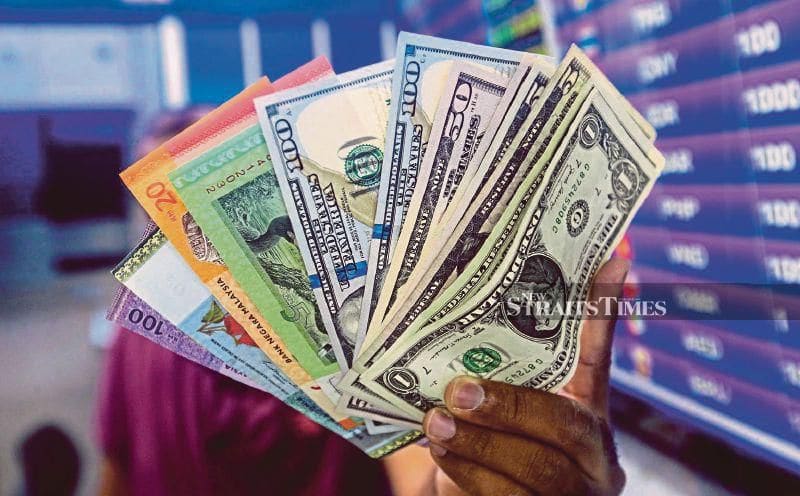
- ·Malaysia's ringgit closed at 4.0870 per US dollar, strengthening for a second consecutive session on better-than-expected trade performance and regional semiconductor stock recovery.
- ·The currency gained despite broader dollar strength across G10 markets and ongoing US-Iran tensions that threaten crude oil flows through the Strait of Hormuz.
- ·Analysts expect the ringgit to maintain a slightly positive bias this week unless Middle East hostilities escalate meaningfully, with foreign exchange volatility remaining unusually low.
Currency Momentum Builds
The Malaysian ringgit closed at 4.0870 per US dollar on Tuesday, extending its rally into a second consecutive session despite elevated geopolitical uncertainty. The local currency appreciated from Monday's close of 4.0895, according to Bank Muamalat Malaysia.
Malaysia's trade performance exceeded market expectations, providing fundamental support for the currency move. The strengthening came even as the dollar gained ground across G10 markets, suggesting domestic factors played a decisive role.
Semiconductor Lift
A recovery in semiconductor stocks across Asia created additional tailwinds for the ringgit. Regional chip equities rebounded after recent volatility, improving investor sentiment toward currencies tied to technology supply chains.
Stephen Innes, managing partner at SPI Asset Management, noted the currency's resilience stands out given the broader dollar strength. Malaysia's position in the global electronics manufacturing network makes its currency sensitive to shifts in semiconductor demand and production expectations.
Foreign exchange volatility remains unusually subdued this week, with few major US macroeconomic releases on the calendar. That low-volatility environment has allowed regional currencies to respond more directly to local fundamentals rather than external noise.
Geopolitical Overhang
Tensions between the United States and Iran continue to weigh on market psychology, particularly concerns over potential disruptions to vessel traffic through the Strait of Hormuz. The waterway handles roughly one-fifth of global oil transit, making any escalation a direct threat to energy markets and Asian import costs.
Mohd Afzanizam Abdul Rashid, chief economist at Bank Muamalat Malaysia, said market participants are monitoring the conflict closely for its implications on crude prices. An escalation that drives oil significantly higher could reverse recent currency gains across the region, as energy-importing economies face deteriorating terms of trade.
Innes expects the ringgit to maintain a slightly positive bias through the remainder of the week, barring a meaningful worsening of Middle East hostilities. A sharp escalation would likely trigger safe-haven flows back into the dollar, he added.
Cross-Currency Performance
The ringgit also strengthened against the euro, closing at 4.6682 compared with 4.6743 the previous day. It gained ground versus the Japanese yen, moving to 2.5123 from 2.5177, and appreciated against the British pound to 5.4868 from 5.5049.
Performance was mixed against regional peers. The ringgit slipped slightly versus the Singapore dollar, closing at 3.1682 compared with 3.1677 on Monday. It also edged lower against the Indonesian rupiah, moving to 228.4 from 227.8.
However, the currency advanced against the Thai baht, reaching 12.1420 from 12.1556, and climbed against the Philippine peso to 6.62 from 6.63.
Near-Term Outlook
The absence of major data releases from the United States this week leaves Asian currencies more responsive to regional developments and geopolitical headlines. Market participants will watch for any signs of de-escalation or further deterioration in the Middle East situation, which remains the primary external risk factor.
Oil prices have not yet spiked sharply, suggesting traders do not currently price in a severe disruption scenario. If that assessment holds, the ringgit's recent momentum could extend, particularly if semiconductor demand signals continue to improve.
Malaysia's export sector remains heavily weighted toward electronics and commodities, making the currency a barometer for both global technology demand and raw material flows. The combination of strong trade data and recovering chip sentiment provides a constructive near-term backdrop, provided external shocks remain contained.
RELATED STORIES
Ringgit Strengthens as Malaysia's Stable Rates Signal Policy Flexibility
Mariel D. Santos · 3 min
Ringgit Set to Hold Gains as Malaysia Central Bank Meeting Nears
Priyanka V. Rao · 3 min
Ringgit Gains Ground as Traders Await Fed Chair Warsh's Jackson Hole Address
Priyanka V. Rao · 3 min
Malaysian Palm Oil Giant KLK Swings to RM1.34 Billion Quarterly Loss
Priyanka V. Rao · 3 min
Spot something wrong? Email editor@briefasia.com. We log every correction publicly.